
What SEO Is and Why It Still Matters
Bastian W.
Co-Founder of Keupera
In a hurry? You can find our SEO Checklist here.
If your website is hard to find, it might as well not exist. That is the practical reason SEO still matters to startups, agencies, and growth teams trying to win attention online.
Search engine optimization, or SEO, is the process of improving your website so it appears more prominently in search engine results for relevant queries. When people ask, "what is SEO," the simple answer is this: it helps the right audience find you through Google and other search engines, without paying for clicks.
That sounds straightforward, but effective SEO goes far beyond adding keywords to a page. It touches your content, site structure, technical health, authority, and user experience. Done well, it compounds over time. A strong page can bring in qualified traffic for months or years, at a lower acquisition cost than paid channels.
For startups, SEO can create sustainable demand. For marketing and SEO agencies, it is both a service line and a strategic lever that influences content, brand visibility, and pipeline quality. If you understand how SEO works, you can make better decisions about where to invest and how to measure impact.
What search engine optimization is
At its core, search engine optimization is about aligning your website with how search engines discover, understand, and rank content. Search engines crawl pages, index what they find, and decide which results best match a user’s search intent.
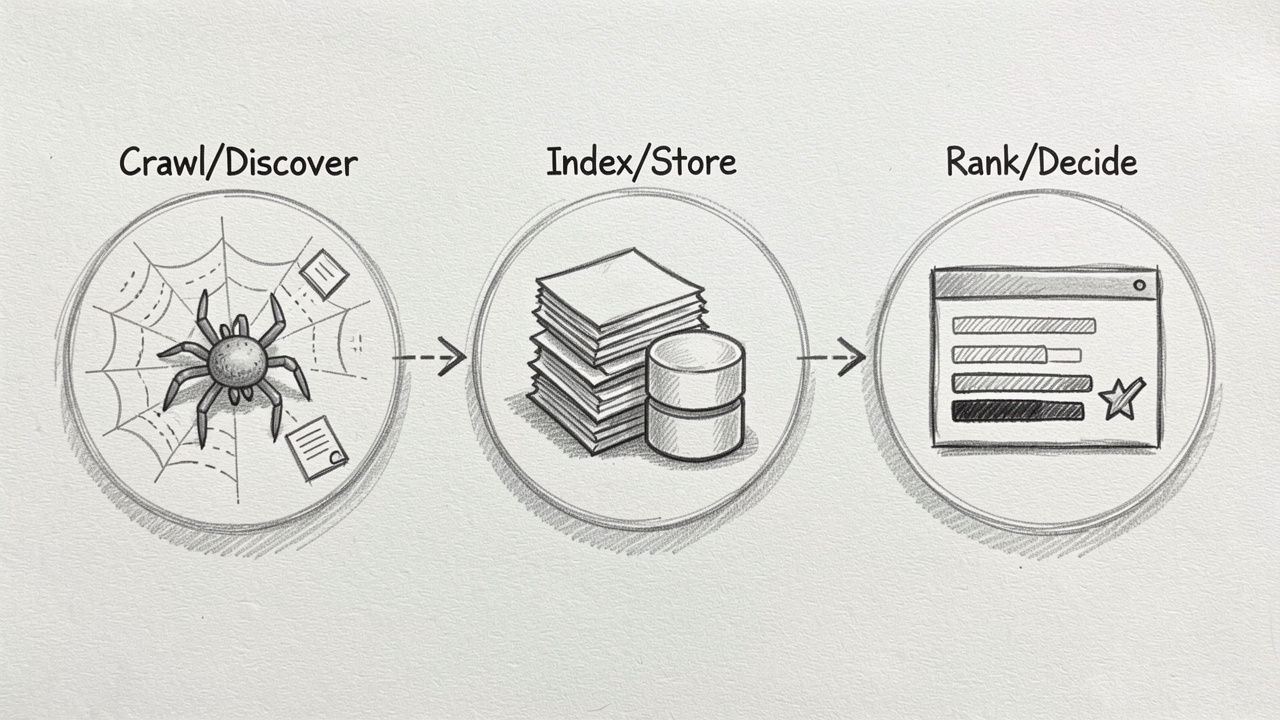
That last part matters most. SEO is not just about ranking for a term. It is about ranking for the right term, with the right page, for the right audience. A page that ranks but attracts the wrong visitors will not drive meaningful business results.
SEO vs. paid search
SEO is often confused with paid search, but they work differently. With paid search, you bid on keywords and pay for visibility. With SEO, you earn visibility by proving relevance, usefulness, and authority over time.
Both channels have value. Paid search can deliver immediate traffic. SEO usually takes longer, but the payoff can be more durable. Many high-performing growth teams use both, with paid search capturing short-term demand and SEO building long-term visibility.
Why search engines care about quality
Google’s goal is simple. It wants to show users the most helpful result for each query. That means pages that are clear, trustworthy, fast, and aligned with user intent tend to perform better.
This is why SEO has matured. It is no longer about gaming the algorithm with keyword stuffing or low-quality backlinks. Modern SEO rewards pages that genuinely solve problems, answer questions, and create a better search experience.
Key aspects of SEO
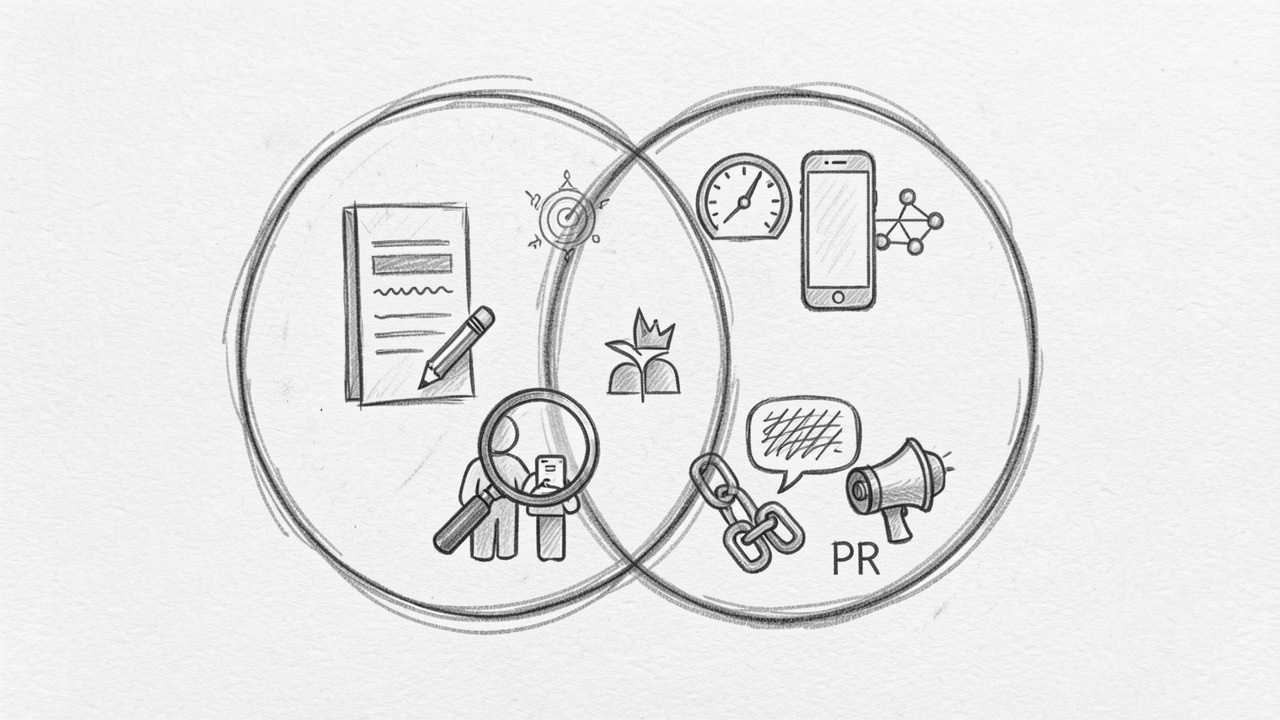
SEO usually breaks into three major areas: on-page SEO, technical SEO, and off-page SEO. These categories overlap, but they give you a useful way to diagnose what is working and what needs attention.
On-page SEO
On-page SEO covers the elements on your website that help search engines and users understand a page. This includes page titles, headings, internal links, URL structure, image alt text, and most importantly, the quality of your content.
A strong on-page strategy starts with search intent. If someone searches for “best CRM for startups,” they probably want a comparison or buyer’s guide, not a homepage or a pricing page. If your content format does not match intent, ranking becomes much harder.
Keywords still matter, but context matters more. You should use the language your audience uses, then build pages that answer the underlying need clearly and comprehensively. Good on-page SEO feels natural to the reader because it is written for humans first.
Technical SEO
Technical SEO makes your site easier for search engines to crawl, index, and trust. It also improves the user experience, which increasingly affects rankings.
This includes site speed, mobile usability, structured data, canonical tags, XML sitemaps, redirect management, and preventing issues like duplicate content or broken pages. If your site is slow, difficult to navigate, or full of crawl errors, even great content may struggle.
For startups, technical SEO often becomes important during rapid site changes. A redesign, migration, or CMS update can quietly break rankings if redirects, indexing rules, and page structure are not handled carefully. For agencies, this is often where hidden performance gains are found.
Off-page SEO
Off-page SEO refers to signals from outside your site that influence trust and authority. The best-known example is backlinks, which are links from other websites pointing to your pages.
Not all backlinks are equal. A relevant link from a respected publication or industry site usually carries more value than dozens of low-quality links. Search engines treat quality links as signals that your content is credible and worth surfacing.
Brand mentions, digital PR, reviews, and overall online reputation also contribute. This is why SEO often intersects with content marketing, partnerships, and thought leadership. Authority is built on the web, not just on your own domain.
How search engines decide what to rank
Search engines use complex algorithms, but the practical ranking factors fall into a few broad themes. They look for relevance, authority, usability, and evidence that a page satisfies the query better than competing options.
Relevance comes from matching the topic and intent of the search. Authority comes from trust signals like backlinks and brand credibility. Usability comes from page speed, mobile friendliness, and a clear experience. Satisfaction is reflected in whether users seem to find what they need.
This is why SEO cannot be reduced to one trick or tool. It is a system. You need the content to be useful, the site to be technically sound, and the brand to appear trustworthy.
Search intent shapes everything
One of the biggest mistakes in SEO is chasing keywords without understanding intent. The same search volume can represent very different business value depending on what the user wants.
Informational searches often happen earlier in the journey. Commercial and transactional searches happen closer to conversion. Both matter, but they serve different roles. A healthy SEO program maps content to each stage of the funnel instead of treating every keyword the same.
SERP features change the game
But ranking first is not the whole story. Search engine results pages, or SERPs, include featured snippets, local packs, image results, videos, FAQs, and AI-generated overviews in some markets.
That means visibility comes in more than one form. A page may earn traffic through a snippet, branded panel, or rich result even if it is not the top blue link. Smart SEO looks at the whole results page and asks where your brand can win attention.
Why SEO matters for startups and agencies
For startups, SEO can reduce dependence on paid acquisition. When every click costs money, organic traffic becomes strategically important. It helps you capture demand from buyers already researching problems, categories, and solutions.
SEO also improves message clarity. The process of researching keywords and search intent reveals how your market talks about pain points, alternatives, and outcomes. That insight strengthens content, product positioning, and even sales enablement.
For agencies, SEO is valuable because it is measurable and cross-functional. It touches analytics, content, development, UX (User Experience), PR (Public Relations), and CRO (Conversion Rate Optimization). When managed well, it becomes more than a traffic channel. It becomes a growth framework.
Short-term vs. long-term value
SEO is not usually the fastest channel, but it can be one of the most efficient over time. Paid campaigns stop when budget stops. Organic visibility can continue generating visits and leads long after a page is published.
That said, SEO requires patience and discipline. New domains usually need time to build trust. Competitive industries require consistent effort. The teams that win are the ones that treat SEO as an operating system, not a one-off project.
The main benefits of SEO
The clearest benefit of SEO is qualified traffic. You attract users who are actively searching for a topic, problem, or solution related to what you offer. That often means stronger intent than interruption-based channels.
SEO also supports credibility. Users tend to trust businesses that appear prominently in organic results, especially for educational or category-defining searches. Visibility can reinforce authority before a prospect ever books a demo or fills out a form.
There is also a compounding effect. One well-optimized content hub can support dozens of pages through internal linking and topical authority. Over time, your site becomes easier to rank because search engines understand your expertise more clearly.
A quick comparison of SEO and paid search
Channel | Speed | Cost Model | Longevity | Best Use Case |
SEO | Slower to ramp | Upfront investment in content, technical work, and links | Long-term, compounding | Sustainable growth, education, demand capture |
Paid Search | Immediate | Pay per click | Stops with budget | Fast testing, short-term demand capture, high-intent campaigns |
Common misconceptions about SEO
A common myth is that SEO is just about keywords. Keywords matter, but they are only one signal. If your site is slow, your content is thin, or your brand lacks authority, keywords alone will not carry you far.
Another misconception is that SEO is free. Organic traffic does not require paying for each click, but good SEO still costs time, expertise, tools, and execution. Content creation, technical fixes, link building, and reporting all require resources.
Some teams also assume SEO is a one-time setup. It is not. Search behavior changes, competitors improve, algorithms evolve, and sites drift over time. SEO needs ongoing maintenance if you want durable results.
SEO is not about trickery
Older SEO tactics often focused on loopholes. Today, that approach is risky and short-lived. Search engines are better at identifying manipulation, and penalties or lost visibility can be expensive.
The better mindset is simple. Make your site easier to understand. Make your content more useful. Build real authority. That is what tends to hold up over time.
How to get started with SEO
If you are new to SEO, start with the basics and build momentum from there. You do not need a massive strategy deck before taking action. You need a clear audience, a healthy site, and pages that deserve to rank.
Begin by identifying what your ideal customers search for. Focus on the questions, problems, and solution comparisons that show real business intent. Then review whether your current pages actually answer those searches well.
Start with a simple SEO foundation
The first pass should cover a few essentials:
Check technical health: Make sure your site is crawlable, mobile-friendly, fast, and free of major indexing issues.
Map keywords to pages: Assign a primary topic or keyword cluster to each important page.
Improve core pages: Update titles, headings, internal links, and content depth.
Create useful content: Publish pages that answer real search demand with clarity and authority.
That foundation will take you further than many overly complicated strategies.
Prioritize pages with business impact
Not every ranking matters equally. A homepage may matter for brand terms. A product page may matter for commercial intent. A blog post may matter for top-of-funnel discovery.
Start with pages closest to revenue, then expand outward. For a SaaS (Software as a Service) startup, that often means product, solution, comparison, and use-case pages before broad educational content. For agencies, it may mean service pages, local landing pages, and case-study-supported thought leadership.
Build content around topics, not just terms
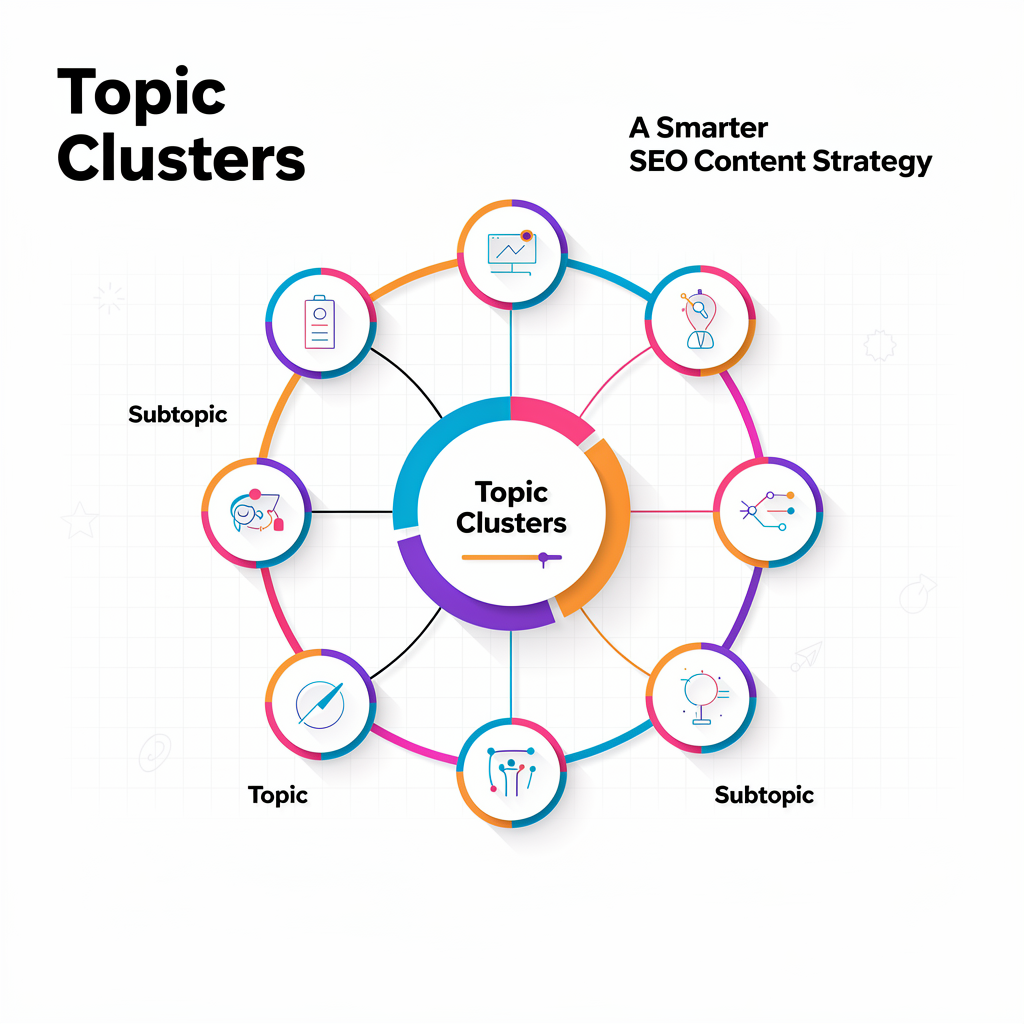
Strong SEO content is usually organized by topic clusters rather than isolated keywords. This helps search engines understand your depth on a subject and gives users a clearer path through related questions.
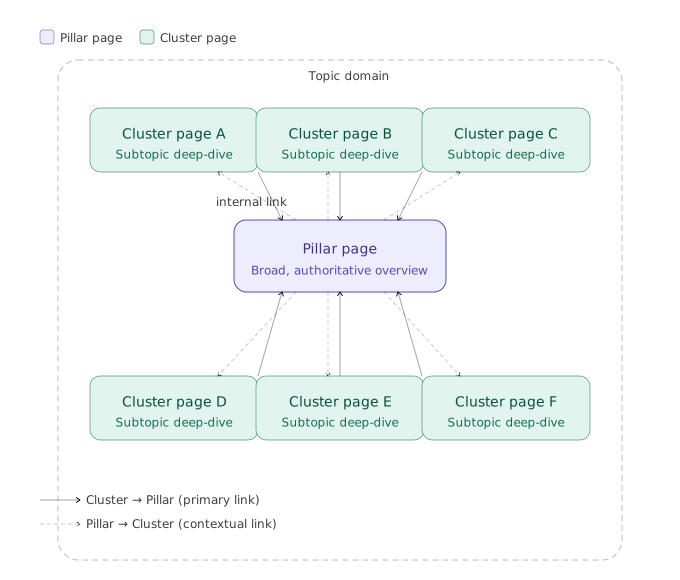
For example, if you target a topic like technical SEO, you might support it with pages on crawlability, site speed, indexing, schema markup, redirects, and site audits. Internal linking connects the cluster and strengthens relevance across the group.
Measure the right metrics
Traffic alone is not enough. A page can attract visitors and still fail to drive pipeline. You need to connect SEO performance to business outcomes.
The most useful metrics often include the following:
Metric | What It Tells You | Why It Matters |
Organic traffic | How many users arrive from search | Shows visibility growth |
Keyword rankings | Where pages appear in SERPs | Helps track topic-level progress |
Click-through rate | How often searchers click your result | Reveals title and meta effectiveness |
Conversions | Leads, signups, demos, or revenue from organic traffic | Connects SEO to business value |
Backlinks and referring domains | External authority signals | Indicates trust and link growth |
Technical errors | Crawl, index, speed, and page issues | Prevents hidden losses |
When you report SEO, tie improvements to outcomes. Better rankings are useful. Better pipeline is what matters.
What good SEO looks like in practice
A good SEO program is visible in how a site behaves. Pages load quickly. Navigation makes sense. Important pages are internally linked. Content is written for a clear audience and matches search intent. Metadata is clean. Duplicate pages are controlled. Authority grows steadily through relevant mentions and links.
It also shows up in results. You begin ranking for more non-branded searches. High-intent pages earn impressions and clicks. Organic leads improve in quality. Teams spend less time guessing what content to publish because the roadmap is tied to demand.
This does not happen overnight. But when strategy, content, and technical execution work together, SEO becomes one of the few channels that improves as you keep investing.
Mistakes to avoid early on
One frequent mistake is creating content without a purpose. Publishing many thin blog posts rarely works if none of them target meaningful intent or support a broader topic strategy.
Another is ignoring technical basics. It is easy to get excited about content while overlooking noindex tags, broken links, redirect chains, or poor Core Web Vitals. These issues can quietly suppress performance.
A third mistake is expecting immediate wins in competitive spaces. SEO rewards consistency. The better approach is to find reachable opportunities, build authority step by step, and expand from there.
The next step
SEO is the discipline of making your website more visible, useful, and trusted in search results. It blends content strategy, technical execution, and authority building to attract qualified organic traffic over time.
If you are just getting started, audit your site, identify the searches that matter most to your audience, and improve the pages that can drive real business impact. Start with the fundamentals. Build from data. Stay consistent. That is how SEO turns from a marketing tactic into a durable growth channel. Wanna learn more about other types of organic marketing? Here's more information about AI-SEO and GEO (Generative Engine Optimization). If you want to learn more about how your website appears on AI platforms and would like to use our SEO tools, you can try Keupera for free.
More in Entity SEO
Keep reading
What are the 10 best Content Strategies to Plan, Create, and Scale That Convert?
If your team is publishing regularly but results still feel uneven, the problem usually is not effort. It is strategy. Content without a clear plan often leads to traffic without conversions, rankings…
A Practical Guide to Topic Clusters for Content and SEO
Organizing content by isolated keywords is one of the fastest ways to create thin pages, confuse search engines, and stall organic growth. If your site has useful content but uneven rankings, weak int…