AI SEO: What It Is and How It Works
Bastian W.
Co-Founder of Keupera
In a hurry? You can find our AI SEO Implementation Checklist here.
Search has changed faster than most SEO playbooks. Rankings now move on intent, context, entity relationships, and user behavior, not just exact-match keywords and manual optimizations.
That is why more teams are asking a better question, not just what is AI SEO, but how to use it in a way that drives measurable growth. If you run a startup or agency, you need more than automation for automation’s sake. You need faster research, better prioritization, and a clearer path from data to traffic.
AI-powered SEO helps you do that. It can surface content gaps, spot technical issues early, score link opportunities, and help you make smarter decisions at scale. Used well, it does not replace SEO strategy. It strengthens it.
Start for free, enter a domain, scan your pages, and find opportunities in minutes.
What Is AI SEO?
Definition and quick benefit
AI SEO is the use of artificial intelligence and machine learning to improve how you research, create, optimize, and measure organic search performance. In simple terms, it means using systems that can process large amounts of SEO data, identify patterns, and recommend or automate actions that would take humans far longer to complete manually.
The biggest benefits are speed, scale, personalization, and better decisions. Instead of reviewing thousands of keywords, URLs, or backlinks by hand, you can use AI to cluster intent, prioritize fixes, generate drafts or metadata, and forecast likely outcomes. That shortens the time between finding an issue and acting on it.
For startups, that means doing more with a lean team. For agencies, it means handling larger accounts, faster audits, and more consistent execution across clients.
How AI changes traditional SEO
Traditional SEO often relied on static rules. Find a keyword, place it in the title, build a few links, and improve page speed. Those basics still matter, but search engines now interpret meaning far more intelligently.
AI changes SEO from a mostly rule-based discipline into a more probabilistic and data-driven one. Instead of asking, “Did we use the exact keyword enough times?” you ask, “Does this page fully satisfy the search intent, cover the topic semantically, and outperform competing results?”
That shift matters. AI can analyze patterns across the SERP, detect content relationships, and flag technical issues based on impact, not just existence. It helps you move from manual checklists to smarter prioritization.
Why AI SEO Matters Today
Search engines use AI too
Google and other search engines already use machine learning systems to interpret queries and rank pages. Google’s RankBrain, BERT, and MUM are well-known examples of AI helping search understand language, intent, and context more accurately.
This has direct SERP implications. A page can rank well without repeating a phrase exactly, while another page can lose visibility even if it is “keyword-optimized” in the old sense. Search engines are evaluating whether your content truly matches intent, answers related questions, and fits the broader topic.
If search engines use AI to rank results, your SEO workflow needs to keep up. That does not mean chasing algorithms. It means using better systems to understand what relevance looks like now.
User expectations: personalization and intent
Users expect search results to feel precise. They want quick answers, strong page experiences, and content that reflects what they actually mean, not just what they typed.
AI helps you align with that expectation. It can group keywords by intent, identify missing subtopics, and suggest page structures that match how users search at different stages of the journey. That often leads to better CTR, lower bounce rates, and stronger conversion paths.
For example, a SaaS buyer searching “best CRM for startups” needs comparison content, while a user searching “what is CRM pipeline automation” needs education first. AI systems can help you separate those intents instead of forcing both into one page.
Competitive advantages for content and technical SEO
The practical advantage is simple. Teams using AI SEO usually find opportunities faster and waste less time on low-impact work.
On the content side, AI can reveal topic gaps, weak semantic coverage, and cannibalization across pages. On the technical side, it can detect crawl anomalies, internal linking weaknesses, and indexing issues before they become larger traffic losses.
This improves visibility, but also execution quality. You get a tighter feedback loop between diagnosis and action.
Core Components of AI SEO
AI SEO combines several core capabilities that work together to surface the highest-impact opportunities and automate low-value work.
Content intelligence: topic modelling and semantic relevance
AI content intelligence looks beyond a single keyword. It analyzes entities, related concepts, SERP patterns, and user intent to help you build pages that cover a topic more completely.
In practice, this shows up as topic clustering, automated content briefs, semantic recommendations, and intent mapping. For example, instead of targeting ten separate near-duplicate keywords with ten thin pages, AI can show you that they belong in one stronger resource.
Technical automation: crawl, fix, and prioritize
AI-driven technical SEO tools can crawl large sites, detect issues, and rank them by likely business impact. That is more useful than a long list of warnings with no prioritization.
Examples include anomaly detection for sudden crawl drops, automated classification of 404 errors, duplicate content clustering, and recommendations for which fixes may recover the most traffic first.
Backlink and authority analysis with machine learning
Machine learning can help score backlinks and referring domains based on patterns associated with trust, relevance, and spam risk. This supports smarter outreach and cleaner link profiles.
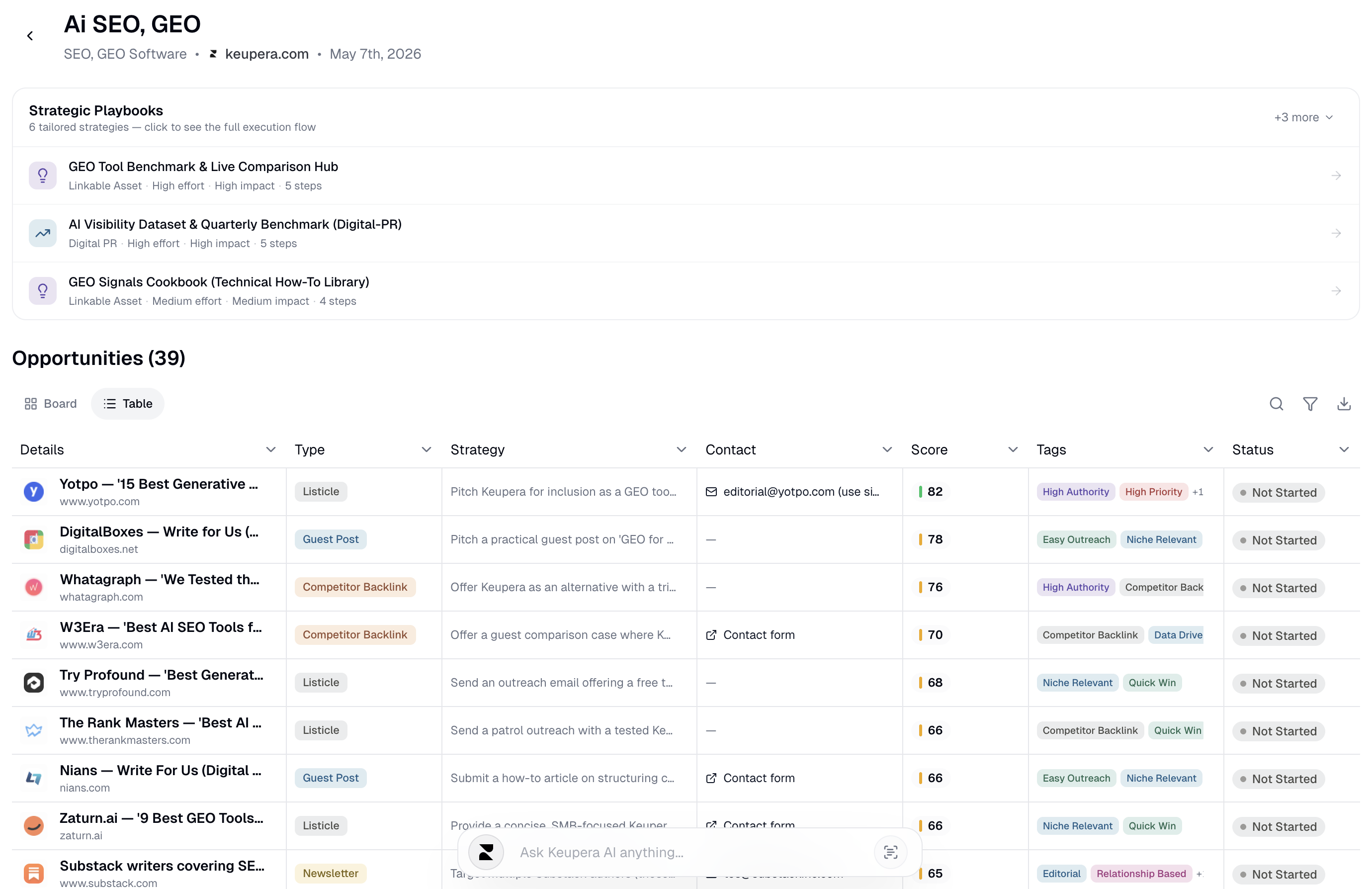
Instead of evaluating links one by one, you can use AI to estimate link quality, flag suspicious sources, and identify the kinds of domains most likely to improve Domain Authority, Page Authority, or topical authority over time.
User-behavior signals and personalization
AI SEO also uses behavioral data. That can include click patterns, dwell time proxies, engagement by page type, and paths through the site.
This does not mean chasing vanity metrics. It means learning which pages attract the wrong traffic, which titles earn stronger CTR, and where search visitors fall out of the funnel. That insight helps you tailor content and improve conversion paths.
Predictive analytics and forecasting
Predictive SEO uses historical and real-time signals to estimate future outcomes. That can include traffic forecasting, ranking volatility alerts, seasonal trend prediction, or identifying pages at risk of decline.
For startups and agencies, this is especially valuable for planning. You can model likely gains from publishing a new cluster, estimate impact from technical fixes, and allocate resources before the loss or opportunity becomes obvious in monthly reporting.
How AI SEO Works, Step by Step
AI SEO is a process that converts data into prioritized actions and continuous improvement.
Data collection and feature engineering
AI SEO starts with data. That usually includes crawl data, rankings, analytics, backlinks, server logs, SERP observations, content data, and conversion metrics.
From that raw data, systems create features, which are the signals a model can use. A feature might be page depth, title length, referring domains, indexability status, content freshness, click-through rate, or internal link count. Good features shape good outputs.
Training models and selecting algorithms
Once features are prepared, AI systems apply models to detect patterns or make predictions. Some are supervised, meaning they learn from labeled examples. Others are unsupervised, meaning they group or cluster data without predefined labels.
In SEO, supervised models might predict the probability of traffic growth after a fix. Unsupervised models might cluster keywords by intent or group similar pages with cannibalization issues. The goal is not academic complexity, the goal is usable insight.
Applying insights to content and site changes
Once the model identifies opportunities, teams act on them. That can mean rewriting titles, expanding a page’s topical coverage, improving internal links, consolidating overlapping pages, or fixing high-priority technical errors.
This is where AI SEO becomes practical. The model does not create value on its own. It creates value when the recommendations lead to better pages, cleaner site architecture, and stronger user outcomes.
Continuous learning and feedback loops
AI SEO works best as a loop, not a one-time project. You collect data, generate insights, make changes, measure results, and feed that performance back into the system.
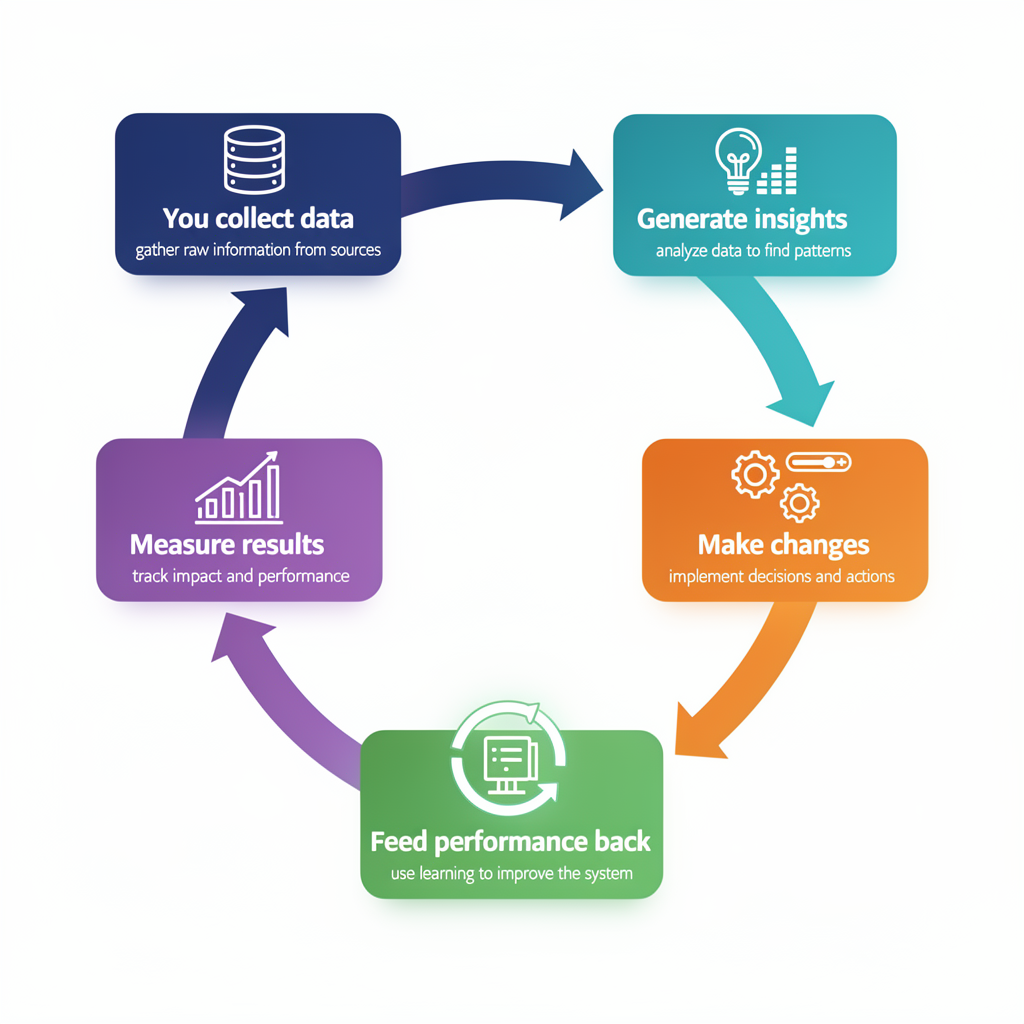
That loop improves prioritization over time. If certain title patterns improve CTR, the system can learn from them. If some fix types rarely move rankings, you can reduce their priority. The result is a more adaptive SEO program.
Practical AI SEO Tactics You Can Use Today
Use AI to discover content gaps and topic clusters
Start with your existing content and compare it against top-ranking pages and adjacent topic sets. AI tools can identify missing subtopics, unanswered questions, and weak semantic coverage.
The quickest win is clustering related keywords into one hub-and-spoke structure. This usually saves hours of manual research and increases topic coverage without creating redundant pages.
Automate title, meta, and schema generation
AI can help generate title tags, meta descriptions, and structured data at scale, especially for large sites with product, category, or location pages.
The key is to use automation as a first draft, not a final publish button. Apply templates, then review for accuracy, differentiation, and brand voice. This reduces repetitive work while keeping quality under control.
Prioritize technical fixes by estimated traffic impact
Not all technical errors are equal. An AI-assisted workflow can combine crawl findings with traffic, template, and indexation data to estimate which issues matter most.
That helps your team avoid spending a sprint fixing low-visibility warnings while a high-value section suffers from internal noindex problems or broken canonicals. The ROI is better prioritization and faster recovery.
Leverage AI for internal linking and site architecture
Internal links are one of the most underused SEO levers. AI can identify pages with authority, pages lacking contextual links, and anchor patterns that support better crawl paths and topical reinforcement.
This can improve discovery, Page Authority distribution, and user navigation. For content-heavy sites, AI-assisted internal linking often delivers meaningful gains with relatively low implementation cost.
Predict and pre-empt ranking drops
AI systems can monitor volatility across rankings, traffic, crawl behavior, and engagement to spot early warning signs. That is useful before a decline becomes visible in executive reporting.
For example, if a cluster begins losing impressions, shows rising bounce patterns, and drops in internal link support, AI can flag it for review. That gives you time to refresh, merge, or reoptimize pages before the loss deepens.
Tools and Platforms for AI SEO
Categories: content, technical SEO, link analysis, analytics
AI SEO tools generally fall into four categories. Content platforms help with topic research, briefs, optimization, and semantic analysis. Technical SEO tools focus on crawling, diagnostics, and issue prioritization. Link analysis platforms evaluate backlink quality, authority, and outreach targets. Analytics and forecasting tools model trends, segment performance, and surface anomalies.
Most teams need a mix. A startup may start with one technical platform and one content optimization tool. An agency may need a more connected stack with reporting and workflow support.
Examples of popular tools and what they excel at
Category | Representative Tools | Best For |
Content intelligence | Keupera, Clearscope, MarketMuse, Surfer, Frase | Semantic optimization, briefs, topical depth, intent coverage |
Technical SEO | Screaming Frog, Sitebulb, JetOctopus, Botify | Crawling, indexation analysis, log analysis, site issue prioritization |
Link analysis | Keupera, Ahrefs, Semrush, Moz | Backlink discovery, Spam Score review, authority metrics, competitor link gaps |
Analytics and forecasting | Google Search Console, GA4, Looker Studio, enterprise SEO platforms | Performance tracking, CTR analysis, anomaly detection, dashboards, forecasting |
There is no universal best tool. The right choice depends on your site size, internal expertise, reporting needs, and how much automation you want versus how much control you need.
Measuring Success with AI SEO
KPIs to track
You should track the same business-relevant outcomes that matter in any SEO program, with added attention to speed and efficiency. The core KPIs are organic traffic, rankings, CTR, conversions, assisted revenue, and time to fix.
Time to fix is especially important in AI SEO because automation should reduce lag between detection and action. If your tooling finds issues faster but your process does not resolve them faster, the value is limited.
A/B testing and experimentation with AI-driven changes
AI recommendations should be tested, not blindly trusted. When possible, use controlled rollouts across page groups to compare outcomes.
For example, test AI-generated title rewrites on one segment while holding another segment steady. Or apply AI-recommended internal links to one cluster first. This helps you separate genuine impact from seasonal fluctuations or unrelated ranking shifts.
Attribution and expected timelines
SEO attribution is never perfect, and AI does not change that. A title update may raise CTR in two weeks, while a cluster strategy may need three to six months to show compounding traffic gains.
A practical rule is to separate short-cycle signals from long-cycle outcomes. Indexation improvements, metadata changes, and internal linking updates can show movement in days or weeks. Authority growth, cluster expansion, and sitewide structural changes usually take longer. That framing keeps stakeholder expectations realistic.
Common Risks and How to Avoid Them
Over-automation and loss of brand voice
The most common mistake is treating AI output as finished work. That often leads to bland copy, repetitive metadata, and pages that sound interchangeable.
The fix is simple. Keep human review in the loop for strategy, messaging, and final quality control. Use AI to accelerate production, not flatten your brand.
Data biases and flawed training data
AI models reflect the quality of the data they learn from. If your source data is outdated, incomplete, or skewed toward one content type, your recommendations will be too.
Mitigate this by using diverse datasets, checking outputs against real SERP behavior, and reviewing recommendations that seem overly confident. Better inputs usually produce better SEO decisions.
Black-hat techniques and compliance with guidelines
AI can scale bad tactics just as easily as good ones. Mass-produced low-value pages, manipulative link schemes, and misleading metadata can create short-term wins and long-term damage.
Stay aligned with search engine guidelines. Focus on helpful content, honest optimization, and user value. AI should help you meet quality standards more consistently, not find shortcuts around them.
Monitoring for unexpected outcomes
Even good changes can cause side effects. Automated internal links can create clutter. Metadata generation can produce duplication. Schema automation can introduce markup errors at scale.
That is why monitoring matters. Track post-launch changes in rankings, CTR, crawl behavior, and conversions. Roll out gradually when the change affects large templates or important revenue pages.
Checklist for tool selection and data needs
Choose tools that connect to the data you already trust. At minimum, you want access to crawl data, Search Console data, analytics, backlink data, and page-level performance metrics.
Also check how well a platform supports collaboration. Agencies need client-ready reporting and workflow visibility. Startups usually need fast onboarding, clear recommendations, and lightweight implementation.
FAQ
Is AI SEO the same as SEO?
No. AI SEO is still SEO, but with smarter tools and automation layered into the workflow. The strategy remains human-led. AI improves research, prioritization, and execution.
Will AI replace SEOs?
No. It will replace some repetitive tasks, not strategic thinking. Teams still need people to set priorities, interpret results, protect brand voice, and make judgment calls.
Is AI-generated content penalized?
Not automatically. Search engines focus on quality and usefulness, not whether AI assisted the process. Low-value, inaccurate, or manipulative content is the real risk, regardless of how it was produced.
How much does AI SEO cost?
Costs vary widely. Some teams start with low-cost tools and internal workflows. Others invest in enterprise platforms, data integrations, and custom models. Start small, prove ROI, then scale.
How do you ensure accuracy and fairness?
Use strong source data, human review, controlled testing, and regular audits. Check outputs for bias, factual errors, and weak assumptions before applying changes at scale.
AI SEO is not a shortcut. It is a better operating model for modern search. When you combine machine speed with human judgment, you get faster insights, sharper prioritization, and stronger organic growth.
If you want to move from theory to action, start with one pilot. Pick one cluster, one workflow, or one section of the site. Measure the result, learn from it, and scale what works.
More in AI & GEO
Keep reading

Entity SEO: How AI Search Thinks in Topics
Search has changed faster in the last two years than in the previous ten. If your SEO strategy still revolves around single keywords, exact-match phrases, and isolated pages, you are already competing…

Predictive SEO: Using AI to Forecast Ranking Opportunities
Find high-potential keywords sooner, prioritize content with more confidence, and reduce wasted SEO effort. If your SEO roadmap still depends on static keyword lists and last quarter’s rankings, you a…

How AI and Google's Ranking Algorithm Work Together
AI-driven systems are changing how search engines interpret queries and content. This guide explains what that means for your SEO strategy, how to use AI responsibly, and where to focus effort to win …