What are the 10 best Content Strategies to Plan, Create, and Scale That Convert?
Bastian W.
Co-Founder of Keupera
If your team is publishing regularly but results still feel uneven, the problem usually is not effort. It is strategy. Content without a clear plan often leads to traffic without conversions, rankings without revenue, or production without momentum.
The best content strategies do three things at once. They help you rank higher in the SERP, attract the right audience, and move that audience toward action. For startups and agencies, that means more qualified traffic, stronger Backlinks, better conversion rates, and a clearer path from content to pipeline.
You can use this guide to find the right content strategy for your stage, build a repeatable system, and scale output without losing quality.
Start for free or get a demo to see how your content performs across Traffic, Conversions, Retention, and ROI.
Microcopy: Expect a clear view of what content drives rankings, leads, and revenue, plus the gaps that are slowing growth.
Why Content Strategy Matters
A content strategy is the plan behind what you publish, who it is for, why it matters, and how it supports business goals. In plain terms, it connects audience needs to measurable outcomes. It is not just a blog calendar, it is the operating system behind your content.
That distinction matters. Random publishing can create activity, but it rarely creates compounding results. A real strategy helps you target search intent, build topical authority, improve domain authority through stronger backlinks, and earn more visibility in the SERP.
For most startups and agencies, the core outcomes are simple. You want more organic traffic, more qualified leads, more revenue influence, and better retention. Content supports all four when each asset has a job to do.
A high-performing strategy also makes measurement easier. Instead of guessing what worked, you can track rankings, conversion rate, assisted revenue, link growth, and even signals like Spam Score to understand whether your content engine is getting stronger or weaker over time.
Choose the Right Content Strategy for Your Stage
The right strategy depends on where your business is now. A seed-stage startup needs visibility and education. A mature SaaS brand may need stronger conversion assets and retention content. The same content type will not solve every growth problem.

Awareness: SEO-Driven Educational Content
At the awareness stage, your audience is searching for answers. They are not ready for a sales conversation yet. This is where how-to guides, glossaries, templates, and educational blog posts win.
The goal here is reach. You want to rank for relevant long-tail keywords, capture informational intent, and introduce your brand early. A startup selling analytics software might publish a guide on attribution models before it ever asks for a demo.
Consideration: Thought Leadership and Comparisons
Once prospects understand the problem, they start evaluating approaches. This is where comparison pages, expert commentary, webinars, and framework-based articles work well.
The goal is trust. You want to show depth, point of view, and category knowledge. Agencies often do this effectively with opinion-led content on channels, budgets, or testing methods.
Decision: Case Studies, Demos, and Pricing Content
At the decision stage, content should reduce friction. Prospects need proof, clarity, and confidence. Case studies, product demos, implementation guides, ROI calculators, and pricing pages are the most effective assets here.
The goal is conversion. This content should answer objections quickly and show outcomes in concrete terms, such as pipeline growth, CAC reduction, or faster time to value.
Retention: Newsletters, Product Updates, and Customer Education
Retention content is often overlooked, but it is where content creates durable revenue impact. Customer newsletters, onboarding content, feature education, and knowledge base updates help users stay engaged and expand usage.
The goal is adoption and loyalty. Good retention content lowers churn, improves product understanding, and creates opportunities for expansion revenue.
Core Elements of a High-Performing Content Strategy
A strong strategy is built from a few non-negotiables. When these pieces are missing, even good content underperforms.
Audience Research and Intent Mapping
Start with the audience, not the topic. You need to know who you are targeting, what they are trying to solve, and what type of content matches that need. A founder searching for “best CRM for startups” has different intent than a marketer searching for “how to improve lead routing.”
Intent mapping helps you align content to real buyer behavior, and it prevents one of the most common mistakes in SEO, creating content that ranks but never converts.
Keyword Strategy and Topic Clusters
Keywords still matter, but isolated keyword targeting is not enough. The better approach is to build topic clusters around a pillar subject. That structure signals relevance, strengthens internal linking, and helps search engines understand your expertise.
Long-tail keywords are especially useful for startups and agencies because they are often easier to rank for and closer to conversion intent. Instead of chasing a broad term like “content marketing,” target narrower, higher-intent phrases around use case, industry, or stage.
Content Pillars and Editorial Focus
Your content pillars are the flagship themes your brand wants to own. These should sit at the intersection of audience need, business value, and SEO opportunity. For example, an SEO agency might build pillars around technical SEO, link building, local SEO, and content operations. This focus keeps production aligned and prevents your team from drifting into disconnected topics.
Content Calendar and Prioritization
A calendar is useful only if it reflects priorities. Publishing weekly does not help if the topics are low intent or hard to distribute. Your calendar should account for funnel stage, keyword opportunity, business goals, and production capacity. Cadence matters, but consistency matters more. A sustainable schedule beats a burst-and-burn model every time.
Distribution Plan
Publishing is the midpoint, not the finish line. Every content asset needs a distribution path across organic search, email, social, communities, partnerships, and paid amplification. The best teams build distribution into the brief, not as an afterthought. That is how a single piece becomes a multi-channel growth asset.
Measurement and Dashboards
Track a mix of leading and lagging indicators. The essentials are organic traffic, conversion rate, SERP positions, backlinks, assisted pipeline, and revenue attributed. If you are actively building links, monitor Spam Score and link quality too.
Use dashboards to tie performance to content type, funnel stage, and topic cluster. That makes it easier to spot what is driving outcomes and what needs a refresh.

1. Topic-Cluster SEO
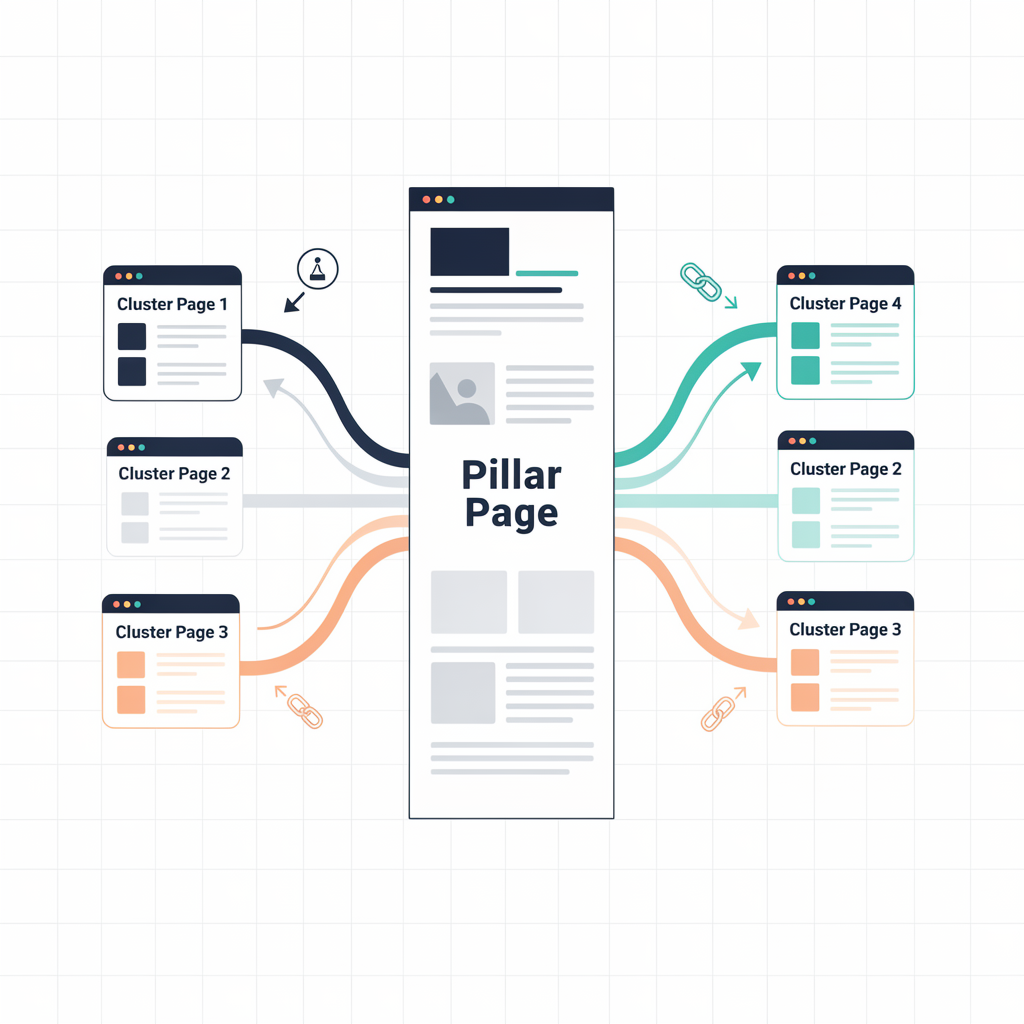
Topic-cluster SEO is one of the best content strategies for building authority over time. You create a comprehensive pillar page around a broad subject, then support it with related cluster content that targets narrower queries and links back to the main page.
This approach works especially well for startups and agencies because it improves internal linking, reinforces topical relevance, and helps multiple pages rank together instead of competing with one another. A strong example of this model can be seen across educational SEO resources from brands like Ahrefs and Semrush.
A simple way to start is to choose one high-value topic, map 8 to 12 related subtopics, then build internal links deliberately. Track organic traffic to the cluster as your primary metric.
Key features include an authoritative pillar page supported by related articles, deliberate internal linking to create clear page relationships, and the buildup of topical authority that signals relevance to search engines. The main trade-offs are the upfront planning and the need for ongoing updates to keep the cluster relevant.
Pros include improved SEO efficiency because multiple pages support one theme, easier planning since content has a clear structure, and stronger user journeys through better internal navigation. Cons are predictable: it takes planning before publishing starts, and it requires maintenance.
2. Data-Driven Original Research and Reports
Original research stands out because it creates something other brands cannot copy easily. Instead of summarizing what already exists, publish benchmark data, survey findings, usage trends, or performance analysis that others want to reference.
This strategy is especially effective for earning backlinks, media mentions, and thought leadership credibility. If your agency has campaign data or your SaaS product has user behavior insights, you already have raw material. Brands like HubSpot and Content Marketing Institute have used this model for years to generate both authority and demand.
Start with one focused research question, gather clean data, and package the insights into a report, a blog post, and a visual summary. Track referring domains as the key performance metric. Key features include unique insights from proprietary data, strong link potential from publishers and bloggers, and repurposing value across blogs, webinars, and social posts. Costs are mainly internal time for research design and promotion, plus any survey or design outsourcing.
3. Evergreen How-To Guides and Cornerstone Content
Evergreen content keeps working long after publication. Good how-to guides answer stable questions in your market and continue attracting traffic month after month with periodic updates.
This is often the best place to begin if you are asking what strong content strategies look like for a new site. It gives you durable assets that can rank, educate, and convert with relatively low maintenance. Backlinko built much of its visibility on this model by publishing detailed, practical guides.
To make evergreen content effective, focus on problems that persist, write clearly, and refresh the page when SERP expectations change. Track non-branded organic sessions over time. Pros are that evergreen content compounds with updates, supports awareness and consideration, and creates a strong base for internal linking. Cons include competition in many niches and the need to refresh content periodically to protect rankings.
4. Case Studies and Customer Success Stories
Case studies turn abstract claims into proof. They show what changed, how it changed, and why your offer made the difference. For decision-stage buyers, this often matters more than generic brand messaging.
The best case studies focus on a specific challenge, clear execution, and measurable outcome. Numbers matter. If a startup increased trial-to-paid conversion by 28% or an agency lifted organic traffic by 140%, say that plainly. HubSpot and many SaaS brands use case studies to shorten sales cycles and support bottom-funnel pages.
Use a simple structure: challenge, solution, result. Track conversion rate from case study pages as your main metric. Key features include high buyer trust through real outcomes, bottom-funnel relevance for decision-stage traffic, and sales enablement value beyond SEO.
5. Product-Led Content and In-App Education
Product-led content connects education directly to usage. It includes feature tutorials, workflow guides, onboarding articles, and in-app help that teaches users how to get value faster.
This strategy is ideal for SaaS companies because it supports both acquisition and retention. A well-written article on a specific workflow can rank in search, bring in qualified traffic, and then guide users inside the product once they sign up. ConvertKit is a strong example of content that educates while reinforcing product use cases.
Start with high-friction product moments and create content around setup, activation, and common blockers. Track activation rate or feature adoption as the key metric. Benefits include improved retention as well as acquisition, better alignment between content and product value, and support for support and success teams. Downsides are the risk of content becoming too product-heavy if not balanced with search intent, and the need for close collaboration with product and customer teams.
6. Video-First Content
Video-first content helps you reach audiences that may never read a 2,000-word blog post. It performs especially well on social channels, nurture sequences, and product education flows.
For agencies and startups, video is also efficient when used as a source asset. One webinar, walkthrough, or expert interview can become a blog article, email sequence, short clips, and social posts. YouTube remains the clearest example of how video content can compound when tied to search behavior.
Begin with one repeatable format, such as weekly educational videos or product explainers. Then repurpose systematically. Track watch time or video-assisted conversions. Video offers high engagement across channels, strong repurposing potential, and usefulness for both education and trust-building.
7. Content Repurposing
Repurposing turns one strong asset into many useful formats. A long-form guide can become a LinkedIn carousel, newsletter section, webinar topic, short video script, and sales enablement one-pager.
This strategy increases output without forcing your team to start from zero every time. It is especially effective for lean teams that need consistency across multiple channels. Buffer has long demonstrated how one idea can be adapted into several audience-friendly formats.
The key is to repurpose with intent, not just copy and paste. Match the format to the platform and the audience behavior there. Track content production efficiency, such as assets created per source piece. Repurposing extends reach without proportional effort, improves consistency across channels, and supports smaller teams with limited bandwidth. But weak source content limits results, and editorial discipline is required to avoid repetition.
8. Expert Roundups and Guest Contributions
Expert-led content borrows authority in a legitimate way. When credible practitioners contribute insight, your content becomes more useful, more shareable, and often more linkable.
This works well when entering a new topic cluster or trying to build brand credibility quickly. It is also a practical relationship-building strategy. Search Engine Land and similar publications regularly rely on expert contributions to increase trust and depth.
Choose a tightly defined question, invite thoughtful contributors, and edit for quality and consistency. Track shares, mentions, or earned links as your key metric. This approach can be low-cost if contributors participate for exposure; the main investment is outreach, editing, and coordination.
9. Community-Driven Content and UGC
Community-driven content draws from customer questions, user stories, forum discussions, reviews, and user-generated content. It works because it reflects the real language, objections, and needs of your audience.
This strategy is powerful for both SEO and conversion. Community phrasing often reveals long-tail keyword opportunities, while real user input increases trust. SaaS brands with active communities often use this content to shape help docs, newsletters, and social proof assets.
Mine support tickets, Slack groups, comment threads, and customer interviews for recurring themes. Then turn those insights into useful content. Track engagement rate or assisted conversions.
10. Paid Amplification and Content Syndication
Organic distribution takes time. Paid amplification helps strong content reach the right audience faster, while syndication extends visibility through third-party publications or partner channels.
This strategy works best when you already know a piece performs well. Paid should accelerate winners, not rescue weak content. Agencies often use paid social or native promotion to push research reports, webinars, or high-converting guides to precise audience segments.
Start by promoting assets with proven engagement or conversion signals. Test audience, placement, and message. Track cost per qualified lead or assisted pipeline. Paid amplifies reach, speeds distribution, and validates content-market fit when executed with attribution clarity.
How to Prioritize Content Ideas
Most teams do not struggle with ideas. They struggle with choosing the right ones. That is why prioritization matters more than ideation volume.
Use an Impact vs. Effort Matrix
Score each content idea on two dimensions: likely business impact and production effort. High-impact, low-effort topics should move first. Low-impact, high-effort topics should usually wait. This exercise prevents your calendar from being dominated by interesting but low-value projects.
Add Keyword Opportunity Scoring
Layer SEO into the decision with a simple model. Score each topic from 1 to 5 on search volume, intent strength, ranking difficulty, and business relevance, then total the score. A topic with moderate volume but high intent and strong revenue relevance often beats a higher-volume keyword with weak conversion potential.
Factor in Revenue Proximity
Not all content needs to convert directly, but some should sit closer to revenue. If your pipeline is thin, decision-stage content may deserve priority over broad top-funnel publishing. The strongest content portfolios balance quick wins with long-term authority plays.
Plan, Create, and Scale: Workflow and Roles
Content scales when responsibility is clear. At minimum, you need ownership across strategy, writing, editing, SEO, design, and analytics. In a small team, one person may cover multiple functions. In a larger organization, each role becomes more specialized.
The workflow should be predictable. Start with a brief that defines audience, search intent, target keyword, CTA, internal links, and distribution plan. Move to drafting, editing, optimization, design, approval, publishing, and promotion, then review performance and refresh as needed.
Small teams should focus on a lightweight process they can sustain every week. Enterprise teams need stronger governance, version control, and content operations to avoid duplication and bottlenecks. Useful templates include a content brief, an on-page SEO checklist, and a distribution plan. Create those three documents first before increasing output.
Technical SEO and Content Health Checks
Great content still needs technical support. If search engines cannot crawl, index, or properly interpret your pages, content quality alone will not carry performance.
Crawlability and Indexation
Check your robots.txt file, XML sitemap, canonical tags, and indexation status in Google Search Console. If a high-value page is blocked, canonicalized incorrectly, or missing from the sitemap, fix that first.
On-Page Structure
Review page titles, meta descriptions, H1 and H2 structure, and internal links. Clean structure improves clarity for both users and search engines.
Performance and Core Web Vitals
Slow pages lose attention and hurt conversion. Monitor load performance, layout stability, and interactivity. Content that ranks but frustrates users will underperform commercially.
Content Decay and Refresh
Content decays when rankings slip, examples age, links break, or search intent changes. Review older pages for 404 errors, outdated sections, thin content, and declining clicks. A focused refresh often delivers faster gains than net-new publishing.
Backlinks and Authority
Monitor link growth, referring domains, anchor distribution, and Spam Score. Not every link helps, and poor-quality links can dilute trust signals and muddy reporting.
Measuring Success: KPIs and Reporting
If you cannot tie content to outcomes, scaling becomes hard to justify. Reporting should connect content activity to business performance, not just pageviews.
Primary KPIs include organic traffic, conversions, leads generated, and revenue attributed. These show whether content is creating measurable business impact.
Secondary KPIs include time on page, bounce rate, backlinks, and SERP rankings. These are helpful diagnostics that should support the primary metrics, not replace them.
Attribution matters too. First-touch attribution shows what introduced the lead, last-touch shows what closed the action, and assisted attribution reveals the content that influenced the journey in between. For content teams, assisted impact is often where the real value appears.
Report weekly for tactical metrics, monthly for performance trends, and quarterly for strategic decisions. Dashboards in GA4, Search Console, Looker Studio, or your BI tool are usually enough for most teams.
Common Pitfalls and How to Avoid Them
One common mistake is chasing keyword volume over intent. High-volume terms can look attractive, but if they do not align with your offer or buyer stage, they create noise instead of pipeline. Prioritize relevance and conversion potential first.
Another mistake is publishing without a distribution plan. Even strong content needs help getting seen. Build email, social, internal linking, and outreach into the workflow before the draft is finalized.
Teams also neglect technical SEO more often than they admit. If page speed is poor, canonical tags are messy, or content decay is unchecked, performance erodes quietly. Run regular audits and fix issues before expanding output.
The last major pitfall is failing to measure revenue impact. Content should not live in a reporting silo. Connect it to demos, influenced pipeline, retention, and expansion wherever possible.
Quick 30/90/365 Day Content Plan Template
Timeframe | Focus | Actions |
30 Days | Quick wins and audits | Audit existing content, fix indexation and 404 issues, identify 10 high-intent keywords, refresh 3 underperforming pages, set up reporting dashboards |
90 Days | Pillars and early scale | Publish 1 to 2 pillar pages, build supporting cluster content, launch a case study, create a repeatable brief template, define distribution by channel |
365 Days | Authority and compounding growth | Expand topic clusters, invest in original research, build a refresh cadence, strengthen link acquisition, connect content reporting to pipeline and retention |
Start tracking results immediately. Early measurement helps you double down on what works before waste compounds.
FAQs
What is the most effective content strategy for startups?
For most startups, the most effective strategy combines SEO-driven educational content, one or two topic clusters, and bottom-funnel proof assets like case studies or comparison pages. That mix builds traffic while still supporting conversions.
How often should I update content?
Review key pages every quarter and refresh high-value assets whenever rankings drop, search intent changes, or product information becomes outdated. Evergreen pages usually benefit from scheduled updates at least twice a year.
How do I measure ROI from content?
Measure content ROI by connecting organic sessions and conversions to leads, pipeline, revenue, or retention outcomes. Assisted attribution is especially useful because content often influences deals before the final conversion touchpoint.
What tools do I need for content strategy?
Most teams need a keyword research tool, analytics platform, search performance data, a content calendar, and a collaboration system. Common choices include Google Search Console, GA4, Ahrefs, Semrush, and editorial workflow tools like Notion or Asana.
Further Reading and Resources
If you want to operationalize this quickly, start with three assets: a content brief template, a refresh checklist, and a prioritization scorecard. Those tools make strategy usable, not theoretical.
For trusted industry resources, review content and SEO guidance from Ahrefs, Moz, Semrush, HubSpot, Search Engine Land, and Content Marketing Institute. They offer practical research, benchmarks, and examples you can adapt to your own workflow.
The answer to what strong content strategies look like is not a single tactic, it is the system behind the tactics. When you align content to audience intent, funnel stage, SEO opportunity, and business outcomes, content stops being a publishing task and starts becoming a growth engine.
Read more about SEO and why it still matters, or dive deeper into topic clustering if you want to learn more about these topics.
More in Entity SEO
Keep reading
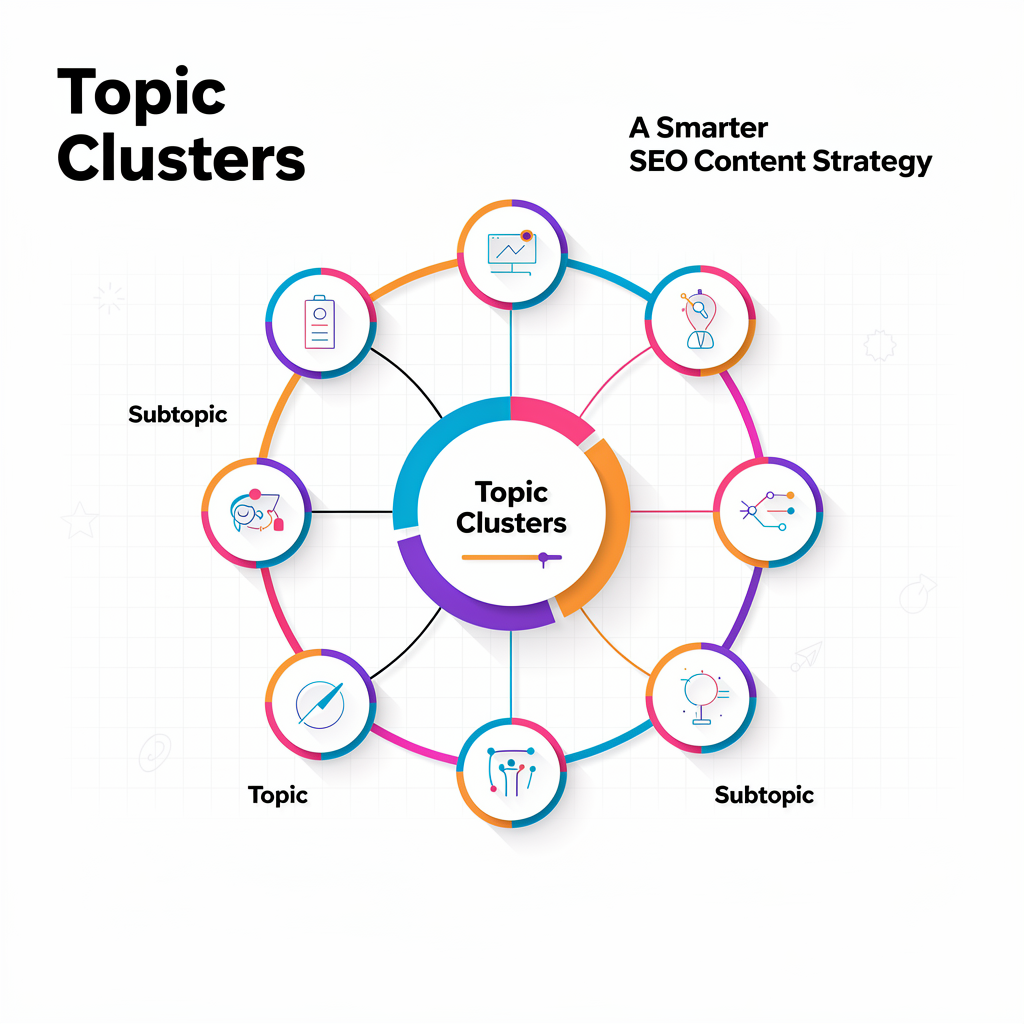
A Practical Guide to Topic Clusters for Content and SEO
Organizing content by isolated keywords is one of the fastest ways to create thin pages, confuse search engines, and stall organic growth. If your site has useful content but uneven rankings, weak int…

What SEO Is and Why It Still Matters
In a hurry? You can find our SEO Checklist . If your website is hard to find, it might as well not exist. That is the practical reason SEO still matters to startups, agencies, and growth teams tryin…