
Long-Form Content for a GEO Content Strategy
Bastian W.
Co-Founder of Keupera
If your content is still built only for blue links on a traditional SERP, you are already behind. Search behavior has shifted. Buyers now discover brands through AI summaries, local search packs, maps, review platforms, and answer engines that pull context from multiple sources at once.
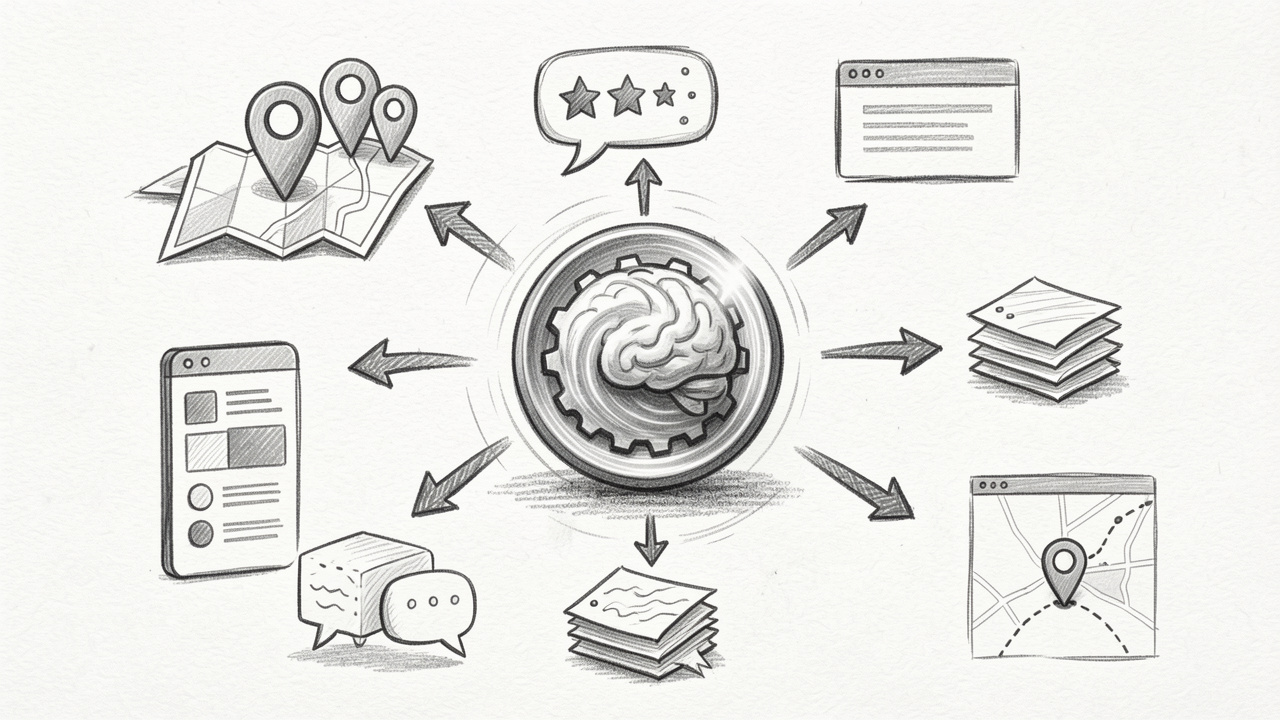
That is where a long-form content strategy for GEO becomes valuable. In this context, GEO is best understood as Generative Engine Optimization, shaped by geographic relevance when local intent matters. It is the practice of creating content that helps your brand appear in AI-generated answers, local discovery experiences, and intent-rich search journeys, not just in classic rankings.
For startups and agencies, this creates a new opportunity. Well-structured long-form content can do more than rank for keywords. It can feed entity signals, support local relevance, improve topical authority, and give generative systems the depth they need to cite, summarize, and trust your brand.
What Is a Long-Form Content Strategy for GEO?
Long-form content for GEO is not simply a longer blog post. It is deep, structured content designed to help search engines and generative systems understand who you are, what you offer, where you are relevant, and why your information is credible.
Traditional SEO often focused on matching search queries and winning page-level rankings. GEO expands that lens. Your content now needs to support machine interpretation. That means stronger context, clearer entities, local relevance, source consistency, and answers that can be extracted cleanly into AI overviews or conversational results.
For example, a standard 700-word service page may mention a city name and a few keywords. A long-form GEO asset goes much further. It explains the service in detail, defines use cases, addresses location-specific concerns, references adjacent topics, answers common questions, and connects the page to a broader content cluster. This gives systems more evidence to work with.
That depth matters because generative engines tend to reward content that is comprehensive, organized, and attributable. If your page only skims the surface, it may still rank in some cases, but it is less likely to become a source for synthesized answers. Long-form content increases your odds of being understood, selected, and surfaced.
GEO vs Traditional SEO
SEO and GEO are closely related, but they are not identical. SEO helps you rank. GEO helps you become referenceable.
In practical terms, SEO asks whether your page matches intent and earns authority signals such as Backlinks, internal links, and on-page relevance. GEO asks whether your content can be parsed, trusted, summarized, and cited by systems that generate answers from multiple sources.
That distinction is important for agencies and startup teams. If you only optimize title tags and target terms, you may miss the broader signals that influence visibility in AI-mediated discovery. If you build pages that are rich in context and easy to interpret, you improve both classic SEO performance and your GEO footprint.
Why Long-Form Content Fits GEO So Well
Generative systems need substance. They look for definitions, relationships, examples, comparisons, and supporting details. Long-form content naturally gives you room to include those elements without forcing unnatural keyword stuffing.
It also helps you cover layered intent. A person searching for a local SaaS implementation partner, for example, may want pricing context, industry examples, onboarding details, integrations, geographic availability, and proof of results. A short page may answer one of those. A strong long-form page can answer all of them in a coherent format.
This is why long-form content often becomes the backbone of a GEO content strategy. It creates a durable asset that supports search visibility, AI discoverability, and conversion at the same time.
Key Aspects of Long-Form Content in a GEO Strategy
A successful GEO strategy is not about writing more words for the sake of volume. It is about adding useful depth with clear structure. The strongest pages combine editorial quality with search clarity and local relevance.
Topical Depth and Entity Coverage
Generative engines work better when they can identify the entities on a page and understand how they relate. Your long-form content should clearly define the core topic, supporting subtopics, brand context, services, locations, and audience problems.
If you are writing for a startup or agency audience, think in layers. Start with the main concept. Then connect it to execution, tools, outcomes, common mistakes, and examples. This builds semantic richness. It also reduces ambiguity, which is critical for AI-driven systems.
A useful test is simple. If someone removed your headline, would the rest of the content still make it obvious what the page is about, who it helps, and in what context it applies? If not, your entity signals are probably too thin.
Local and Geographic Relevance
The geographic part of GEO becomes important when user intent has a location layer. This may be explicit, such as “B2B SEO agency in Austin,” or implicit, such as searches for services, providers, events, regulations, or market conditions tied to a place.
Long-form content helps you express this relevance naturally. Instead of repeating city modifiers, you can discuss region-specific needs, customer scenarios, local market dynamics, compliance issues, delivery constraints, or service coverage areas. That creates authentic location context, which is far stronger than shallow localization.
This is especially useful for agencies with multiple service areas. Rather than publishing dozens of thin city pages, you can build robust regional guides or service pages that explain meaningful differences by market. That approach is better for users and usually stronger for long-term search performance.
Structure That Machines Can Parse
Formatting matters more than many teams realize. Long-form GEO content should be easy for both humans and machines to scan. Clear headings, descriptive subheadings, concise paragraphs, comparison tables, and direct answers improve extraction and comprehension.
When a generative engine scans your page, it looks for usable segments. If your page is one long wall of text, it becomes harder to identify the best answer block. If your content is broken into crisp sections with explicit purpose, you improve the odds of being quoted or summarized accurately.
This does not mean writing robotic copy. It means combining natural prose with strong information architecture. Good structure is not only a readability win. It is a discoverability win.
Authority Signals and Trust
Long-form content gives you space to demonstrate expertise. That matters because generative systems and search engines both look for signals of reliability. Strong pages often include clear definitions, realistic examples, factual consistency, and alignment with the rest of the site.
Trust also comes from off-page factors such as Backlinks, branded mentions, and citation consistency. But on-page depth still matters because it gives those trust signals somewhere meaningful to land. A high Domain Authority site with vague content may still underperform a more focused site with clearer expertise on a specific topic.
For agencies, this is where thought leadership can become a true acquisition asset. A detailed long-form guide that answers industry questions better than anyone else can attract links, support sales conversations, and strengthen your visibility in both SERPs and AI-generated responses.
Search Intent Coverage
Most weak content fails because it answers only one version of the query. Long-form GEO content should cover the surrounding questions too. That means informational intent, evaluative intent, local intent, and action-oriented intent all need room on the page when appropriate.
A startup founder searching for content strategy support might begin with education. Minutes later, the same person wants vendor criteria, pricing expectations, and examples. A comprehensive page can serve that full path.
This improves dwell time, internal navigation, and conversion potential. It also makes your page more useful to systems that want to assemble a fuller answer from a single credible source.
Freshness and Maintainability
Long-form content is not “publish once and forget.” GEO depends on accuracy. If your content covers market realities, local specifics, product details, or process guidance, it needs regular review.
That does not mean constant rewriting. It means updating what matters: examples, statistics, screenshots, offers, coverage details, and internal links. A well-maintained long-form asset often compounds in value because it keeps collecting authority over time while staying current enough to remain trustworthy.
How to Build Long-Form Content for GEO
Execution matters. Many teams understand the theory but struggle to turn it into a repeatable workflow. The key is to build pages that satisfy users first while deliberately improving machine readability and location relevance.
Start With a Real Search Journey
Do not start with a keyword spreadsheet alone. Start with the user journey. Ask what your audience is trying to solve, what follow-up questions they have, and whether geography changes the answer.
For example, a startup looking for demand generation support may ask broad questions first. Then they narrow by industry, budget, region, and execution model. Your content should reflect that progression. The best long-form pages feel like they anticipated the next question before the visitor had to search again.
This is where search intent mapping becomes more useful than raw keyword volume. Keywords matter, but intent sequencing is what turns a page into a real discovery asset.
Build Topic Clusters Around Core Pages
Long-form GEO content works best when it is connected to a broader cluster. A core pillar page can target the main theme, while supporting pages go deeper on subtopics, industries, locations, or use cases.
This creates a stronger internal linking system and helps search engines understand topical relationships. It also improves crawl paths and gives generative systems more corroborating material from the same domain.
Here is a simple way to think about it.
Content Layer | Purpose | Example |
Pillar Page | Broad authority asset | Long-form guide to GEO content strategy |
Supporting Page | Subtopic depth | AI search visibility for SaaS brands |
Location Page | Geographic relevance | SEO and GEO strategy for startups in Chicago |
Use Case Page | Commercial intent | GEO content strategy for B2B lead generation |
FAQ or Glossary Page | Definition support | What is Generative Engine Optimization? |
The cluster model also helps avoid duplication. Instead of forcing every detail into one page, you create a central hub with relevant spokes.
Write for Extraction, Not Just Ranking
If you want your content to appear in AI summaries or answer experiences, write sections that can stand alone. A good paragraph often starts with a direct answer, then adds context, nuance, and a practical example.
This is different from old-school copy that tries to bury the answer to increase time on page. Generative systems reward clarity. Users do too.
For instance, if you define a concept, do it in the first sentence of the section. If you compare two approaches, make the difference obvious early. If you explain a process, keep each phase distinct. This makes your content easier to quote, summarize, and trust.
Use Original Insight
Long-form content becomes much stronger when it adds something beyond generic summaries. That could be a clear framework, a tested workflow, a client-side pattern, a market observation, or a realistic trade-off analysis.
Startups and agencies have an advantage here because they sit close to execution. You can translate what you see in campaigns, pitches, audits, and client questions into content that feels grounded. That kind of specificity often outperforms broader but thinner content from larger publishers.
Originality does not require a major research study. It requires a point of view that is useful and defensible.
Support Conversion Without Breaking Trust
A GEO strategy should drive business outcomes, not just impressions. Still, the page cannot read like a sales pitch disguised as education. The strongest long-form content teaches first, proves credibility second, and invites action naturally.
That might mean a soft CTA after a strategic section, a demo invitation near solution-oriented content, or internal links to service pages where the user is ready to evaluate options. The transition should feel earned.
This is especially important for agencies. Buyers often use educational content to pre-qualify partners. If your page is genuinely helpful, it becomes part of the sales process before a call is ever booked.
How to Get Started With a Long-Form GEO Content Strategy
Most teams do not need a massive overhaul to begin. They need a focused starting point and a repeatable process. The fastest path is to improve your highest-value topics first.
Audit What You Already Have
Before creating new assets, review your current content. Look for pages that already rank, generate leads, or cover commercially important topics. Then check whether they are thin, outdated, poorly structured, or too narrow for modern search behavior.
In many cases, your best GEO opportunity is not a net-new post. It is an expansion of an existing page into a more authoritative, more structured long-form asset.
Pay attention to content that has impressions but weak click-through rate, or pages that rank in the middle of page one and stall. These often have enough baseline relevance to benefit quickly from deeper coverage and stronger formatting.
Prioritize Topics With Layered Intent
Pick topics where users need more than a quick answer. These are ideal for long-form treatment because they naturally combine education, evaluation, and action.
Good examples include service selection, platform comparisons, strategic planning, implementation guides, regional market considerations, and category explainers tied to business decisions. These topics also tend to produce stronger conversion intent than purely informational posts.
If you are an agency, start where sales and search overlap. If you are a startup, start where category education and product discovery overlap.
Create a Practical Content Brief
A strong brief keeps long-form content from becoming bloated. Define the audience, primary intent, secondary intents, entity targets, local angles, conversion goal, and internal links before writing begins.
You should also decide what the page must do. Should it educate a buyer, support a location strategy, earn links, capture demo demand, or anchor a content cluster? Ideally it does more than one, but one purpose should lead.
A focused brief saves editing time and produces cleaner content. It also helps agencies scale quality across writers and accounts.
Publish With Supporting Signals
The page itself is only part of the system. Once published, support it with internal links, relevant metadata, schema where appropriate, and off-page promotion if the asset is link-worthy.
You should also align related profiles and citations when local relevance matters. If your content speaks to a region or service area, your broader digital footprint should reinforce the same story. Mixed signals reduce confidence. Consistent signals strengthen it.
Measure the Right Outcomes
Do not judge GEO content only by classic rank tracking. Rankings still matter, but they are no longer the full picture. You should monitor visibility across branded queries, non-branded topic queries, assisted conversions, engagement depth, and the appearance of your content in AI-generated summaries where tracking is possible.
Use qualitative review too. Search your key topics manually. Check what kinds of sources are being surfaced. Look at how answer engines summarize the subject. Then refine your content so it is easier to interpret and harder to overlook.
A simple starting scorecard can help.
Metric | What It Tells You | Why It Matters for GEO |
Organic Impressions | Topic visibility | Shows whether search engines connect you to the query space |
Click-Through Rate | Snippet appeal and intent match | Indicates whether your positioning is compelling |
Engaged Sessions | Content usefulness | Suggests the page satisfies deeper intent |
Conversions | Business impact | Confirms the asset supports pipeline, not just traffic |
Referring Domains | External trust | Strengthens authority and citation potential |
AI/Answer Presence | Emerging visibility | Indicates whether content is being surfaced beyond classic SERPs |
Common Mistakes to Avoid
A frequent mistake is confusing long-form with padded content. More words do not create more value. If a section does not improve clarity, trust, or intent coverage, it should not be there.
Another problem is weak structure. Many pages contain useful information but hide it in generic headings and oversized paragraphs. That hurts both readability and extractability. Strong content needs a clear path.
Teams also over-localize in the wrong way. Repeating city names across thin variations is rarely a durable strategy. Real local relevance comes from specificity, not repetition.
Finally, many brands fail to update winning pages. A once-strong guide can decay quietly. Competitors improve. Search behavior shifts. Product realities change. GEO content is an asset, but only if it stays accurate and useful.
Conclusion
A long-form content strategy for GEO helps your brand compete in a search environment that is no longer limited to ten blue links. It gives generative systems more context, users more value, and your business more chances to be discovered at the right moment.
For startups and agencies, the opportunity is practical. Build fewer thin pages. Create stronger core assets. Add topical depth, geographic relevance, and machine-friendly structure. Then connect those pages to a smart internal ecosystem and keep them current.
Your next step is simple. Audit one high-value page, expand it into a true long-form resource, and optimize it for both human intent and generative discovery. That is often the fastest way to turn content into a stronger GEO advantage.
Learn more about GEO and how it differs from traditional SEO and AI SEO.
More in AI & GEO
Keep reading

How AI and Google's Ranking Algorithm Work Together
AI-driven systems are changing how search engines interpret queries and content. This guide explains what that means for your SEO strategy, how to use AI responsibly, and where to focus effort to win …

How AI Interprets Search Intent
Search visibility is no longer just about matching keywords. It is about matching meaning. If your content ranks poorly despite solid on-page SEO, the problem is often not authority or links, it is in…

How to Use AI to Write SEO Content: Best Practices and Risks
AI can help you publish faster, cover more keywords, and reduce content production costs. It can also flood your site with thin pages, factual errors, and generic copy that never ranks. That tension i…