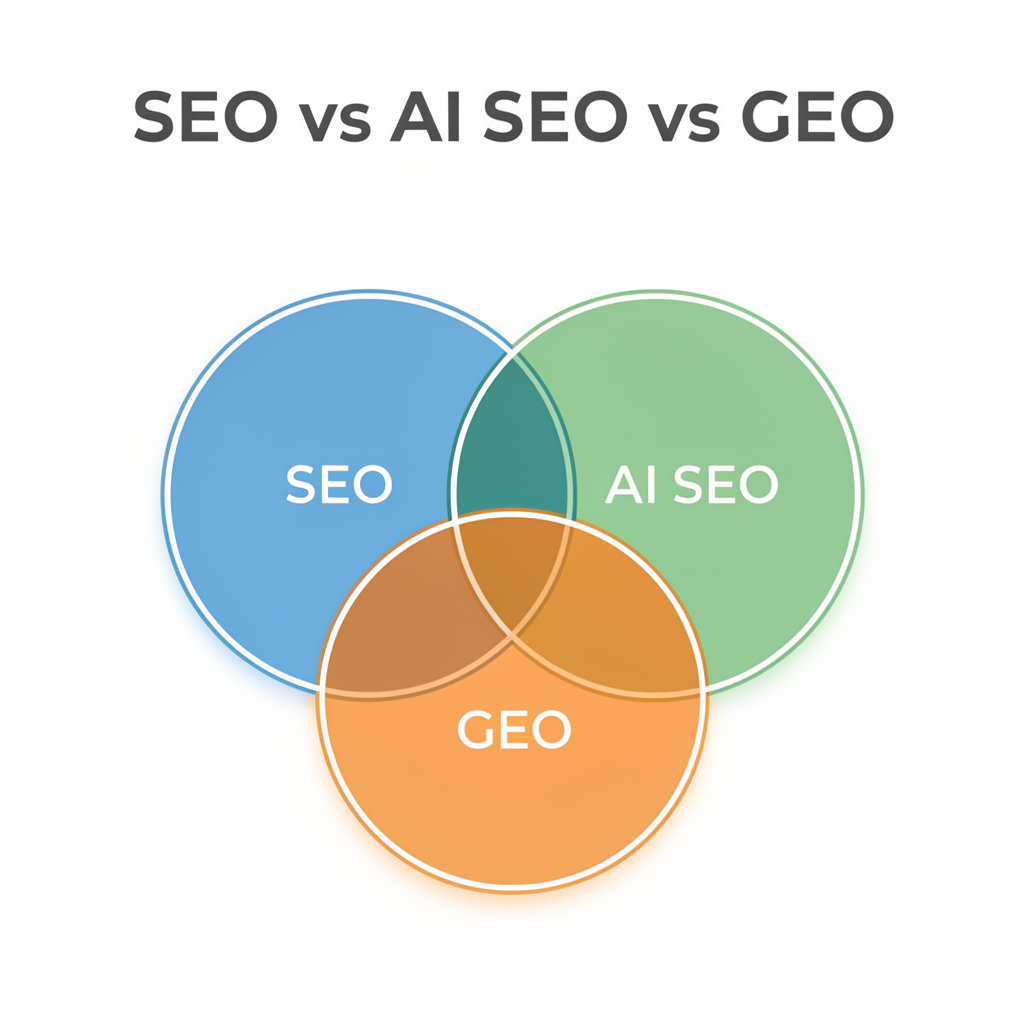
GEO vs SEO vs AI SEO: Key Differences Marketers Need to Know
Bastian W.
Co-Founder of Keupera
Search has changed faster in the last two years than it did in the previous ten. If you still treat visibility as a simple race for blue links on Google, you are already behind.
Today, brands need to think across three related but different disciplines: SEO, GEO, and AI SEO. They overlap, but they are not interchangeable. If you run a startup or manage growth for clients, understanding the differences matters because each one shapes how people discover your brand, trust your content, and choose your product.
The short version is this. SEO helps you rank in search engines. GEO helps you show up in AI-generated answers. AI SEO uses artificial intelligence to improve how you research, create, optimize, and scale search content. If you confuse one for another, your strategy gets messy. If you understand how they work together, you can build a much stronger acquisition engine.
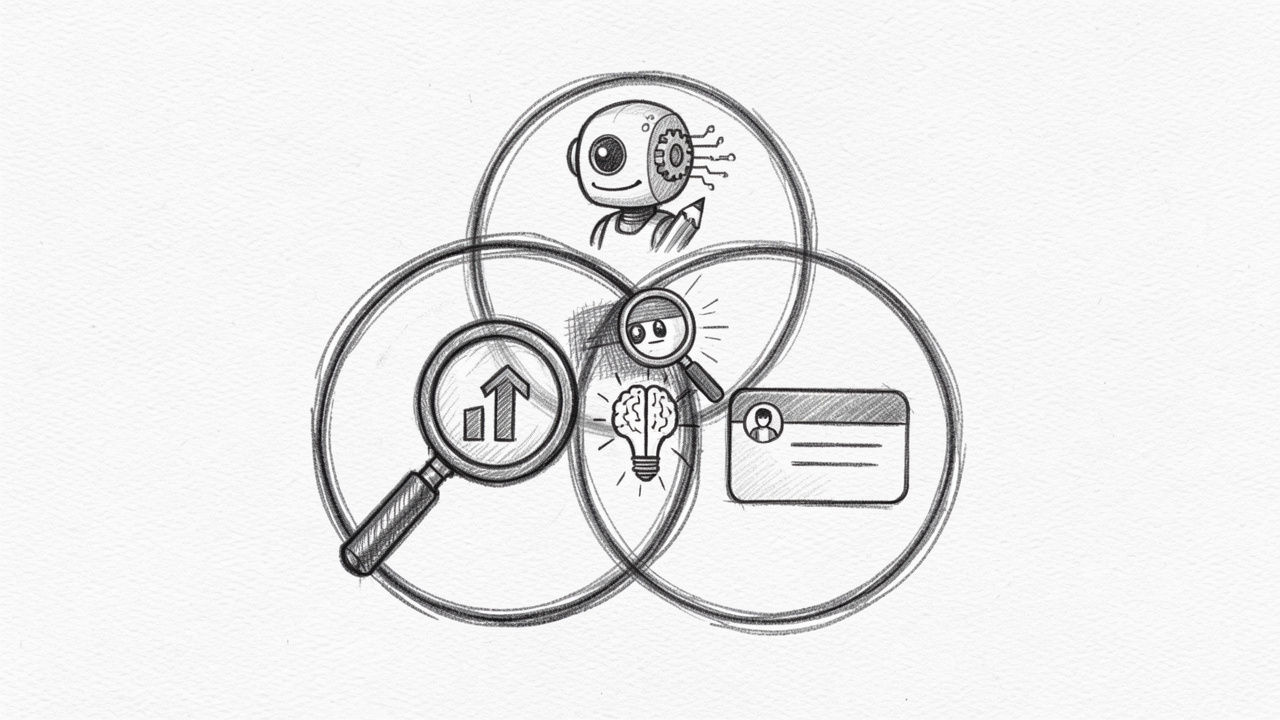
What GEO, SEO, and AI SEO Actually Mean
The discussion around GEO vs SEO vs AI SEO often gets muddled because the terms sound similar. But each one solves a different visibility problem.
SEO, or Search Engine Optimization, is the established discipline of improving your website so search engines can crawl, understand, and rank it in the SERP. That includes technical SEO, on-page optimization, content quality, internal linking, backlinks, site speed, search intent alignment, and authority signals such as Domain Authority and Page Authority.
GEO, commonly understood as Generative Engine Optimization, is the practice of optimizing your brand and content so AI-driven search systems and answer engines are more likely to reference, summarize, cite, or recommend you. Think of experiences like ChatGPT answers, Google AI Overviews, Perplexity, Copilot, and other generative interfaces. GEO is less about winning a single rank position and more about becoming a trusted source that language models can pull from.
AI SEO is different from both. It does not describe a search engine channel by itself. Instead, it refers to using AI tools and workflows to improve SEO execution. That can include AI-assisted keyword clustering, content briefs, entity analysis, content gap detection, internal link recommendations, schema suggestions, and performance forecasting. In simple terms, AI SEO is about how you do SEO, while GEO and SEO are more about where and how you get found.
That distinction matters. Many teams say they are "doing AI SEO" when they really mean they are publishing AI-written blog posts. That is far too narrow. Strong AI SEO is operational. It helps you move faster, find opportunities, reduce manual work, and improve decisions. It does not replace strategy.
Key Aspects of GEO vs SEO vs AI SEO
The Core Goal of Each Approach
The clearest way to understand the key differences is to start with the end goal.
With SEO, your goal is to improve organic rankings and earn clicks from traditional search results. You want pages to appear for relevant keywords, attract traffic, and convert visitors. The primary success metric is often visible and direct: rankings, impressions, CTR, sessions, and conversions.
With GEO, your goal is to influence AI-generated answers and recommendations. You want your brand, data, expertise, and web content to be included in the answer layer, even when the user never clicks through to a standard result page. Success can be harder to measure, but the goal is straightforward, become part of the machine-generated response.
With AI SEO, your goal is efficiency and performance. You use AI to improve research quality, accelerate production, uncover patterns, and scale optimization without losing accuracy. Done well, AI SEO makes your entire organic program sharper.
How Discovery Happens
Traditional SEO works in a familiar model. A user types a query, the engine returns a ranked list of pages, and your page competes for a click. The user decides what looks credible based on title tags, meta descriptions, brand familiarity, and position on the page.
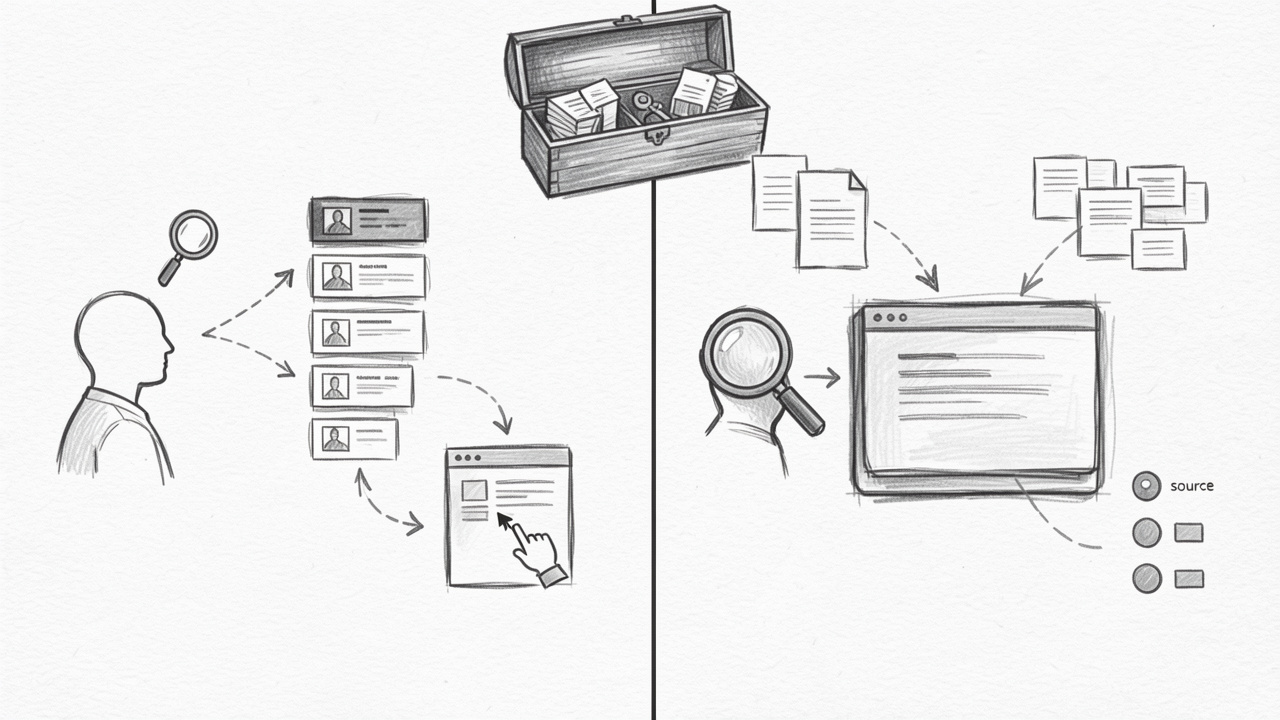
GEO changes that behavior. In a generative environment, the engine may synthesize multiple sources into one direct answer. The user often sees a summary first and sources second. In some cases, they may never visit your site unless your brand is explicitly cited or strongly recommended.
This has a major implication for startups and agencies. In standard SEO, being position three instead of position one may still drive traffic. In GEO, being absent from the answer can mean near-total invisibility, even if your page ranks reasonably well in classic search.
AI SEO sits behind the scenes. It helps you identify which content has a chance to rank, which entities and topics to cover, what search intent to target, and how to improve topical depth. It shapes the inputs that make both SEO and GEO stronger.
What Search Engines and AI Systems Reward
Search engines like Google still reward a mix of relevance, authority, usability, and technical accessibility. That means clean site architecture, strong content, quality backlinks, low Spam Score, proper indexing, and pages that satisfy search intent better than alternatives.
Generative engines tend to reward source reliability, clarity, structure, entity consistency, and extractable information. They are more likely to use content that is easy to parse, trustworthy, current, and supported by clear signals of expertise. Pages with concise definitions, statistics, FAQs, comparisons, and well-organized explanations tend to be easier for AI systems to summarize.
If your content buries the answer, hedges every statement, or lacks clear factual structure, it becomes harder for AI systems to pull usable snippets from it. That does not mean you should write robotic content. It means you should write content that is both useful to people and legible to machines.
AI SEO tools can help spot these gaps. They can detect missing subtopics, weak internal linking, thin semantic coverage, and inconsistent optimization patterns across large content libraries. But the tool only helps if the human strategy is sound.
The Role of Authority and Trust
Authority matters in all three areas, but it plays out differently.
In SEO, authority is often reflected in backlink quality, brand signals, topical depth, and overall site trust. A newer startup can still outrank larger competitors with a better page, but authority usually compounds over time.
In GEO, authority becomes even more nuanced. AI systems tend to prefer content from recognizable, well-cited, and consistent sources. If your brand appears across industry publications, has clear authorship, publishes original research, and maintains factual consistency, your chances improve. GEO is not just about your website. It is also about your broader digital footprint.
For AI SEO, trust is about process quality. If you rely on AI to draft content without expert review, you can create factual drift, duplicate messaging, or low-value pages at scale. That often hurts both SEO and GEO. The winning model is not "AI instead of humans." It is AI plus editorial judgment, subject matter expertise, and quality control.
Content Strategy Differences
A strong SEO content strategy starts with keyword research and search intent. You identify what users search, map topics to funnel stages, build landing pages and educational content, and optimize each page to win in the SERP.
A strong GEO content strategy starts with answerability and citation-worthiness. You still care about topics and intent, but you also ask different questions. Is this page easy to summarize? Does it state the answer clearly? Does it show expertise? Does it include facts, examples, definitions, data points, and unique insight that an AI system might quote or paraphrase?
That shift changes how you structure content. For GEO, content often performs better when it includes direct answers near the top, descriptive headings, strong entity relationships, original insights, and consistent factual framing. In other words, the page should be helpful for skimmers, search engines, and language models at the same time.
AI SEO supports content strategy by making analysis faster. You can cluster hundreds of keywords, compare SERP patterns, audit content decay, generate briefs, and identify topical holes much faster than with manual workflows. The risk is obvious, speed can create sameness. If every agency uses the same AI prompts and templates, the output becomes generic. That is bad for rankings and even worse for brand differentiation.
Measurement and Reporting
SEO is still the easiest of the three to measure. You can track rankings, impressions, clicks, sessions, assisted conversions, backlink growth, crawl health, and indexation status with relatively mature tools.
GEO is less straightforward. There is no universal dashboard that tells you exactly how often your brand influenced an AI-generated answer across platforms. Measurement often involves prompt testing, citation tracking, brand mention monitoring, referral analysis, and qualitative review of answer engine visibility. It is part science, part observation.
This makes reporting harder for agencies, but not impossible. The smart approach is to combine direct metrics with proxy signals. Look at branded search growth, assisted traffic from AI interfaces, source citations in generative answers, and uplift in non-brand organic visibility for pages engineered to be highly answerable.
AI SEO should be measured by operational and performance outcomes. Are you reducing research time? Improving content coverage? Increasing output without increasing revision cycles? Lifting rankings faster? Better workflows matter only if they improve actual outcomes.
A Side-by-Side Comparison
Aspect | SEO | GEO | AI SEO |
Primary focus | Ranking in search engines | Appearing in AI-generated answers | Using AI to improve SEO workflows |
Main goal | Earn organic traffic and conversions | Gain visibility in generative search interfaces | Scale and sharpen optimization efforts |
Core surface | SERPs and organic listings | AI Overviews, chat-based engines, answer layers | Internal tools, processes, and execution |
Key success signals | Rankings, clicks, traffic, conversions | Citations, mentions, answer inclusion, brand recall | Faster production, better optimization, stronger outcomes |
Content priority | Search intent and keyword relevance | Clarity, answerability, authority, structured insight | Efficiency, analysis, consistency, automation |
Main risk | Ranking losses, technical issues, thin content | Being excluded from the answer layer | Publishing low-quality AI-driven content at scale |
Best use case | Long-term organic growth | Future-proofing visibility as search changes | Increasing team output and decision quality |
Why This Matters for Startups and Agencies
Startups Need Efficient Visibility
If you are a startup, you usually have limited authority, limited budget, and pressure to show traction quickly. That makes channel focus critical.
SEO gives you a durable foundation. It helps you build compounding traffic, rank for commercial and educational terms, and create a content moat over time. But SEO often takes patience.
GEO gives you a chance to compete differently. A younger brand with clear expertise, strong product pages, useful comparison content, and original research can sometimes earn inclusion in AI-generated answers faster than it can dominate highly competitive SERPs. This is especially true in niche B2B categories where authoritative content is thin.
AI SEO helps you do more with fewer resources. It can speed up planning, auditing, and optimization. For lean teams, that matters. But if you use AI only to mass-produce bland content, you will create inventory, not advantage.
Agencies Need a Clear Service Model
For agencies, the GEO vs SEO vs AI SEO conversation is also a positioning issue. Clients are hearing new terms every week. Some expect GEO to replace SEO. Others assume AI SEO is just content automation.
You need a cleaner narrative. SEO remains the foundation. GEO is an emerging visibility layer that smart brands should prepare for. AI SEO is the operating system that helps teams deliver both more efficiently.
That framing protects your strategy from trend-chasing. It also helps clients understand why technical SEO, authority building, content quality, and measurement still matter. The medium is evolving, but the fundamentals of discoverability and trust have not disappeared.
How to Get Started With SEO, GEO, and AI SEO
The biggest mistake is trying to treat these as three separate silos. In practice, the most effective programs stack them together.
Start with your SEO foundation. Make sure your site can be crawled and indexed cleanly. Fix technical issues. Improve internal linking. Audit thin pages. Align content with search intent. Strengthen titles, headers, and page structure. If your site has unresolved technical debt, neither GEO nor AI-assisted workflows will compensate for it.
Next, improve your content for GEO readiness. Look at high-value pages and ask whether they are easy for an AI system to use. Tighten definitions. Add direct answers early. Clarify headings. Include original data, strong examples, and factual support. Build author credibility and keep content updated. Think about how a machine would summarize the page in two sentences. Then make that summary obvious.
After that, introduce AI SEO workflows carefully. Use AI to accelerate research, cluster topics, surface optimization opportunities, and draft structured outlines. Keep human review in place for accuracy, differentiation, tone, and strategic alignment. The goal is not to remove expertise. It is to free your team to spend more time on it.
A practical rollout often follows this sequence:
Audit your current organic performance
Prioritize pages with high business value
Rewrite key pages for clarity, authority, and answerability
Use AI tools to scale research and optimization, not unchecked publishing
That order keeps your team focused on impact rather than novelty.
What to Optimize First
If you need a starting point this quarter, focus on the pages closest to revenue. For most startups and agencies, that means service pages, product pages, comparison pages, solution pages, and high-intent educational content.
These pages do double duty. They support traditional SEO by targeting commercial intent, and they support GEO because they often contain the direct, factual explanations AI systems want to synthesize. A strong "X vs Y" page, a well-structured product use case page, or a concise pricing explainer can support both channels at once.
Support those assets with stronger trust signals. Publish expert-authored content. Tighten your About and author pages. Earn mentions from credible websites. Keep data current. Make your brand easier to verify across the web. GEO rewards consistency, and SEO still rewards authority.
Common Mistakes to Avoid
A lot of teams overcorrect when they hear about AI search. They stop focusing on SEO basics and rush to create "AI-optimized" content that says little and sounds the same as everything else online.
That is a mistake. Generic content is weak in every system. It struggles to rank, gives AI nothing distinctive to cite, and fails to convert once visitors arrive. Originality, usefulness, and trust still matter.
Another common error is assuming AI SEO equals automated blogging. It does not. AI SEO should improve the parts of your workflow that are repetitive or data-heavy. It should not replace expert positioning, editorial standards, or product insight.
The final mistake is measuring only traffic. As generative search grows, visibility may influence brand discovery before a click happens. You still need traffic and conversions, but you also need to watch for citation presence, branded demand, and shifts in how prospects mention finding you.
Where the Market Is Heading
Search is moving toward blended discovery. Users will continue to click traditional results, but they will also ask AI tools for summaries, evaluations, and recommendations. This does not kill SEO. It expands the visibility model.
The brands that win will not choose between GEO, SEO, and AI SEO. They will build an integrated system. Their websites will be technically sound. Their content will rank in search. Their pages will be easy for AI systems to cite. Their teams will use AI to move faster without sacrificing quality.
That is the real answer to the GEO vs SEO vs AI SEO question. It is not a contest with one winner. It is a stack. Each layer strengthens the others when you use it correctly.
Conclusion
SEO helps you win clicks in search results. GEO helps you earn presence inside AI-generated answers. AI SEO helps you execute faster and smarter across both. Those are the key differences, and they matter because search behavior is no longer limited to a simple list of links.
If you want a practical next step, audit your top revenue pages this week. Check whether they are technically sound, easy to summarize, rich in clear expertise, and supported by a smart AI-assisted workflow. That is where modern organic growth starts.
More in AI & GEO
Keep reading

Predictive SEO: Using AI to Forecast Ranking Opportunities
Find high-potential keywords sooner, prioritize content with more confidence, and reduce wasted SEO effort. If your SEO roadmap still depends on static keyword lists and last quarter’s rankings, you a…

How AI and Google's Ranking Algorithm Work Together
AI-driven systems are changing how search engines interpret queries and content. This guide explains what that means for your SEO strategy, how to use AI responsibly, and where to focus effort to win …
How AI Interprets Search Intent
Search visibility is no longer just about matching keywords. It is about matching meaning. If your content ranks poorly despite solid on-page SEO, the problem is often not authority or links, it is in…