How to Track AI Visibility in 2026
Ole N. Mai
Founder of Keupera
Let’s talk about AI Visibiltiy! 🌸
People aren’t just scrolling through a list of blue links anymore. They're opening ChatGPT, Perplexity, or utilizing the newly upgraded AI Mode in Google Search.
Users no longer type "best workflow software." Instead, they ask ChatGPT or use Google's new "AI Mode".
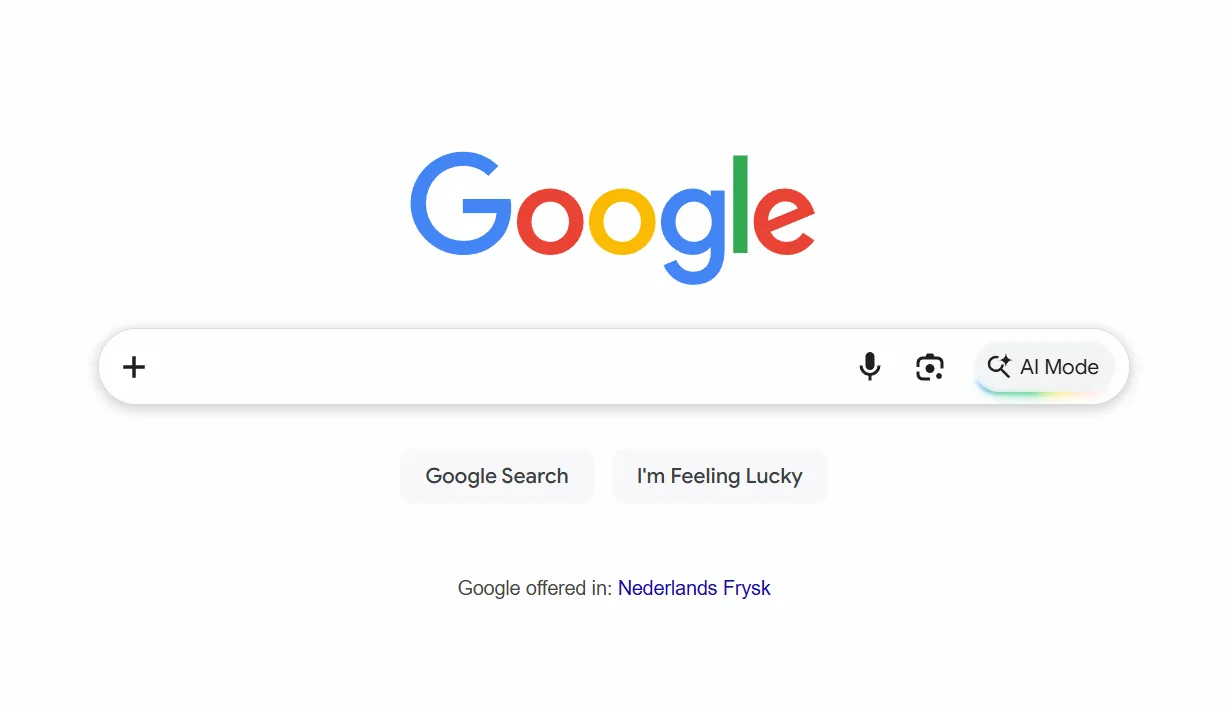
When an AI engine answers that, it doesn't offer ten separate options to click. It synthesizes. It curates. It handpicks 3 to 5 brands to feature in its response and leaves the rest of the web entirely invisible.
If your brand isn’t one of those 3 to 5 synthesized answers, your traditional organic traffic faces a steep decline - no matter how perfectly optimized your meta titles are.
This new paradigm requires us to merge classic SEO with a critical new discipline:
It's called GEO (Generative Engine Optimization).
I want to walk you through exactly how I track, analyze, and optimize AI visibility so your brand doesn't get quietly filtered out of the zero-click internet.
Why Google I/O 2026 Changed Everything for Content Teams
If you caught the recent Google I/O 2026 keynote, you saw the official transition into what Sundar Pichai called the "agentic Gemini era." This wasn't just a minor feature update; it was a fundamental architectural overhaul of how search functions.
I watched two specific announcements that completely rewrite the rules for content creators and SEOs:
Generative UI: Google Search now uses Gemini 3.5 Flash to build custom, interactive interfaces on the fly. If a user asks for a product comparison, Google doesn't send them to a comparison blog; it builds a custom, dynamic comparison dashboard directly on the results page, pulling the data from background sources.
Information Agents: Rolling out to power users, these are background agents that users assign to continuously scan the web 24/7 for specific changes, product drops, or brand sentiments.
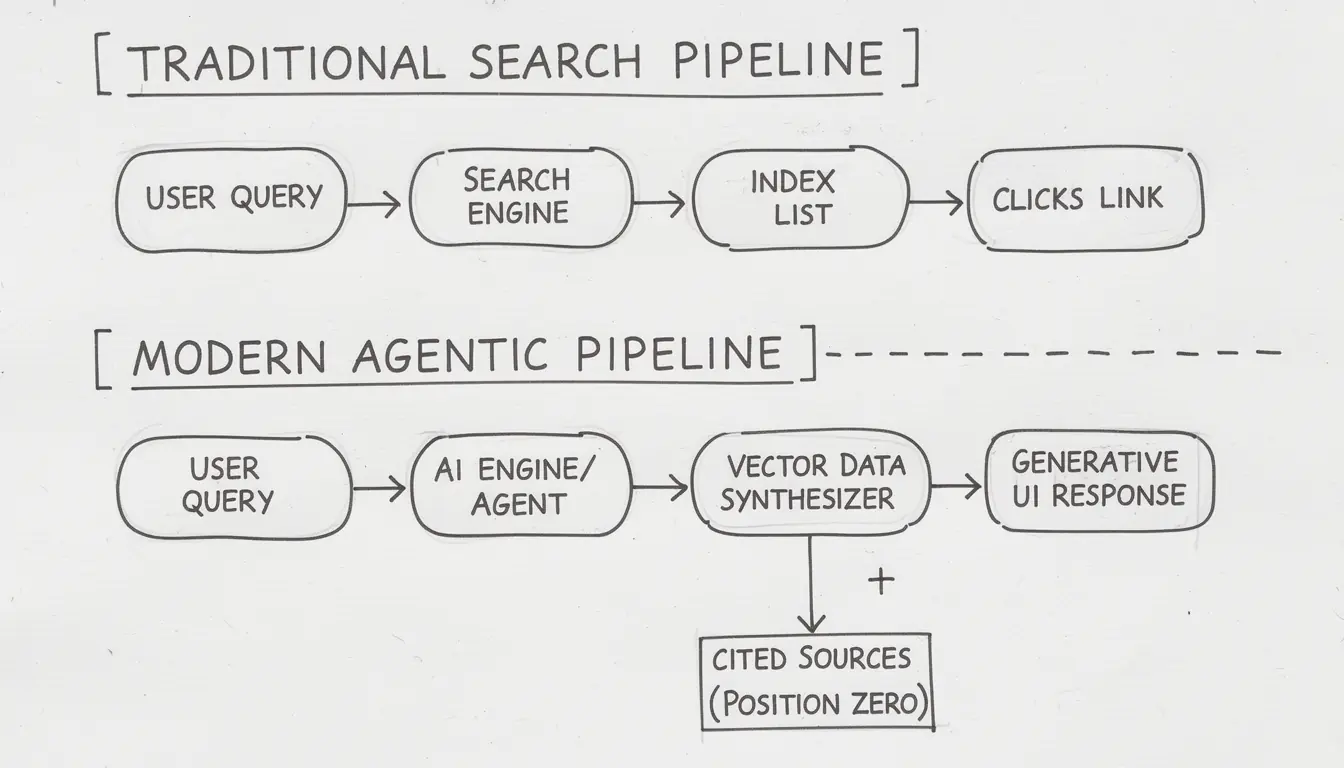
The takeaway I got from these updates is clear: You can no longer rank inside a custom-generated dashboard. You can only hope to be one of the trusted underlying sources that the AI extracts data from. If your site isn't machine-readable or doesn't possess strong brand authority across the web, you cease to exist to the LLM.
The Metrics That Actually Matter Now
To survive this shift, we have to toss out the legacy metric dictionary. Normal rank trackers that show your exact URL placement on a standard desktop viewport tell you absolutely nothing about whether an LLM recommends your product during a live chat session.When I audit a brand's modern visibility, I look at four primary metrics:
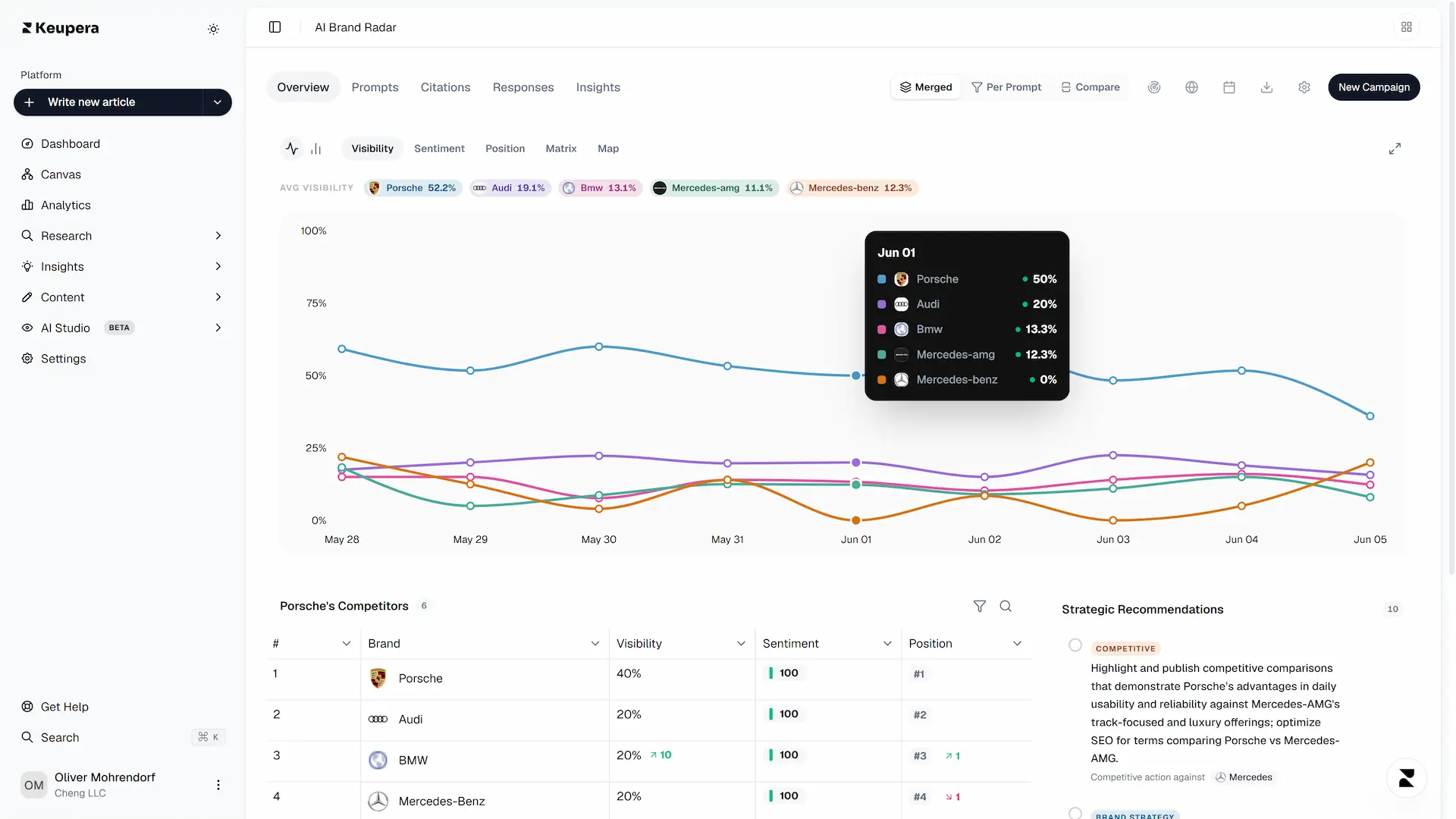
AI Share of Voice (SOV) & Visibility: Out of 100 conversational prompts relevant to your industry, what percentage of the time does the AI explicitly name, recommend, or pull data from your brand? This is your actual market share in the conversational ecosystem.
Citation Share & Core Sources: A simple text mention in a paragraph is nice, but a citation is a hard link attached to the text that directs the user to your site. You need to track how often you are an official footnote vs. just a passing text reference.
Brand Sentiment & Association Matrix: LLMs possess inherent data biases shaped by the public web data they digest. Is the model recommending you as the "premium, highly secure enterprise choice," or is it framing you as a "budget-friendly but clunky alternative"?
Narrative Tracking: What specific features, taglines, or historical bugs does the AI associate with your brand name? If you've spent millions of dollars rebranding your company around "Data Privacy," but the LLMs are still scraping old forum posts from 2022 calling you "unreliable," your modern marketing strategy has a massive gap.
My Step-by-Step Workflow for Tracking & Optimizing AI Visibility
Let me walk you through the practical, day-to-day workflow I use to monitor these changes and optimize content accordingly.
1.Map the 'Prompt Demand':
Phase 1: Discovery.
The old way was searching for high-volume keywords. The modern way requires mapping conversational long-tail queries based on true buyer intent. Gather the exact, problem-centric questions your audience types into LLMs.
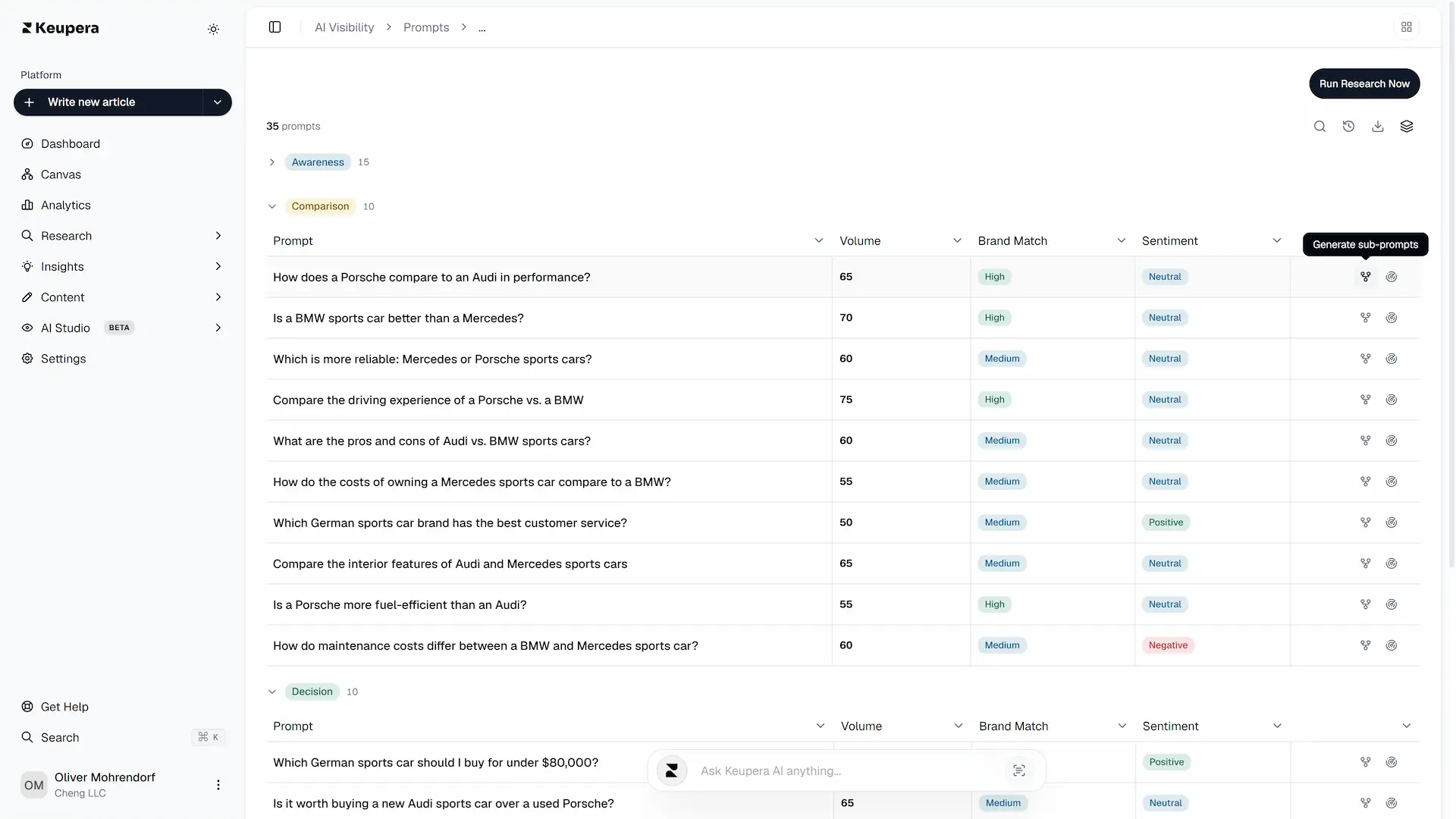
2.Run the Automated Audit:
Phase 2: Benchmarking.
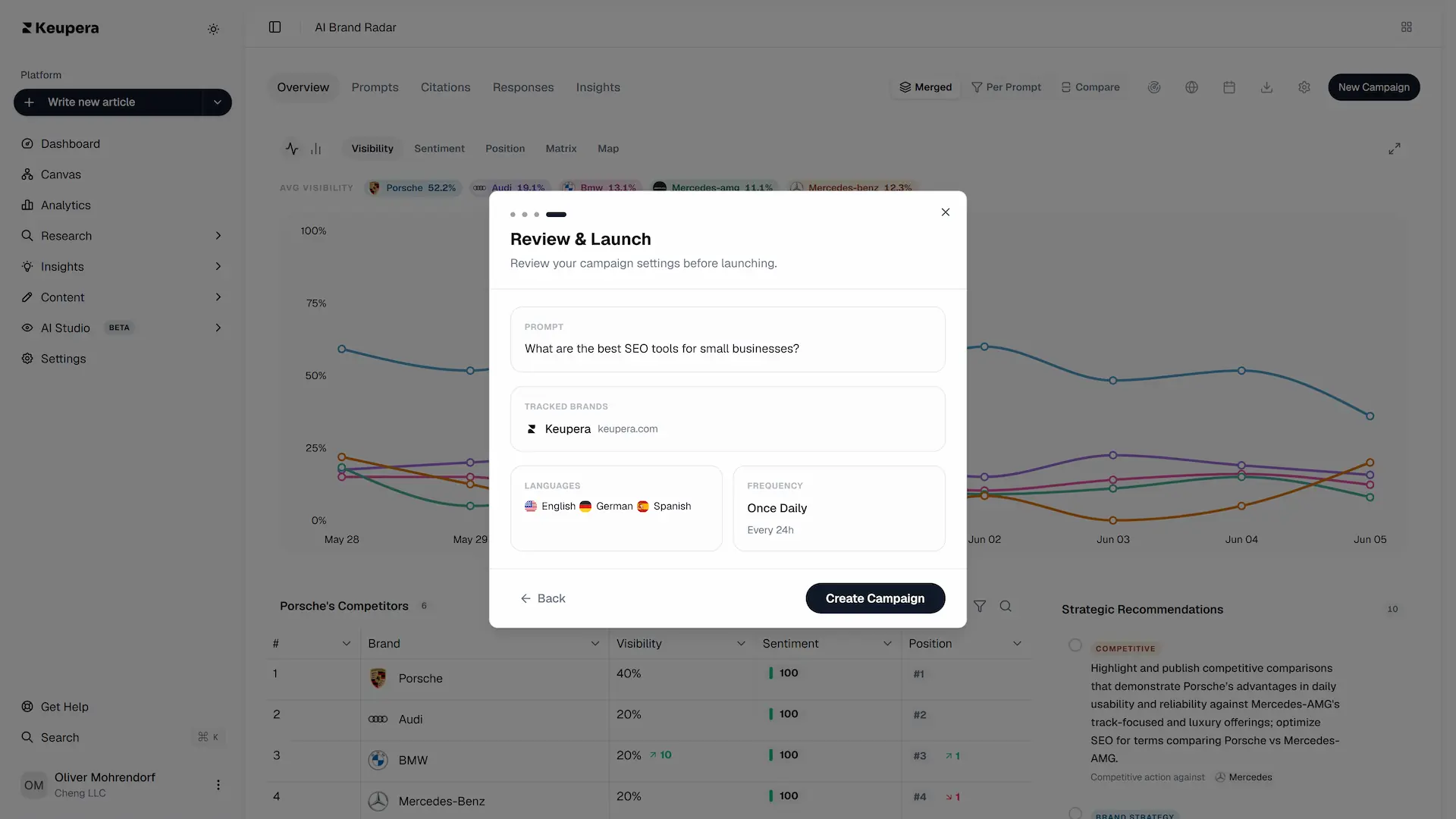
Manually copying and pasting 500 different prompts into four different AI chatbots every morning is a quick way to burn out. To solve this, I rely on automated tracking platforms native to this agentic era, such as Keupera. I spin up an "AI Brand Radar" campaign to transform conversational text into clean, structured visibility data.
3. Analyze Citation Gaps:
Phase 3: Competitive Intel.
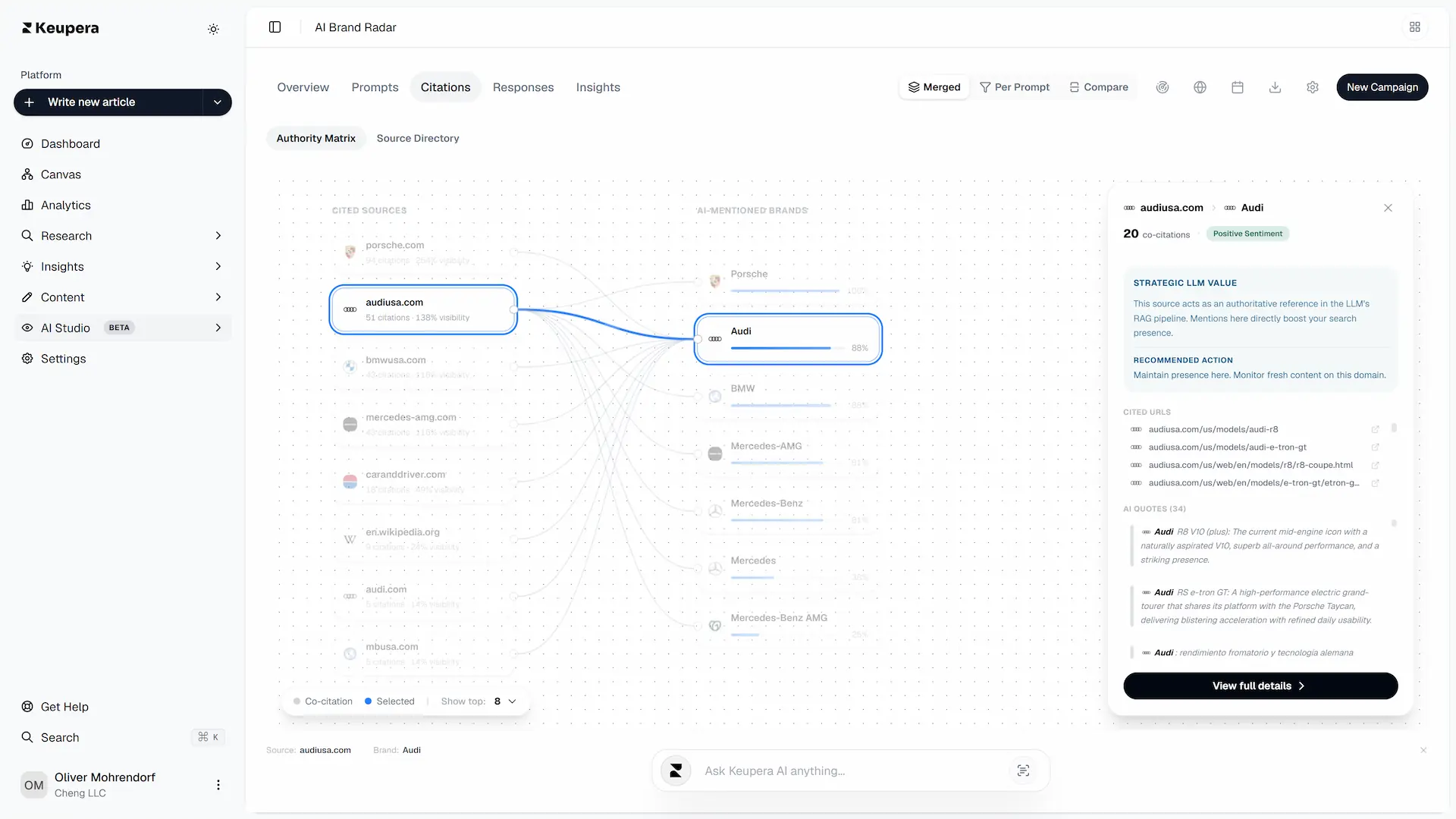
If the tracking dashboard shows a competitor outperforming us, open up the platform's Sources Analytics to view the exact root URLs the LLMs are citing. This tells you exactly where your digital PR and brand footprint need to expand next (e.g., GitHub, niche forums, or independent review matrices).
4. Structure Content for AI Extraction:
Phase 4: Optimization.
Apply the 'Chunking' method to your site. Use a direct thesis pattern (answer the heading in the very first sentence), maximize information density with HTML tables/bullets, and deploy comprehensive Schema.org markup so background information agents can verify your data instantly.
Traditional SEO vs. GEO: A Direct Comparison
To balance your resource allocation, it helps to understand how these two approaches coexist. They aren't mutually exclusive; rather, GEO relies on a strong technical SEO foundation.
Optimization Layer | Traditional SEO | GEO (Generative Engine Optimization) |
Primary Target | Traditional search indexing algorithms (Google HCU, PageRank) | Frontier LLMs and Vector Databases (Gemini, GPT-4, Claude) |
Success Metrics | SERP Position, Organic Impressions, Direct Clicks | Citation Share, Brand Sentiment, Presence in AI Overviews |
Content Format | Comprehensive, keyword-optimized long-form articles | Modulated, information-dense text blocks with tables and direct answers |
Authority Focus | Standard backlink profiles, domain age, anchor text distributions | Third-party consensus, brand citations across authoritative industry nodes |
Final Thoughts: The Shift to Proactive Tracking
If there’s one piece of advice I can give you as we navigate this new web ecosystem, it’s this: Stop waiting for your monthly organic traffic report to tell you that you have an AI visibility problem.
By the time your Google Analytics or Search Console clicks show a steep downward trend, an AI model has likely already rewritten its primary narrative about your industry and automated your brand out of its default recommendations.
Using an automated platform to actively monitor your brand radar gives you an early warning system. You can see precisely when a model updates its training data weights, note when a competitor gains traction in a conversational narrative, and adjust your broader content footprint before the traffic drop occurs.
With Keupera, your brand is ready to thrive in AI search. Sign up today.
Learn more about AI SEO and how it differs from traditional SEO and GEO.
More in AI & GEO
Keep reading

Predictive SEO: Using AI to Forecast Ranking Opportunities
Find high-potential keywords sooner, prioritize content with more confidence, and reduce wasted SEO effort. If your SEO roadmap still depends on static keyword lists and last quarter’s rankings, you a…

How AI and Google's Ranking Algorithm Work Together
AI-driven systems are changing how search engines interpret queries and content. This guide explains what that means for your SEO strategy, how to use AI responsibly, and where to focus effort to win …
How AI Interprets Search Intent
Search visibility is no longer just about matching keywords. It is about matching meaning. If your content ranks poorly despite solid on-page SEO, the problem is often not authority or links, it is in…