
GEO Metrics: Measuring AI Visibility for Brands
Bastian W.
Co-Founder of Keupera
Your brand can rank well in Google and still be invisible in AI answers. That gap is becoming a real performance problem for startups and agencies. Buyers now ask ChatGPT, Gemini, Claude, Perplexity, and AI-powered search tools for recommendations, comparisons, and explanations before they ever click a blue link.
That shift changes what visibility means. Traditional SEO still matters, but it no longer tells the full story. If your content is not being surfaced, cited, paraphrased, or recommended by AI systems, you are missing demand that may never reach your site analytics in a familiar way.
This is where GEO metrics, short for Generative Engine Optimization metrics, come in. They help you measure how visible your brand, pages, and expertise are inside AI-generated responses. If you want a practical framework for measuring AI visibility, this guide will show you what to track, how to interpret it, and how to build a reporting model that makes sense for clients or internal teams.
What Are GEO Metrics and How Do They Measure AI Visibility?
GEO metrics are the indicators you use to understand how often and how well your brand appears in generative AI environments. That includes direct brand mentions, source citations, inclusion in answer summaries, recommendation frequency, sentiment, and the kinds of prompts that trigger your presence.
Think of GEO as the next layer on top of SEO. SEO asks, "Do you rank in the SERP?" GEO asks, "Do AI systems use your brand and content when generating answers?" That distinction matters, because many AI interfaces reduce or even remove the need for a click. Visibility can now happen without a visit, and influence can happen without an impression in the classic ad-tech sense.
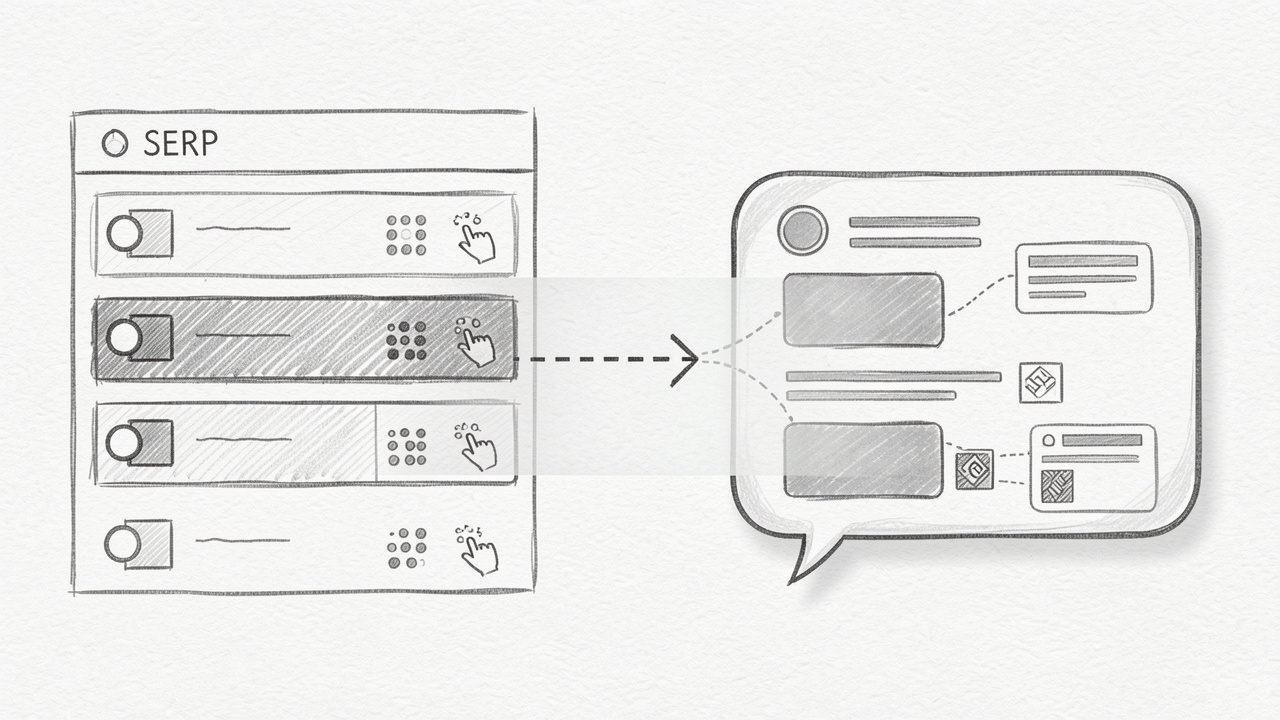
Why AI Visibility Is Harder to Measure
AI visibility is less stable than organic rankings. In a search engine, you can often track fixed keywords, positions, and click-through rates, but generative systems vary results by phrasing, context, user history, model updates, device, geography, and whether the model retrieves live web results.
That means measuring AI visibility requires a broader, more probabilistic approach. You are not just tracking rankings. You are tracking appearance patterns across prompts, answer types, entities, and source references.
GEO Versus Traditional SEO Metrics
SEO metrics usually focus on organic rankings, impressions, clicks, backlinks, Domain Authority, crawlability, indexed pages, and on-site engagement. Those remain useful because AI systems often rely on strong web signals and trusted sources.
But GEO metrics add a different lens. They focus on whether your brand is present in generated outputs, whether your expertise is recognized and reused, and whether your site is cited as a source of truth. A page with modest traffic can still become highly influential in AI answers if it is clear, authoritative, and easy for systems to extract.
The Core Goal of GEO Measurement
The goal is not just to count mentions. It is to understand share of AI voice.
That means asking how visible your brand is compared with competitors across the prompts that matter most to your pipeline. If buyers ask AI tools for "best payroll software for startups" or "how to reduce SaaS churn," you want to know whether your company appears, how often it appears, and in what role. Are you recommended? Quoted? Ignored? Misrepresented?
Those are business questions, not just search questions.
Key Aspects of GEO Metrics for Measuring AI Visibility
A strong GEO framework combines visibility, quality, authority, and business impact. Looking at one metric alone can be misleading. A brand might get mentioned frequently but in weak contexts. Another might appear less often but dominate high-intent prompts.
Mention Rate
Mention rate tracks how often your brand, product, people, or content appear in AI responses across a defined prompt set. This is one of the most basic GEO metrics, but it is foundational.
To make it useful, you need a consistent prompt library. That library should include branded queries, category queries, comparison prompts, problem-aware prompts, and bottom-of-funnel prompts. Then you test whether your brand shows up and how prominently it appears.
If your mention rate is low on non-branded commercial prompts, that is often a sign that AI systems do not yet associate your brand strongly with the category.
You can build and manage a consistent prompt library to ensure repeatable tests and to expand coverage over time, especially for the commercial and comparison prompts that matter most.
Citation Rate
Citation rate measures how often AI tools link to, quote, or reference your website as a source. This matters because not every mention is backed by a citation. In many cases, AI systems synthesize answers without exposing where the information came from.
When citations do appear, they are a strong signal of authority and extractability. If your pages are frequently cited, your content is likely structured in a way that supports retrieval and summarization. This can also reveal which content formats perform best, such as comparison pages, glossaries, research studies, or concise how-to resources.
Share of AI Voice
Share of AI voice is the GEO equivalent of Share of Voice in SEO or paid media. It compares your appearance rate against a competitor set for a group of strategic prompts.
This metric is especially useful for agencies and startup marketing teams because it turns a fuzzy concept into a benchmark. You can see whether your brand is winning or losing in the AI layer of discovery, not just in the SERP.
Here is a simple way to frame core GEO signals:
Metric | What It Measures | Why It Matters |
Mention Rate | How often your brand appears in AI answers | Indicates baseline AI visibility |
Citation Rate | How often your site is referenced as a source | Signals authority and retrievability |
Share of AI Voice | Your visibility versus competitors | Shows market position in AI answers |
Prompt Coverage | The percentage of relevant prompts where you appear | Reveals topical gaps |
Answer Positioning | Whether you are listed first, mid-list, or as a secondary mention | Reflects prominence and recommendation strength |
Sentiment Accuracy | Whether your brand is described positively and correctly | Protects perception and conversion potential |
Prompt Coverage
Not all prompts carry the same value. Prompt coverage measures how many relevant prompts include your brand at all.This is important because AI visibility is often uneven. You may show up for broad educational prompts but disappear for product comparisons. Or you may appear in branded prompts but fail to surface in problem-led discovery searches where buyers begin their journey.
A good prompt map should mirror the funnel. Top-funnel prompts test educational authority. Mid-funnel prompts test category association. Bottom-funnel prompts test commercial recommendation strength.
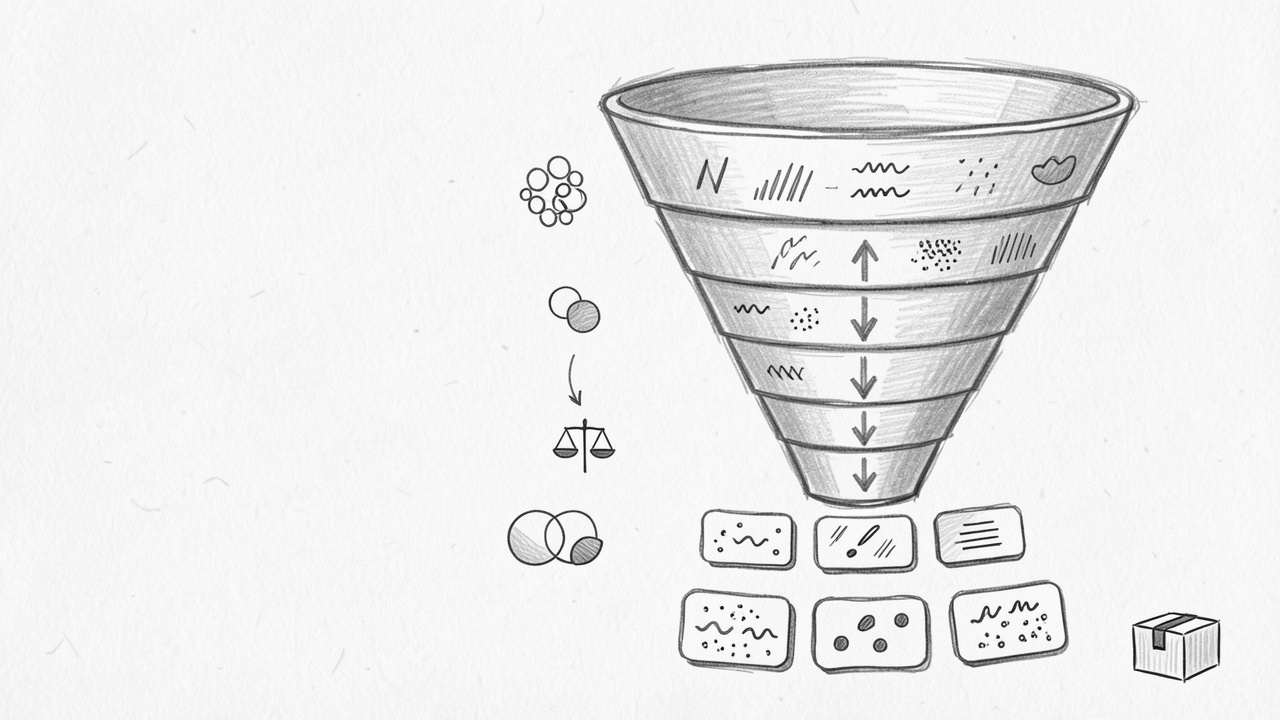
Answer Positioning and Recommendation Strength
Being mentioned is not the same as being recommended. Some AI responses list several options. Others identify one "best fit." Your answer positioning tracks whether your brand appears first, appears among top suggestions, or is buried as an afterthought.
This matters because users tend to trust concise AI summaries. If the model presents your competitor as the clear leader and your brand as an alternative, that framing influences perception before a click even happens.
Sentiment and Accuracy
A brand mention can still be harmful if it is wrong. Sentiment and accuracy tell you whether AI tools describe your product correctly, highlight the right strengths, and avoid outdated or misleading claims.
For startups, this is crucial. AI systems can latch onto stale reviews, old pricing pages, or incomplete third-party summaries. If your positioning has changed and the model still repeats your old narrative, your visibility may exist but your messaging is broken.
Source Authority Signals
While GEO is distinct from SEO, it still depends heavily on authority signals. AI systems tend to pull from sources that appear credible, linked, frequently referenced, and semantically clear.
That means metrics like Backlinks, Domain Authority, branded search demand, expert authorship, and content freshness still matter. They are not GEO metrics by themselves, but they often influence GEO performance. In practice, you should treat them as leading indicators.
Content Extractability
One overlooked aspect of AI visibility is content extractability. This refers to how easy it is for a machine to parse, understand, and reuse your content.
Pages that perform well in AI environments usually answer specific questions directly, define terms cleanly, structure information logically, and support claims with concrete evidence. Dense marketing copy, vague category pages, and thin affiliate-style content tend to be weaker candidates for citation and summarization.
How to Build a GEO Measurement Framework
Without a framework, GEO turns into anecdotal checking. You ask ChatGPT a question, see whether your brand appears, and call that insight. That is not enough for strategy or reporting.
A useful framework standardizes what you test, how you score it, and how often you review it.
Start With Prompt Clusters
Begin by grouping prompts into clusters that reflect your market. Most teams should track at least four categories: branded, informational, comparative, and transactional. This gives you a balanced view of AI visibility across intent levels.
For example, a startup in HR software might test prompts such as "best HR software for startups," "how to manage employee onboarding," "Rippling alternatives," and "which HR platform is best for remote teams." Those prompts reveal different visibility patterns and different content needs.
Define the Entities You Care About
AI systems do not only recognize websites. They recognize entities such as your brand, product names, founders, use cases, categories, and even specific features.
Your GEO tracking should reflect that. If your company wants to own "AI sales coaching" but the model only associates you with "conversation intelligence," you have an entity-positioning gap. Measuring by entity gives you more precision than measuring only by domain.
Create a Scoring Model
A simple scoring model helps turn qualitative AI outputs into something trackable. You can score each prompt on whether your brand appeared, whether it was cited, where it appeared in the answer, and whether the description was accurate.
A sample model might look like this:
Signal | Score Example | Interpretation |
No mention | 0 | No AI visibility for the prompt |
Mentioned | 1 | Brand appears but weakly |
Recommended | 2 | Brand is actively suggested |
Top recommendation | 3 | Brand leads the answer |
Cited source | +1 | Your site is used as a reference |
Accurate messaging | +1 | Positioning is correct and useful |
This kind of score is not perfect, but it gives teams a repeatable baseline. Over time, trends matter more than any single test.
Segment by Platform
Different AI tools behave differently. Some rely more heavily on live search. Others lean more on internal model knowledge. Some show citations clearly. Others do not.
Because of that, you should track GEO metrics by platform, not just in aggregate. Visibility in Perplexity may look very different from visibility in ChatGPT with browsing enabled. Gemini may favor a different source mix. If you blend all results into one number, you can miss platform-specific opportunities.
Track Over Time, Not Once
AI visibility changes quickly. Model updates, source changes, competitor content, news coverage, and technical site improvements can all affect inclusion.
Monthly tracking is usually the minimum. For highly competitive categories or agency reporting, biweekly checks may be more useful. The main goal is consistency. The same prompts, the same scoring rules, the same competitor set.
If you want a practical framework for measuring AI visibility, this guide will show you what to track, how to interpret it, and how to build a reporting model that makes sense for clients or internal teams.
How to Get Started With GEO Metrics and AI Visibility Tracking
Most teams do not need a perfect system on day one. They need a practical one. Start small, define your baseline, and expand once patterns become clear.
Step 1: Build a Prompt Set
Choose a focused set of prompts tied to revenue, not vanity. Keep the set manageable at first.
Select branded prompts that test whether AI tools understand your company and product.
Add category prompts that reflect your primary market.
Include comparison prompts where buyers evaluate alternatives.
Add problem-based prompts that map to customer pain points.
Review and refine monthly based on performance and business priorities.
This prompt set becomes the foundation of your GEO measurement process.
To make it useful, you need a consistent prompt library that includes branded queries, category queries, comparison prompts, problem-aware prompts, and bottom-of-funnel prompts.
Step 2: Identify Your Competitor Benchmarks
You need context. If your brand appears in 20 percent of prompts, is that good or bad? The answer depends on who else appears.
Choose a realistic competitor set. Include direct product competitors, major publishers in your niche, review platforms, and adjacent thought leaders if they frequently surface in AI answers. Generative engines often blend software vendors, educational sources, and media brands into the same response.
Step 3: Audit Your Current Presence
Run your prompt set across major AI interfaces and document what appears. Note not just whether you are present, but how you are framed. Are you the answer, a supporting option, or absent entirely? Are competitors being cited more often? Is your messaging accurate?
This is where many teams discover a surprising mismatch. Strong SEO pages may be underrepresented in AI outputs, while third-party reviews and old listicles dominate. That insight can reshape your content priorities fast.
Step 4: Map Visibility to Content Assets
Once you know where you appear and where you do not, connect each prompt cluster to actual pages or assets. This helps you spot why certain topics underperform.
If AI tools cite competitors for "best CRM for startups," compare their source pages to yours. Their page may be more direct, more comparative, more linked, or simply easier to extract. GEO improvements often come from content clarity as much as authority.
Step 5: Improve for Retrieval and Reuse
This is where measurement turns into action. To improve AI visibility, create content that is easy to understand, easy to quote, and easy to trust.
That usually means clearer definitions, stronger subheadings, factual support, concise summaries, updated stats, expert attribution, and pages that answer a specific question well. In many cases, the best GEO gains come from improving existing high-intent pages instead of publishing dozens of new ones.
Step 6: Tie GEO Metrics to Business Outcomes
AI visibility should not sit in its own reporting silo. Connect it to pipeline signals where possible.
For example, if your brand starts appearing more often in commercial AI prompts and branded search volume rises afterward, that is meaningful. If sales calls increasingly mention AI recommendations, that matters too. You may not get perfect attribution, but you can still build directional evidence that GEO contributes to demand generation.
What Good GEO Performance Looks Like
Healthy GEO performance usually has three traits. First, your brand appears consistently across relevant prompts, especially in category and comparison queries. Second, your site or brand is cited by trusted AI systems often enough to validate authority. Third, your messaging stays accurate across responses, which means the market and the models understand what you do.
That does not mean you need to dominate every answer. In many categories, AI responses are inherently mixed. The goal is not universal ownership. It is reliable, growing presence where buying decisions are shaped.
For startups, this often starts with a few high-value prompt clusters rather than broad coverage. For agencies, success means building a repeatable measurement model that clients can understand and act on.
Common Mistakes When Measuring AI Visibility
One common mistake is treating GEO like rank tracking. AI outputs are too fluid for a simplistic position-only metric. You need broader pattern recognition.
Another mistake is overvaluing mentions without checking context. If your brand appears often but never as a recommendation, your visibility may not be commercially useful. The same goes for inaccurate mentions. Presence alone is not the goal.
A third mistake is ignoring the role of classic SEO signals. GEO is new, but it does not exist in isolation. Strong technical SEO, authoritative links, brand mentions, topical depth, and trustworthy content still influence how likely your pages are to be surfaced by AI systems.
If you want to dig deeper into how to build a reporting model and operationalize GEO for clients or internal teams, see this practical framework for measuring AI visibility.
GEO Metrics and SEO Work Better Together
The strongest teams do not replace SEO with GEO. They integrate both.
SEO helps you earn discoverability in search indexes. GEO helps you earn inclusion in generated answers. In practice, the same assets often support both goals when they are built well. A page that ranks, gets links, answers a question clearly, and demonstrates expertise is also more likely to be reused in AI contexts.
That is why agencies and startup teams should treat GEO metrics as an expansion of their organic measurement stack. Add them alongside rankings, backlinks, crawl health, branded search, and conversion metrics. This gives you a more realistic picture of modern visibility.
Conclusion
If you want to measure AI visibility well, start with the right question. Do not ask only whether your site ranks. Ask whether AI systems recognize, trust, and recommend your brand when real buyers ask real questions.
A practical GEO metrics framework tracks mentions, citations, share of AI voice, prompt coverage, answer positioning, and messaging accuracy. That gives you something far more useful than guesswork. It gives you a baseline, a benchmark, and a path to improvement.
The next step is simple. Build your prompt set, score your current visibility, compare it against competitors, and improve the pages most likely to shape AI answers. Start there. Then measure again.
External references and tools mentioned:
ChatGPT (background): https://en.wikipedia.org/wiki/ChatGPT
Internal tools and references:
practical framework for measuring AI visibility: https://keupera.com/research
build a reporting model: https://keupera.com/publish
consistent prompt library: https://keupera.com/generate
Domain Authority checker: https://keupera.com/free-seo-tools/authority-checker
rank tracking tools: https://keupera.com/free-seo-tools/rank-tracker
Learn more about GEO and how it differs from traditional SEO and AI SEO.
More in AI & GEO
Keep reading

How AI and Google's Ranking Algorithm Work Together
AI-driven systems are changing how search engines interpret queries and content. This guide explains what that means for your SEO strategy, how to use AI responsibly, and where to focus effort to win …

How AI Interprets Search Intent
Search visibility is no longer just about matching keywords. It is about matching meaning. If your content ranks poorly despite solid on-page SEO, the problem is often not authority or links, it is in…

How to Use AI to Write SEO Content: Best Practices and Risks
AI can help you publish faster, cover more keywords, and reduce content production costs. It can also flood your site with thin pages, factual errors, and generic copy that never ranks. That tension i…