
E-E-A-T for GEO: Authority Signals That Matter
Bastian W.
Co-Founder of Keupera
If your content is accurate but still invisible, authority is usually the missing layer. Startups and agencies often invest in pages, links, and technical SEO, then wonder why some brands keep getting surfaced, cited, and trusted across search experiences.
That gap is where E-E-A-T for GEO becomes practical. It is not just about ranking a blue link, it is about giving search engines, AI systems, and users enough confidence to treat your brand as a reliable source worth mentioning, summarizing, and recommending.
As search evolves from simple retrieval to generated answers and entity-based understanding, authority signals that matter have become more concrete. You need proof of expertise, proof of real-world experience, and proof that your business is credible beyond its own website. When those signals are strong, your content has a better chance to earn visibility in both classic SERPs and generative search outputs.
What E-E-A-T Means for GEO
E-E-A-T stands for Experience, Expertise, Authoritativeness, and Trustworthiness. Google uses this framework in its quality guidance, but the concept now extends beyond Google alone. In a GEO context, meaning Generative Engine Optimization, E-E-A-T helps explain why certain brands are more likely to be cited or echoed in AI-generated answers.
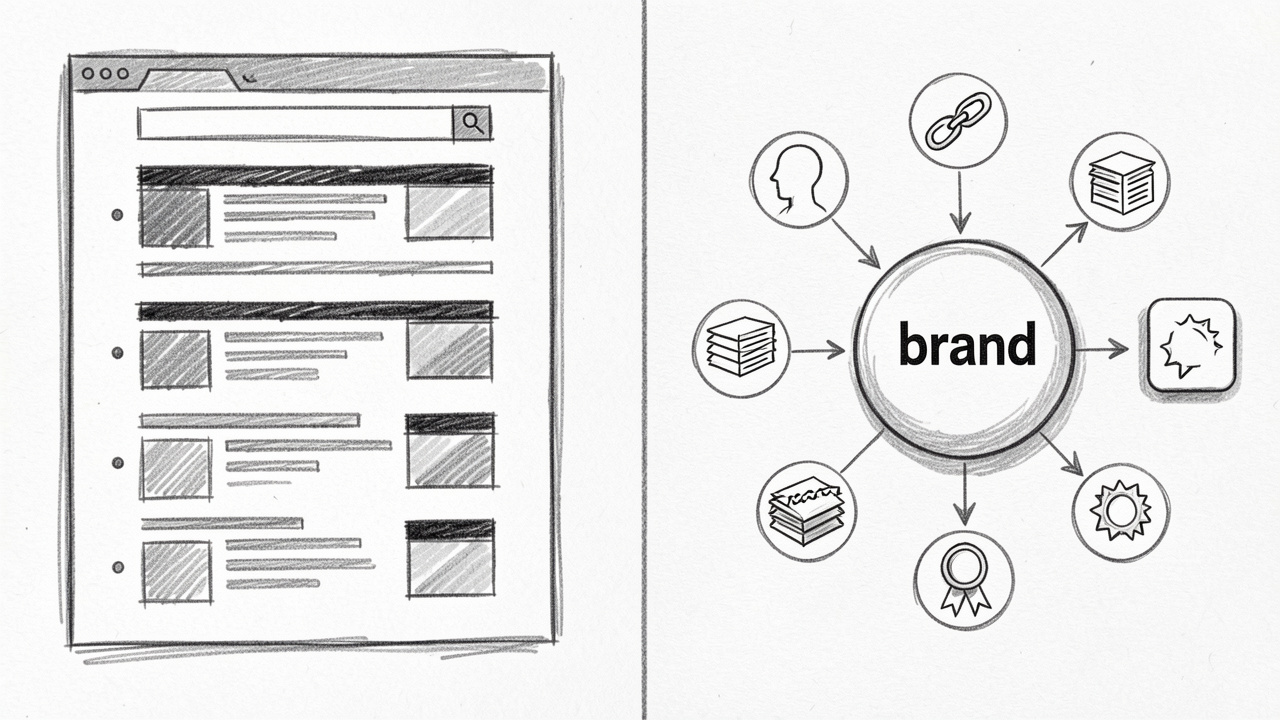
Traditional SEO often focused on pages and keywords. GEO shifts part of the focus to entities, reputation, corroboration, and source confidence. A generated answer does not just look for a page with the right phrase, it tries to identify whether the source behind that information is credible, current, and consistent across the web.
That is why authority signals matter more than ever. If your site says you are an expert but the wider web does not support that claim, your content becomes less dependable as a source. If your authors are invisible, your company footprint is thin, and your claims lack references, AI systems have fewer reasons to trust you.

Key Aspects of E-E-A-T and the Authority Signals That Matter
The most effective E-E-A-T strategy is built from several layers. Some live on your site. Others exist off-site. The strongest brands connect both.
Experience: Show You Have Done the Work
Experience is what separates generic advice from useful guidance. If your content reads like it was assembled from summaries, it will struggle to stand out. If it reflects actual implementation, testing, or firsthand lessons, it becomes more credible.
For startups and agencies, this means publishing content with real substance. Share screenshots, workflows, campaign outcomes, product decisions, and lessons learned. Explain what worked, what failed, and what changed after testing. These details signal that the content comes from lived practice, not recycled opinion.
Experience is especially important in competitive B2B topics. Anyone can define technical SEO or conversion tracking. Fewer teams can explain how they handled a migration without traffic loss or how they improved crawl efficiency across a large site. That level of specificity builds trust quickly.
Expertise: Make Subject Knowledge Visible
Expertise is not just having knowledge, it is making that knowledge obvious and attributable. Many websites bury their best experts behind faceless blog posts. That weakens the signal.
Use named authors. Build author bios with credentials, relevant roles, speaking appearances, certifications, and links to professional profiles. Show who reviewed the content if the topic requires extra credibility. If your CEO writes about market strategy or your lead SEO writes about indexing issues, make that connection explicit.
This matters because expertise has to be machine-readable as well as human-readable. A page with strong insights but no clear author context is harder to evaluate. A page with a visible expert behind it is easier to trust.
Why GEO Changes the Stakes
Generative engines compress decision-making. Instead of presenting ten links and letting the user evaluate them, they often pre-evaluate sources before producing a response. That means your authority has to be legible to machines before a person ever visits your site.
For startups, this creates both risk and opportunity. The risk is obvious, new brands have less history and fewer mentions. The opportunity is that smaller companies can still build strong E-E-A-T if they publish expert-led content, structure their brand signals well, and earn quality references in the right places.
Agencies should pay close attention here. Many client SEO programs still over-index on content volume. GEO rewards content quality, source clarity, and external validation more than publishing frequency alone.
Authority Is Not a Single Metric
There is no universal authority score that controls everything. Domain Authority, Page Authority, backlink quality, branded mentions, author credibility, review signals, citation consistency, and editorial references all contribute in different ways.
Think of authority as a pattern, not a number. Search engines and AI systems infer trust from multiple connected signals. A strong backlink profile helps. So does a detailed author page. So does a company profile that matches across your website, LinkedIn, industry directories, and media mentions.
That is why teams that chase one metric in isolation often plateau. They may improve one visible score while missing the broader trust ecosystem that GEO depends on.
Authoritativeness: Earn Recognition Beyond Your Site
Authority is rarely self-declared. It is earned through external recognition. This includes backlinks from reputable sites, unlinked brand mentions, quotes in industry publications, podcast appearances, conference speaking, community participation, and inclusion in respected roundups or directories.
For GEO, this off-site validation matters because generative systems often rely on consensus and corroboration. If your brand appears in several trustworthy contexts, your claims carry more weight. If your content exists in a vacuum, it is harder to verify.
Authority also grows through topical concentration. A startup that consistently publishes deep expertise in one area often becomes more credible than a larger brand publishing shallow articles across dozens of unrelated subjects. Topical focus helps search engines understand what you should be trusted for.
Trustworthiness: Remove Doubt Everywhere
Trust is the foundation. Without it, experience, expertise, and authority lose force. Trust signals include transparent company information, clear policies, accessible contact details, secure browsing, factual accuracy, citations to reputable sources, and honest claims.
This is where many otherwise strong content programs break down. The article may be good, but the website feels thin. There is no visible company address, no editorial policy, no clear service information, and no evidence the business stands behind its content. Those gaps create friction.
For agencies, trust also includes process transparency. If you claim results, explain the timeframe and context. If you present data, state where it came from. If you discuss SEO forecasting, acknowledge uncertainty. Trust often grows faster when your content feels precise instead of promotional.
Entity Signals: The GEO Layer Many Teams Miss
In GEO, your brand is not just a website, it is an entity. Search systems try to understand who you are, what you do, who is associated with you, and whether that identity is stable across sources.
That means consistency matters. Your company name, leadership team, positioning, social profiles, directory listings, and media references should align. If one profile describes you as an analytics platform, another as an SEO agency, and your homepage as a content tool, you create ambiguity.
Entity clarity helps generative systems connect the dots. It increases the chance that your brand is recognized as a coherent source rather than a loose collection of pages. For startups, this can be a major advantage because clear entity framing is often easier to fix than link authority.
Backlinks Still Matter, but Context Matters More
Backlinks remain one of the clearest authority signals. But raw link count is not the point. Relevant, editorial, high-trust links are far more valuable than a large volume of weak references.
A backlink from an established trade publication, respected SaaS blog, university resource page, or trusted industry association carries more credibility than dozens of low-quality directory submissions. Relevance sharpens the effect. A cybersecurity startup should not build authority primarily through unrelated lifestyle links.
Agencies should also watch Spam Score and overall link neighborhood. Poor-quality links may not help, and in some cases they can distort the trust picture. GEO is less about gaming authority and more about making real authority easier to detect.
Structured Reputation Signals
Reputation is increasingly distributed. Reviews, founder profiles, customer stories, public case studies, third-party ratings, and knowledge panel consistency all support trust and authority.
These signals matter because AI systems often synthesize across the public web. If your site says one thing and public reputation says another, the model has to resolve the conflict. Usually, that does not work in your favor.
The goal is not to manufacture polish, it is to reduce uncertainty. Strong authority signals make it easier for search systems to trust your content enough to rank it, cite it, or use it in answer generation.
A Practical View of the Signals That Carry the Most Weight
Not every authority signal is equal. Some are foundational. Others are supportive.
Signal | Why It Matters for GEO | What Good Looks Like |
Expert authorship | Ties content to real people with relevant knowledge | Named authors, detailed bios, role relevance, public profiles |
Editorial backlinks | Confirms external recognition and topic relevance | Links from respected, niche-relevant sources |
Brand mentions | Builds entity awareness beyond link graphs | Media references, podcasts, citations, expert quotes |
Topical depth | Signals sustained expertise in a focused area | Clusters of strong content around core themes |
Trust pages | Reduces friction and proves legitimacy | About, Contact, Policies, editorial standards, team pages |
Firsthand evidence | Supports the “experience” component of E-E-A-T | Case studies, examples, screenshots, original research |
Consistent business identity | Helps engines resolve your entity accurately | Matching descriptions across site, socials, directories |
Source citations | Improves factual trust and content reliability | Links or references to reputable supporting sources |
A useful way to think about this table is sequence. Trust and identity clarity make your brand understandable. Expertise and experience make your content believable. Authority from external sources makes your brand defensible in competitive search environments.
Common Mistakes That Weaken E-E-A-T for GEO
A lot of content teams think they have an authority problem when they actually have a clarity problem. Their site may contain strong insights, but those insights are disconnected from visible experts, unsupported by external references, or buried inside a weak brand framework.
One common issue is anonymous publishing. Another is over-optimized content that hits keywords but lacks evidence. A third is trying to cover too many topics too early. If your startup writes about CRM, SEO, analytics, AI, sales hiring, brand design, and cloud security all at once, topical authority becomes diluted.
Agencies also run into a familiar trap. They produce polished thought leadership that sounds smart but says very little. GEO rewards content with verifiable substance. The safest path is not to sound authoritative, it is to be authoritative in a way machines can recognize.
How to Get Started With E-E-A-T for GEO
The best way to improve authority is to audit what search engines and users can already verify about you. Most brands do not need a reinvention, they need alignment.
Start With a Credibility Audit
Review your site as if you were a skeptical prospect or a machine trying to verify a source. Can you quickly identify who created the content, why they are qualified, what the company does, and whether the claims are backed by evidence?
Check your author pages, About page, Contact page, editorial process, and service pages. Then review your off-site presence. Look at LinkedIn, industry listings, founder bios, review platforms, and media mentions. The question is simple, do these sources reinforce the same story?
This step often reveals obvious gaps. A strong blog with weak author bios. A credible team with no detailed About page. Good case studies with no customer context. Fixing these basics usually creates faster gains than publishing another ten articles.
Tighten Topical Focus
Authority compounds when your content reinforces a core subject area. If you are a startup, choose the topics you want to own and build depth there first. If you are an agency, align content clusters with the service lines and industries where you have the most evidence.
Topical depth improves internal linking, user trust, and semantic relevance. It also helps AI systems infer what your brand is known for. That matters because GEO is heavily shaped by entity understanding and contextual confidence.
A narrow content strategy may feel limiting at first. In practice, it usually makes growth easier. It is simpler to become a trusted source in one category than a weak source in six.
Make Expertise Visible on Every Important Page
Your best ideas need a face and a context. Add author attribution to articles. Expand bio pages. Include reviewer information where it adds credibility. Mention practical experience where relevant. Link authors to speaking profiles, social accounts, interviews, or published work.
This is especially important for YMYL-adjacent content, but it helps across almost every category. Even in SaaS and agency content, visible expertise improves trust signals and reduces the impression of generic AI-assisted publishing.
You do not need to overdo it. Clear authorship, concise credentials, and a consistent expert presence are enough to change how your content is perceived.
Publish Evidence, Not Just Opinions
Authority grows when your content teaches from proof. That proof can be original research, benchmark data, customer trends, internal experiments, annotated examples, or detailed case studies.
If you say page speed affected conversion, show the before and after. If you explain how internal linking helped rankings, show the pattern. If you claim a channel is growing, reference the data behind the claim. The more your content includes traceable evidence, the stronger its E-E-A-T profile becomes.
This is where startups can outperform larger brands. You may not have their backlink profile, but you can often publish sharper, more specific evidence drawn from real execution.
Build Recognition in the Right Places
Off-site authority takes time, but it is highly strategic. You do not need mentions everywhere, you need mentions where your market and search systems expect credible signals to appear.
Focus on digital PR, founder commentary, guest contributions to relevant publications, podcast interviews, expert roundups, and partnerships with trusted communities. The goal is not vanity coverage, it is source validation.
Here is a simple priority order for most teams:
Fix trust and authorship on your site
Concentrate content around core expertise
Publish firsthand evidence and useful analysis
Earn relevant mentions and editorial backlinks
That sequence works because off-site authority performs best when on-site credibility is already strong. Otherwise, you drive attention to a site that still feels unproven.
A Simple Maturity Model for Teams
Not every company starts from the same place. A practical maturity model helps you decide what to do next.
Stage | What It Looks Like | Best Next Move |
Foundational | Thin author pages, limited mentions, broad content strategy | Clarify brand identity, tighten focus, improve trust pages |
Developing | Good content, some backlinks, inconsistent expert signals | Strengthen authorship, publish evidence, refine topic clusters |
Established | Recognized niche presence, strong content depth, growing mentions | Scale digital PR, deepen original research, expand expert footprint |
Leading | Strong entity recognition, frequent citations, defensible authority | Protect quality, maintain consistency, invest in category leadership |
Most startups are in the first two stages. That is normal. What matters is not trying to imitate enterprise-level authority overnight, it is building a structure that compounds.
Measuring Progress Without Chasing Vanity Metrics
You should measure E-E-A-T improvements, but not only through one score. A healthier approach looks at both direct and indirect outcomes.
Track branded search growth, referral traffic from authoritative sources, quality backlink acquisition, improvements in non-branded rankings, engagement on expert-led content, and increases in mentions across trusted sites. Also watch whether your content begins appearing more often in AI overviews, answer summaries, or citation-like placements when relevant.
Some tools will show Domain Authority, Page Authority, or similar indicators. These can be useful directional metrics, but they are not the finish line. The real test is whether your authority becomes visible in outcomes, better rankings, stronger citations, higher trust, and more qualified demand.
Conclusion
E-E-A-T for generative search is really about making trust legible. Search engines and AI systems want evidence that your content comes from real experience, informed expertise, recognized authority, and a trustworthy business. If those signals are weak or inconsistent, even good content can be overlooked.
Start with the basics. Clarify who you are. Show who is behind the content. Publish what you know from direct experience. Earn validation beyond your own site. When you do that consistently, the authority signals that matter become easier for both users and machines to recognize.
Your next step is simple, audit your top twenty pages and your top five off-site brand profiles this week. Find the gaps in authorship, evidence, trust, and consistency. Then fix those before you publish anything new. That is often the fastest path to stronger SEO, stronger GEO, and a brand people can trust.
Learn more about GEO and how it differs from traditional SEO and AI SEO.
More in AI & GEO
Keep reading

Predictive SEO: Using AI to Forecast Ranking Opportunities
Find high-potential keywords sooner, prioritize content with more confidence, and reduce wasted SEO effort. If your SEO roadmap still depends on static keyword lists and last quarter’s rankings, you a…

How AI and Google's Ranking Algorithm Work Together
AI-driven systems are changing how search engines interpret queries and content. This guide explains what that means for your SEO strategy, how to use AI responsibly, and where to focus effort to win …

How AI Interprets Search Intent
Search visibility is no longer just about matching keywords. It is about matching meaning. If your content ranks poorly despite solid on-page SEO, the problem is often not authority or links, it is in…