
How to Optimize for Conversational Queries and AI Search
Bastian W.
Co-Founder of Keupera
Make your content easier for AI systems to find, trust, and quote, without sacrificing human readability.
Microcopy: You do not need a full site rebuild. Most teams can test this on one page first and scale what works.
Start with one high-intent page. Audit it, rewrite the lead answer, add schema, and measure results within 30 days.
Search behavior has changed faster than most content teams have adjusted. People no longer type clipped keyword strings and stop there. They ask full questions, add constraints, compare options, and follow up as if they are talking to a person. That shift matters because AI-powered search systems are built to interpret meaning, not just match terms.
If you want to rank for AI-driven search, you need more than classic keyword targeting. You need content that answers conversational queries clearly, fast, and credibly. This guide shows you how to optimize for conversational search in a way that improves visibility in AI answers, featured snippets, and evolving SERP experiences.
Why conversational queries matter now
What we mean by conversational queries
A conversational query is a search phrased the way people naturally speak. Instead of searching CRM pricing SaaS, a user might ask, What is the best CRM for a startup with a small sales team? The second query is longer, more specific, and packed with intent.
That difference changes how content is evaluated. AI systems do not just look for exact keywords. They look for whether your page answers the real question behind the wording. That is why optimizing for conversational queries and AI search now overlaps heavily with intent matching, entity coverage, and answer quality.
Voice search accelerated this trend, and AI assistants pushed it further. Now multi-turn behavior is common, where the first question leads to a second and third. If your content only targets isolated keywords, it often misses the richer context users now provide.
How AI search changes user intent and SERP behavior
Traditional search often returned a list of pages and let users do the synthesis. AI search increasingly performs that synthesis for them, extracting, summarizing, and presenting direct answers before the click.
That changes what it means to rank. Your page may influence the answer even if the user never lands on it first. Visibility now includes being cited, summarized, or used as a source in answer experiences.
For startups and agencies, this is both a threat and an opportunity. Lower clicks can hurt weak pages, but strong answer-first content can win disproportionate exposure because AI systems tend to surface the clearest, most trustworthy sources.
Key metrics that shift: impressions, click-through, and featured answers
As AI search grows, you may see impressions rise while CTR falls on some informational queries. That does not always mean performance is worse. It can mean your content is being surfaced in answer layers higher in the SERP.
You should also watch for featured snippets, People Also Ask visibility, branded search lift, assisted conversions, and answer appearance share. In AI-heavy SERPs, influence happens before the click. Your reporting model needs to reflect that.
How AI search interprets queries differently
From keywords to intents and entities
AI systems map language to intent and entities. In plain terms, they try to understand what the user wants and which people, products, topics, or concepts are involved.
This is why semantically strong content often outranks pages that repeat the exact target phrase. If your page explains the topic clearly, covers related concepts, and uses recognizable entities, it gives the model more confidence that the answer belongs there.
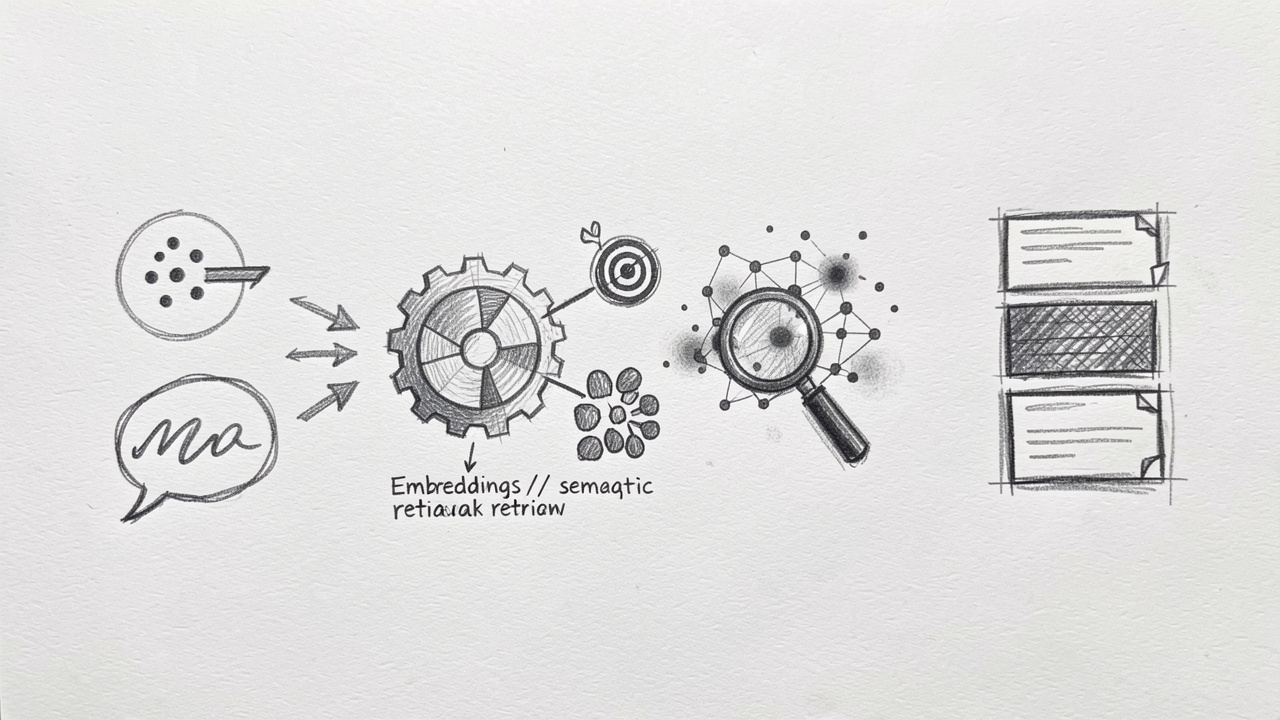
Embeddings and semantic retrieval support this process. They help systems connect similar meanings even when the wording differs. Your job is to make those meanings explicit through structure, clarity, and topical completeness.
Role of context, session history, and follow-ups
Conversational search is rarely one-and-done. A user may ask, What is AI search optimization? then follow with, How is it different from SEO? then ask, What should a SaaS company do first?
AI search can use session context to interpret those follow-ups. That means your content should not only answer a primary question. It should anticipate the next logical question and address it nearby.
Pages that support this flow tend to perform better because they mirror how people actually search. A strong page feels like a useful conversation, not a glossary entry.
Signals AI uses: relevance, authority, freshness, and citations
The core signals are familiar, but their application is becoming stricter. Relevance means direct answer fit. Authority means topic depth and credible reputation. Freshness matters where facts change. Citations help validate claims.
Structured content helps machines parse those signals faster, as do author bios, publication dates, reputable references, consistent internal linking, and schema markup. In AI search, trust is not decorative. It is functional.
Audit your content for conversational readiness
Identify common conversational question patterns
Start in Google Search Console. Filter queries by question words like how, what, why, when, best, compare, and vs. Then look for long-tail queries with clear intent.
Site search data is equally useful. So are chatbot logs, sales call notes, support tickets, and onboarding questions. These sources reveal how real people phrase problems when they are not trying to sound like SEO tools.
A strong conversational audit looks for patterns, not just terms. Are users asking for definitions, steps, comparisons, pricing context, examples, or troubleshooting? Each pattern suggests a different content shape.
Detect pages that already convert to AI answers
Some pages are closer than you think. Look for pages that already earn impressions for question-led searches, appear in featured snippets, or show strong rankings but middling CTR.
These pages often need structural fixes more than new content. A weak intro, a buried answer, or a missing summary line can stop a good page from being surfaced as a direct answer.
Checklist: clarity, completeness, and answer-first structure
Use this quick audit on your top candidate pages:
Check the lead answer, does the page answer the core question in the first 50 to 100 words?
Check completeness, does it address obvious follow-up questions, examples, or edge cases?
Check structure, are headings written like natural questions users would ask?
Check trust signals, are there citations, author details, dates, and accurate claims?
If a page fails two or more of these checks, it is unlikely to perform well in AI-driven answer experiences.
Structure content to win direct answers
Use concise, direct answer lines (20 to 50 words)
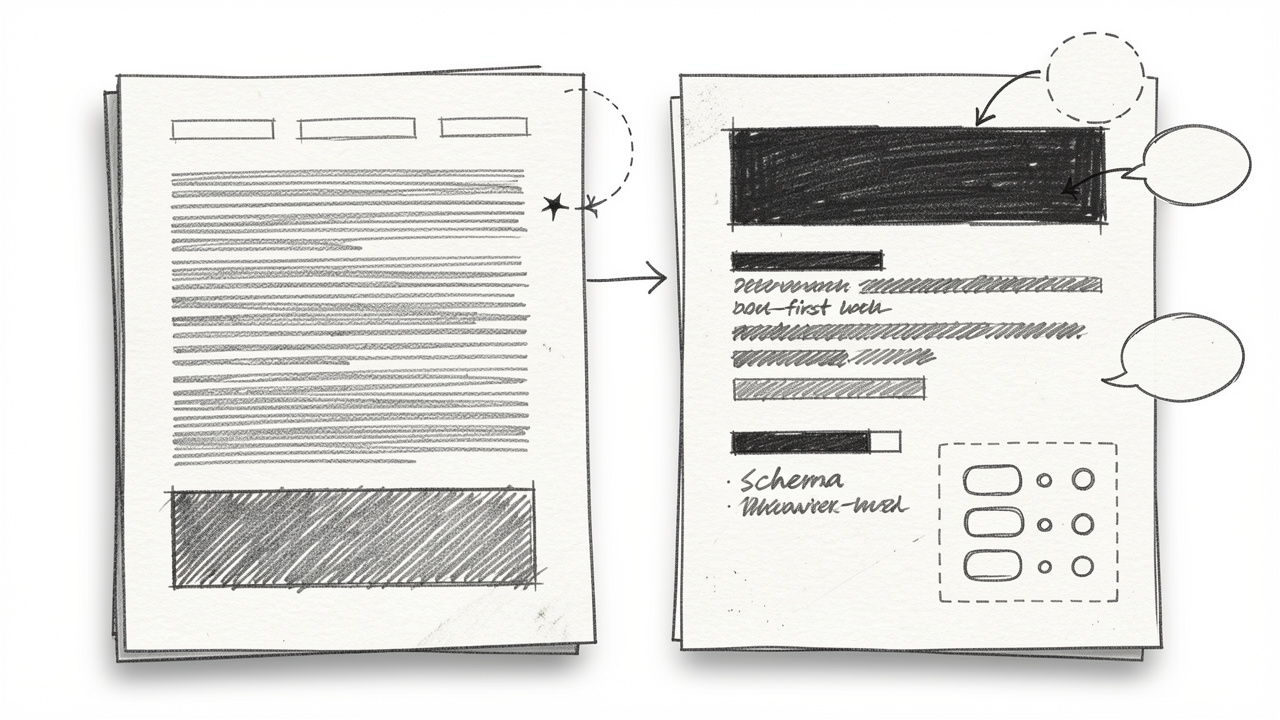
The most effective pattern is simple. Answer first, explain second. Open a section with a direct response that can stand alone if extracted by a search engine or assistant.
For example, if the page asks What is AI search optimization? the first line should answer that exact question in plain language. Do not warm up with brand context or abstract framing. Put the answer where the machine can use it instantly.
The sweet spot is often 20 to 50 words. That is long enough to be useful and short enough to quote cleanly.
Add short follow-ups and examples for context
A direct answer alone is not enough. It needs support. Right after the answer, add a brief explanation, one concrete example, and one likely follow-up.
This layered approach works well because AI systems can extract the short answer, while humans still get nuance. It also increases your odds of matching multi-turn search behavior.
Format with Q&A, bullets, and schema
When the topic lends itself to direct questions, use Q&A formatting. If the content is instructional, use step-based sections. If it is comparative, use tables.
Schema strengthens these patterns. For most marketing and SaaS content, the highest-value formats are shown below.
Schema Type | Best Use Case | Key Benefit | Common Mistake |
FAQ | Repeated customer questions | Supports question-answer clarity | Marking up hidden or thin answers |
QAPage | Community or forum-style pages | Helps clarify accepted answers | Using it on editorial FAQ pages |
HowTo | Procedural content | Improves step interpretation | Using vague or incomplete steps |
Product | Feature, pricing, and offer pages | Supports commercial context | Missing review, price, or availability details |
Use clear headings that mirror natural questions
Your headings should sound like the user. Replace vague labels like Platform Overview with specific questions like How does AI search affect SaaS SEO?
This is one of the easiest wins in conversational SEO. Better headings improve scannability for readers and intent alignment for search systems.
Optimize for conversational search signals
Improve topical authority with content hubs and internal linking
AI systems favor sources that show topic depth, not just isolated page relevance. Build content hubs around a core subject, then link supporting pages back to a canonical pillar page.
For example, a pillar page on AI search optimization can link to supporting content on schema, featured snippets, semantic search, and content audits. Those supporting pages should also link back using natural anchor text.
This structure reinforces authority. It tells both users and machines that your site covers the topic comprehensively.
Earn trust: citations, expert authorship, and up-to-date facts
Trust signals matter more when answers are extracted out of context. If your page gets summarized in an AI answer, the system needs confidence that the underlying source is credible.
Use named authors where appropriate. Add publication and update dates. Cite reputable sources for claims, benchmarks, and definitions. If a fact can go stale, revisit it regularly.
For agencies, this is a client-side opportunity. Updating expert bios and source hygiene can improve performance without writing net-new content.
Speed, mobile UX, and accessibility as ranking factors
Technical quality still matters. AI search does not excuse a slow page, broken mobile experience, or inaccessible layout.
Faster pages are easier to crawl and more likely to deliver a clean user experience once clicked. Accessibility also improves parseability. Clear heading hierarchy, descriptive link text, and sensible page structure help both humans and machines interpret the page correctly.
Use conversational keywords and natural language SEO
Map user intents to conversational keyword sets
Start with a seed topic, then expand it into natural-language question variants. If your seed topic is AI search optimization, the intent set may include definitions, implementation steps, tool comparisons, pricing implications, and measurement questions.
This mapping matters because one head term can hide several different user needs. If you collapse them into one generic page, your answer quality drops.
A useful model is to group queries by intent, then write sections that satisfy each cluster in a logical sequence.
Create templates for question-led content
You do not need to reinvent your editorial process each time. Use simple templates for recurring formats.
Here are effective patterns:
Definition: What is [topic], and why does it matter?
How-to: How do you [action] step by step?
Comparison: [Option A] vs. [Option B], which is better for [use case]?
Evaluation: What should you look for in [tool or solution]?
These templates reduce friction for writers and improve consistency across large content programs.
Target follow-up intents and multi-turn queries
Do not stop at the first question. Ask what a user would logically ask next. If your page answers What is conversational search? the follow-up may be How do I optimize for it? then How do I measure results?
When you build those paths into a single page or tightly linked cluster, you increase your relevance to AI systems that model conversations, not just queries.
Leverage structured data and retrieval tools
Implement FAQ, QAPage, HowTo, and Product schema
Schema helps search systems interpret page purpose and answer structure. It is not a magic ranking switch, but it improves machine readability and can support richer SERP treatment.
Prioritize schema based on page type. Use FAQ on real FAQ sections. Use HowTo where the page gives sequential instructions. Use Product on commercial pages with real offer details. Avoid over-marking pages just because a generator makes it easy.
Mark up content answers for SERP features and snippets
The best markup in the world will not save weak copy. First create a clear answer block, then mark up the relevant section accurately.
Keep answer text visible on the page. Align the marked-up question with the on-page heading. Make sure the answer is specific enough to stand alone if extracted into a snippet or summary result.
Use vector search and RAG for your on-site assistant
If you run a help center, knowledge base, or in-product assistant, conversational optimization should not stop at Google. Vector search and retrieval-augmented generation (RAG) help your own assistant find semantically relevant answers from your content.
This matters for two reasons. First, it improves customer experience on-site. Second, it creates a feedback loop. Assistant logs reveal the exact conversational phrases users use, which can feed your SEO roadmap.
For startups, this is often a practical bridge between content strategy and product experience. For agencies, it is a high-value service layer that goes beyond standard on-page SEO.
Testing and measuring impact
Metrics to track: impressions, click-through, answer appearance, conversions
Your measurement plan should cover both visibility and business outcomes. At minimum, track Search Console impressions, CTR, average position, featured snippet presence, assisted conversions, and page-level conversion rate.
If possible, add an internal metric for answer appearance rate. This can be a manual SERP sample, a tracked featured-snippet count, or a tool-based estimate of answer-box visibility.
A/B test answer lengths and lead summaries
Few teams test answer formatting rigorously, which creates an opportunity. Try two versions of a high-intent page lead. One may use a 25-word answer. Another may use a 45-word answer with a qualifier.
You can also test summary boxes, question-led H2s, or the placement of supporting examples. The goal is not to chase novelty. It is to learn what format earns the clearest response from both users and search systems.
Monitor conversational logs and iterate
Search Console tells you what users typed into search engines. Chatbot logs and site search analytics tell you what they ask when they are already engaged.
Those second-party signals are often more candid and more detailed. Review them monthly. If users keep asking follow-ups your page does not answer, update the page. That is conversational optimization in its purest form.
Common mistakes and how to avoid them
Over-optimizing for keywords vs. intent
A page can include the right phrase and still miss the query. This happens when writers force keyword placement but ignore the actual task the user is trying to complete.
Fix this by rewriting around the question itself. If the user wants a comparison, give a comparison. If they want steps, give steps. Format follows intent.
Thin answers without citations
Short answers are useful. Thin answers are not. If you make a strong claim, support it with evidence, examples, or source references.
AI systems tend to reward clarity, but they also need trust. A concise answer backed by verifiable detail is much stronger than a catchy line with no support.
Ignoring multi-turn conversations and follow-ups
Many pages answer the first question and stop. Users rarely do. If you do not address the next question, another source will.
Fix this by adding brief follow-up sections, contextual links, and FAQ blocks that reflect actual conversation flow.
Playbook: 30-day plan to optimize one page for conversational queries
Week 1, audit and research
Pick one page with strong business value and existing search demand. Pull query data from Search Console, review on-site search and chatbot logs, and identify the top five conversational intents tied to that page.
Then assess the page structure. Is the answer visible in the first screen? Are the headings natural? Are there obvious trust gaps? By the end of week one, you should have a clear rewrite brief.
Week 2, write answer-first content and add schema
Rewrite the introduction around a direct answer. Add question-led H2s and short follow-up sections. Include one example, one comparison point if relevant, and one FAQ block.
Then add schema for the page type. Validate that the markup matches visible content and does not overstate what the page actually contains.
Week 3, publish, internal links, and promote
Publish the updated page and strengthen its internal links. Link from related blog posts, help articles, and product pages where relevant.
If the page supports revenue, share it through email, sales enablement, and social distribution. Fresh engagement can help accelerate discovery and feedback.
Week 4, measure, iterate, and scale
Check impressions, CTR, rankings, and answer-feature visibility. Review any new conversational queries the page begins to attract.
If performance improves, document what changed. Then apply the same workflow to the next page in the cluster. This is how a one-page test becomes a repeatable growth system.
Tools and resources
Query discovery: Search Console, AnswerThePublic, chatbot logs
Use Google Search Console for real query data, AnswerThePublic for question expansion, and your own chatbot or site search logs for uncensored customer language.
These three sources usually provide enough signal to start. Fancy tooling helps later, but the foundational data is often already in your stack.
Testing and monitoring: SERP tracking, site search analytics
Use a SERP tracking tool that can monitor featured snippets and question-based keywords. Pair that with analytics from your site search or assistant platform to catch follow-up demand.
The combination gives you external visibility data and internal intent data. That is where the best optimization ideas come from.
Implementation: schema generators, semantic search libraries
For implementation, lightweight schema generators can speed up markup creation. For semantic retrieval and RAG, choose a stack that fits your team’s technical maturity and content volume.
Here is a practical short list:
Task | Recommended Option | Best For |
Query discovery | Google Search Console | Real search demand |
Question expansion | AnswerThePublic | Content ideation |
SERP monitoring | A keyword tracking platform with snippet tracking | Visibility measurement |
Schema support | Schema generator and validator tools | Faster implementation |
Semantic retrieval | Vector database or search platform | On-site assistants and knowledge bases |
FAQs
Will AI search replace organic traffic?
No. It will reshape it. Some informational clicks may shrink, but strong brands and strong answer sources can gain more qualified visibility.
How long before changes show in results?
Minor improvements can appear within a few weeks, especially on established pages. Bigger gains usually come after several crawl cycles and iterative updates.
Should I remove long-form content?
No. Keep long-form content, but structure it better. AI search favors concise answers supported by deeper context, not shallow pages.
Start for free or get a demo to see where your pages are already close to answer-ready.
Next steps and CTA
Quick wins to implement this week
Start with one page. Rewrite the first paragraph into a direct answer, convert vague headings into natural questions, add one FAQ section, and tighten internal links from related content.
That small set of changes is often enough to improve how your page performs for conversational queries in AI search.
How our product helps
We help you scan pages instantly, find answer-structure gaps, deploy schema injections, and surface conversational opportunities from your content and assistant logs. If you are building an on-site assistant, we also support RAG workflows that make your knowledge base easier to retrieve and trust.
You get faster audits, cleaner implementation, and a clearer path from content updates to measurable search impact.
Learn more about GEO and how it differs from traditional SEO and AI SEO.
More in AI & GEO
Keep reading

10 Best GEO Tips for Startups and Agencies
If your content is still optimized only for blue links, you are already behind. Search behavior has changed fast. People now ask AI assistants, answer engines, and generative search tools to summarize…

How to Get Your Brand Cited by LLMs
If AI can answer your buyers before your site ever gets a click, visibility has changed. The new challenge is not just ranking in the SERP, it is making sure your brand is present when large language …

A Step-by-Step Guide to Using AI for SEO
Use AI to speed up research, sharpen content decisions, and scale SEO work without losing quality. If your SEO workflow still depends on manual keyword sorting, hand-built briefs, and hours of SERP re…