
A Step-by-Step Guide to Using AI for SEO
Bastian W.
Co-Founder of Keupera
Use AI to speed up research, sharpen content decisions, and scale SEO work without losing quality.
If your SEO workflow still depends on manual keyword sorting, hand-built briefs, and hours of SERP review, you are already operating at a disadvantage. Search has become faster, more competitive, and more data-heavy. AI helps you close that gap.
The opportunity is not to let AI "do SEO" for you. The real win is using it to remove repetitive work, surface better insights, and help your team make stronger decisions. For startups and agencies, that means faster execution, lower production friction, and more room for strategy.
The step-by-step approach matters. When teams rush straight into AI-generated content, they often create thin pages, duplicate angles, and risky optimization patterns. When you use AI with a clear process, it becomes a practical SEO assistant, not a shortcut that creates cleanup work later.
What Using AI for SEO Step by Step Really Means
Using AI for SEO step by step means applying artificial intelligence across the full search workflow in a structured way. You use it to support keyword research, search intent analysis, content planning, on-page optimization, technical audits, internal linking, content refreshing, and reporting.

That distinction is important. AI is not one tactic. It is a layer that sits on top of your existing SEO process and helps you move faster with better visibility into patterns. Think of it as a force multiplier for tasks that are data-driven, repetitive, or hard to scale manually.
For example, instead of reading 50 search results one by one to spot common themes, AI can cluster those themes in minutes. Instead of building every content brief from scratch, AI can draft a first version based on SERP patterns, related entities, and likely subtopics. Instead of checking hundreds of title tags manually, AI can flag weak, duplicated, or misaligned metadata almost instantly.
This approach works best when you keep human judgment in the loop. AI can identify patterns, but it does not own your positioning, brand voice, or business priorities. You do. That is why the best SEO teams use AI to accelerate decisions, not replace them.
Key Aspects of Using AI for SEO
Start With Strategy, Not Prompts
Most AI SEO problems begin before the first prompt is written. Teams jump into tools without defining what they want to improve. That leads to generic content, noisy keyword lists, and reports that look busy but do not change performance.
Start by tying AI usage to a business goal. You may want more non-brand traffic, better conversion from informational content, stronger topical authority, or faster content production. Once the goal is clear, AI becomes easier to direct.
A startup may use AI to identify low-competition keyword clusters and publish supporting pages quickly. An agency may use it to standardize audits, scale briefs, and improve client reporting. The tools can be similar, but the use case should drive the setup.
Use AI Across the Full SEO Workflow
AI is most valuable when it supports multiple stages of SEO, not just content generation. If you only use it to write blog posts, you are using a small fraction of its value.
It can help at the research stage by grouping keywords, identifying search intent, and spotting content gaps. It can support planning by generating outlines, FAQs, schema suggestions, and internal linking opportunities. It can improve optimization by auditing headings, metadata, readability, and topical completeness. It can even support maintenance by flagging pages that need updates, consolidation, or pruning.
This end-to-end use is where efficiency compounds. The same keyword cluster used for a content brief can later power internal links, refresh recommendations, and performance analysis.
Protect Quality and Search Intent
The biggest mistake in AI-driven SEO is assuming speed equals quality, and it does not. Search engines reward content that satisfies intent, demonstrates expertise, and helps users complete a task or answer a question clearly. For guidance, see Search engines reward content that satisfies intent.
AI can produce fluent copy that sounds polished but misses the real point of the query. A page can be grammatically clean and still fail because it does not address the right stage of the funnel, the right angle, or the right user problem.
That is why every AI-assisted output should be checked against intent. Ask whether the page matches what users expect to find in the SERP. Check whether it includes the right depth, examples, proof points, and structure. If it does not, improve it before publishing.
Treat AI Output as a Draft, Not a Deliverable
This is one of the simplest rules, and one of the most useful. AI gives you momentum, and it should not be the final word.
In practice, that means using AI to create a strong starting point. Let it suggest title variations, cluster terms, summarize top-ranking pages, and build a draft brief. Then have a strategist, editor, or SEO lead review the output for accuracy, originality, and brand fit.
This matters even more for agencies. Clients are not paying for automated text. They are paying for judgment, prioritization, and outcomes. AI supports that work, but it does not replace it.
Measure the Right SEO Signals
When AI enters the workflow, production volume often rises. More briefs. More pages. More refreshes. That can feel productive, but output alone is not success.
Track metrics that reflect SEO impact. Watch organic traffic, keyword movement, click-through rate, conversion rate, indexation, and engagement signals. For authority-led campaigns, monitor backlinks, referring domains, and the performance of hub-and-spoke content clusters.
Also measure efficiency. If AI cuts brief creation from three hours to 30 minutes while maintaining quality, that is operational value. If content velocity rises but rankings fall, you have a quality control issue, not a scaling win.
How to Use AI for SEO, Step by Step
Step 1: Audit Your Current SEO Process
Before adding tools, map how your SEO work happens today. Look at keyword research, content planning, writing, optimization, technical checks, and reporting. Find the slow, repetitive, or inconsistent steps.
This creates a clean starting point. You cannot improve a process you have not documented. For most teams, the first opportunities appear in SERP analysis, content briefing, metadata optimization, internal linking, and performance summaries.
A simple audit will show where AI can save time quickly and where human expertise must stay central. That balance is the foundation of a useful AI workflow.
Step 2: Define One Clear Use Case First
Do not try to automate everything at once. Start with one focused use case where the return is easy to see.
A good first move is using AI for keyword clustering and content briefs. Those tasks are time-intensive, highly repeatable, and directly tied to publishing quality content. Another strong starting point is using AI for content refresh audits, especially if you already have a large content library.
Keep the first use case narrow. That makes it easier to build a repeatable process, compare before-and-after performance, and avoid tool sprawl.
Step 3: Use AI for Keyword Research and Clustering
Keyword research is one of the most practical places to start. AI can help you expand seed terms, identify semantically related topics, group keywords by intent, and map them into content clusters.
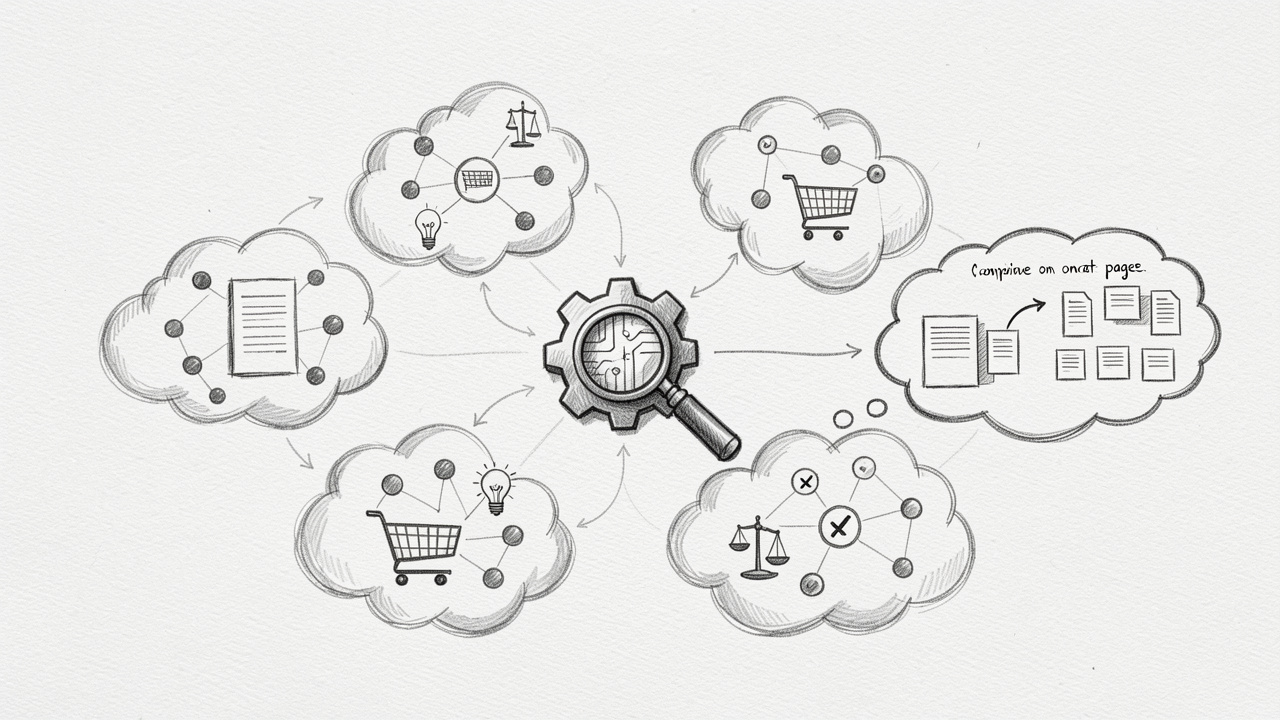
Instead of treating every keyword as a separate article opportunity, use AI to detect which terms belong together on one page. This reduces cannibalization and helps you build stronger topical authority. It also supports a cleaner site architecture.
For example, if you target "AI SEO tools," "best AI tools for SEO," and "AI software for keyword research," AI can help determine whether these belong on one commercial comparison page or across separate pages based on intent differences in the SERP.
Step 4: Analyze Search Intent at Scale
Search intent is where strong SEO campaigns are won or lost. AI can help by summarizing top-ranking pages, identifying recurring content formats, and spotting whether the SERP leans informational, transactional, navigational, or mixed.
This saves time, but it still needs human review. You should validate whether the AI summary reflects what is actually ranking. Look for common angles, depth, page types, and trust signals. Check whether results are list posts, product pages, templates, tools, or long-form guides.
Once intent is clear, your content plan gets sharper. You stop creating pages that technically target a keyword but fail to satisfy the query.
Step 5: Build Better Content Briefs
A strong brief reduces rework. AI can pull together target keywords, related entities, People Also Ask themes, competitor headings, questions to answer, and likely internal links.
This gives writers a more complete starting point. It also improves consistency across a startup team or agency content operation. Instead of every brief depending on one person's manual process, you create a repeatable system with room for expert review.
The key is editing the brief before it goes live. Remove redundant sections. Add original points of view. Include product context, conversion goals, examples, and any evidence the writer should reference. AI gets you to version one faster. Strategy gets you to a version that ranks.
Step 6: Draft Content Faster, Then Improve It
AI can help draft intros, section summaries, FAQs, definitions, and transitions. It can also suggest missing subtopics and identify where the draft is thin. This is useful, especially for teams that need to move quickly without sacrificing structure.
But publishing raw AI content is a poor long-term strategy. Search visibility depends on usefulness, not just volume. Add first-hand examples, original commentary, product insight, statistics, expert quotes, screenshots, or process detail that generic drafts do not include.
The best AI-assisted content feels edited, opinionated, and grounded in experience. It should solve the searcher's problem more clearly than the pages already in the SERP.
Step 7: Optimize On-Page Elements
On-page SEO is another high-value AI use case. You can use AI to improve title tags, meta descriptions, heading hierarchies, image alt text, and internal link anchor suggestions.
This is especially helpful when managing large sites. AI can quickly surface duplicate metadata, weak headings, or pages that miss obvious related terms. It can also recommend clearer language that improves click-through rate without turning every title into clickbait.
Use it as a review layer. Keep your final checks tied to search intent, brand tone, and ranking reality. A title can be keyword-rich and still underperform if it does not match what users expect to click.
Step 8: Use AI for Technical SEO Triage
AI will not replace a full crawler or a technical SEO specialist, but it can speed up analysis. It can summarize crawl data, categorize issues, and help prioritize fixes based on likely impact.
That is valuable when you are dealing with long technical reports. Instead of sorting through every item manually, you can use AI to identify patterns such as 404 errors, redirect chains, duplicate pages, thin indexable content, or orphaned URLs.
For agencies, this can turn raw diagnostics into clearer client recommendations. For startups, it helps lean teams decide what to fix first. Prioritization matters more than perfect detection. AI can help you get there faster.
Step 9: Improve Internal Linking
Internal linking is often under-optimized because it is tedious. AI is very effective here. It can identify related pages, suggest anchor text, and flag important URLs that are not receiving enough internal links.
This supports crawl efficiency, topical relationships, and user navigation. It is especially useful when building clusters around high-priority themes. A pillar page should not stand alone. Supporting content should reinforce it with clear contextual links.
Check the suggestions manually before applying them. The best internal links feel natural to users and reinforce relevance without over-optimization.
Step 10: Refresh Existing Content
Refreshing content is one of the most overlooked AI SEO wins. If your site already has aging articles, decaying rankings, or pages that once performed well, AI can help identify what to update and why.
It can compare your page against current SERP leaders, find missing subtopics, recommend stronger headings, and suggest where intent has shifted. It can also help consolidate overlapping pages that compete against each other.
For many teams, content refreshes outperform net-new publishing because they build on existing authority. AI makes this process easier to scale.
Step 11: Automate Reporting and Insight Extraction
Reporting often consumes too much strategic time. AI can summarize ranking changes, traffic shifts, page-level trends, and likely causes in plain language.
This is useful for both internal teams and client-facing agencies. It shortens the path from raw metrics to actionable interpretation. Instead of manually assembling weekly observations, you can review AI-generated summaries and refine them with business context.
The value is not just speed. It is clarity. Better reporting helps teams act faster on emerging opportunities and problems.
A Practical AI SEO Workflow for Startups and Agencies
The most effective workflow is simple enough to repeat and strict enough to preserve quality. You do not need a complex stack on day one. You need a system.
A practical sequence often looks like this: start with a target topic, use AI to expand and cluster keywords, review SERP intent, generate a draft brief, create or refresh content, optimize on-page elements, add internal links, and then track performance. Each stage should have a human checkpoint.
That checkpoint is what protects quality. It is where you remove vague recommendations, validate the SERP, improve differentiation, and align the page with conversion goals. Without that review layer, AI can scale mediocrity very efficiently.
SEO Task | What AI Does Well | Where Humans Must Lead |
Keyword Research | Expands terms, clusters topics, finds patterns | Chooses priorities based on business value |
SERP Analysis | Summarizes common themes and formats | Validates intent and competitive positioning |
Content Briefs | Drafts outlines, FAQs, entities, headings | Adds differentiation, expertise, and conversion context |
Content Drafting | Creates first drafts and fills structural gaps | Ensures accuracy, originality, and brand voice |
On-Page SEO | Flags metadata issues and optimization gaps | Finalizes messaging and CTR strategy |
Technical SEO | Categorizes issues and suggests priorities | Confirms fixes and implementation impact |
Internal Linking | Recommends link opportunities | Reviews relevance and anchor naturalness |
Reporting | Summarizes performance changes | Interprets outcomes and sets next actions |
Common Mistakes to Avoid
The most common mistake is over-trusting AI output because it sounds polished. Fluency is not expertise. A clean paragraph can still contain weak reasoning, factual errors, or a poor match to intent.
Another mistake is optimizing for volume over performance. Teams produce more pages because AI makes production easier, but they skip the strategic review that would make those pages useful. The result is content bloat, cannibalization, and disappointing rankings.
A third problem is using AI without a clear editorial standard. If every writer or strategist uses different prompts, different quality thresholds, and different formatting logic, your output becomes inconsistent. Agencies feel this fast because clients notice uneven deliverables.
One of the smartest fixes is to standardize your process. Build repeatable prompt structures, brief templates, review checklists, and content expectations. AI performs best when your workflow is disciplined.
How to Get Started With AI for SEO
If you are starting from scratch, keep the rollout focused. Choose one workflow, one content segment, and one measurable outcome. That approach reduces risk and makes it easier to prove value.
Use this simple sequence:
Pick a goal, choose a specific outcome like faster briefs, better refreshes, or stronger keyword clustering.
Select one workflow, start with research, briefing, or optimization, not everything at once.
Create a review process, define who checks accuracy, search intent, and brand fit.
Measure results, track both SEO impact and time saved.
Scale what works, expand only after the first workflow is reliable.
If you are an agency, pilot the process on one client or one service line first. If you are a startup, test it on one topic cluster tied to pipeline or sign-up goals. Small tests create clean evidence. Clean evidence makes scaling easier.
You should also set expectations internally. AI will improve speed quickly. It may improve rankings only when paired with stronger strategy, better briefs, and sharper editorial judgment. That is normal. SEO gains come from better execution, not automation alone.
What Good Results Look Like
Good AI SEO results are not just more content. They show up as cleaner topic maps, faster turnaround, stronger content alignment, and more confident prioritization.
You may see shorter production cycles, fewer missed subtopics, more consistent briefs, and faster content refreshes. Over time, the more important indicators should appear: improved rankings, more qualified organic traffic, stronger engagement, and better conversion from search landing pages.
For agencies, another sign of success is consistency. Teams spend less time reinventing workflows and more time applying strategy. For startups, success often looks like leverage. A smaller team can execute like a larger one because repetitive work no longer consumes the week.
Conclusion
Using AI for SEO step by step is not about replacing experts. It is about giving your team better leverage. When you apply AI to research, intent analysis, briefing, optimization, technical triage, and reporting, you move faster without giving up control.
Start small. Pick one workflow. Build a review layer. Measure both performance and efficiency. Then expand with discipline. That is how you turn AI into an SEO advantage instead of just another tool in the stack.
Next step: choose one live SEO task you repeat every week, then redesign that single workflow with AI support. Start for free, test the output, and refine the process until it is reliable.
Learn more about GEO and how it differs from traditional SEO and AI SEO.
More in AI & GEO
Keep reading

10 Best GEO Tips for Startups and Agencies
If your content is still optimized only for blue links, you are already behind. Search behavior has changed fast. People now ask AI assistants, answer engines, and generative search tools to summarize…

How to Optimize for Conversational Queries and AI Search
Make your content easier for AI systems to find, trust, and quote, without sacrificing human readability. Microcopy: You do not need a full site rebuild. Most teams can test this on one page first and…

How to Get Your Brand Cited by LLMs
If AI can answer your buyers before your site ever gets a click, visibility has changed. The new challenge is not just ranking in the SERP, it is making sure your brand is present when large language …